The Art Of Energy Conversion: The Engineering Significance Of Radiofrequency Needles As Precision Thermophysical Systems
Apr 23, 2026
The Art of Energy Conversion: The Engineering Significance of Radiofrequency Needles as Precision Thermophysical Systems
At its essence, the radiofrequency (RF) needle is a micro energy conversion and delivery terminal that transforms intangible electrical energy into precise, controllable thermal energy. As medicine transitions from macro-traumatic surgery to precision interventional therapies, the emergence of the RF needle redefines the very form of the "scalpel." It no longer relies on mechanical cutting but achieves tissue ablation through physical energy. The core significance of this slender needle lies in its ingenious design, which encapsulates complex electromagnetic thermal effects into a standardized, predictable, and safe clinical tool-exemplifying how engineering principles solve clinical challenges.
The physical foundation of radiofrequency ablation rests on Joule heating. When high-frequency alternating current (typically 350–500 kHz) passes through human tissue, ions within the tissue oscillate at high speed following the current direction, generating heat through friction. The exposed active tip of the RF needle (the uninsulated portion) serves as the precise "port" for this energy release. Its length is rigorously calculated to directly determine the initial geometry of the energy field. For pain management needles, the active tip may be as short as 2–5 mm to form a highly focused nerve coagulation point; whereas for liver tumor ablation, the active tip can utilize deployed electrodes or perfusion techniques to construct a spherical thermal field with a diameter of 3–5 cm. This reflects a "tailor-made" capability for energy customization.
The insulating coating on the needle shaft is the soul of the RF needle's safety. This polymer material (such as PTFE) covering the shaft (except for the active tip) functions to achieve directional constraint of energy. Acting as an energy "shield," it forces the current to radiate outward from the active tip into the surrounding tissue, forming a spherical thermal field, while strictly preventing current from flowing back along the shaft surface. Without this insulation layer, normal tissue along the puncture path would be severely burned, rendering ablation uncontrollable and dangerous. The length and quality of the insulation layer directly determine the boundary clarity of the ablation zone.
Facing the clinical challenge of larger and irregularly shaped lesions, the morphology of RF needles has undergone revolutionary evolution.
Cooled Electrode Needles: By designing micro-circulation channels within the needle to continuously cool the tip with ice water, these needles solve the problem of tissue carbonization common with traditional electrodes at high temperatures. Tissue carbonization sharply increases impedance, hindering heat diffusion to deeper layers and limiting the ablation range. Active cooling keeps the needle-tissue interface temperature low, allowing for higher power and longer durations, thereby producing larger and more homogeneous coagulative necrotic zones.
Perfused Electrode Needles: These feature micropores at the tip through which physiological saline seeps continuously during ablation. The dispersion of conductive fluid expands the effective area of action and reduces local impedance, allowing heat to conduct more evenly and deeply. This is particularly suitable for gas-containing organs like the lungs or highly vascular tumors.
The integration of sensing functions elevates the RF needle from an open-loop tool to a closed-loop control system. Many RF needles incorporate miniature thermocouples at their tips to monitor target temperature in real-time and with high precision. The ablation generator dynamically adjusts power output based on temperature feedback, stabilizing tissue temperature at a preset lethal threshold (e.g., 90–100°C for tumor ablation). Simultaneously, the system continuously monitors circuit impedance. The dynamic change in impedance during tissue heating-typically a dip followed by a rise due to dehydration and coagulation-serves as another critical biophysical parameter for determining ablation completeness. Temperature monitoring and impedance monitoring together constitute a quantitative "dashboard" for the ablation process.
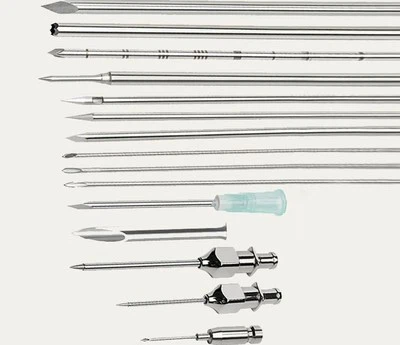
Therefore, the engineering significance of the RF needle lies in its ability to materialize a complex physical process involving electromagnetism, thermodynamics, fluid mechanics, and biological tissue into an intuitive and reliable tool in the physician's hand. The diversification of its specifications (length, diameter), structure (cooling, perfusion), and functions (temperature sensing) enables clinicians to select the most appropriate "energy scalpel" for lesions of varying sizes, depths, organs, and natures. This needle stands as a crystallization of modern physics principles, precision materials engineering, and clinical medicine-a cornerstone of precision in thermal surgery.