From Blockade To Modulation: The Philosophical Revolution Of Neural Intervention Of Radiofrequency Needles In Chronic Pain Management
Apr 23, 2026
From Blockade to Modulation: The Philosophical Revolution of Neural Intervention of Radiofrequency Needles in Chronic Pain Management
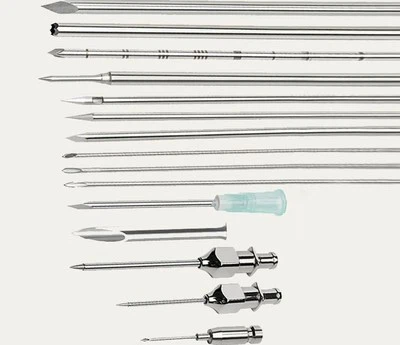
The introduction of radiofrequency (RF) needles in chronic pain treatment marks a profound revolution in therapeutic philosophy: shifting from signal masking via systemic medication to target remodeling through precise physical intervention on pain conduction pathways. Instead of relying on random systemic receptor binding of circulating drugs, RF needles utilize thermal energy to perform millimeter-scale precise modulation on specific neural structures where pain signals originate and transmit, thereby fundamentally turning off or regulating pain pathways at the source. This needle serves as a pivotal instrument driving pain medicine toward minimal invasiveness, precision and reversibility.
Radiofrequency needles function in pain management through two primary modalities, representing two distinct levels of neural intervention concepts:
Conventional radiofrequency thermocoagulation generates sustained high temperatures of 80–85 °C via RF needles, forming localized protein coagulation lesions surrounding the needle tip. When such coagulation zones accurately cover critical nodes of pain signal transduction and transmission including the dorsal root ganglion, medial branch of spinal nerves and trigeminal ganglion, it enables selective ablation of Aδ and C nerve fibers responsible for pain transmission. Its core value lies in achieving selective physical neural denervation.For instance, in the treatment of lumbar facet joint pain, guided by X-ray imaging, RF needles precisely reach the medial posterior branches innervating the affected joints. Subsequent thermocoagulation permanently interrupts abnormal pain signals originating from the joints. This long-lasting therapeutic effect provides a curative solution for numerous cases of drug-refractory localized pain.
A far more revolutionary advancement is pulsed radiofrequency (PRF). Under this modality, the needle tip emits intermittent pulsed electric current, with tip temperature strictly maintained below 42 °C - well beneath the threshold for protein denaturation. Instead of thermal ablation, its mechanism relies on high-voltage pulsed electric fields to modulate voltage-gated ion channels in neurons, regulate neurotransmitter release (such as elevated endorphin secretion in the spinal dorsal horn), and induce neural plasticity alterations.Its therapeutic paradigm elevates from irreversible ablation to neural modulation. Analogous to resetting or interfering with disordered pain neural circuits via electromagnetic signals rather than physically destroying nerve tissues, this modality preserves complete anatomical integrity of nerves. It eliminates complications including sensory deficit and motor dysfunction, making it especially suitable for patients whose treatment sites adjoin vital nerves or those requiring intact neurological function preservation.
The outstanding clinical value of RF needles is embodied in their extreme precision and verifiable procedural safety. Treatment efficacy entirely depends on accurate needle tip positioning at millimeter-scale anatomical targets. Under X-ray, CT or ultrasound guidance, RF needles achieve reliable point-to-point precise navigation.Pre-treatment electrical stimulation testing serves as an indispensable safety verification step. First, sensory stimulation at 50 Hz is delivered to reproduce the patient's painful dermatome (paresthesia). Subsequently, motor stimulation at 2 Hz is applied to detect involuntary target muscle contraction, confirming that the needle tip is not excessively proximal to motor nerves. Throughout this process, the RF needle temporarily acts as a diagnostic neural locator, realizing seamless integration of diagnosis and treatment while maximizing procedural selectivity and safety.
In summary, radiofrequency needles provide evidence-based, repeatable minimally invasive solutions for patients with chronic pain. For numerous intractable pain conditions previously managed with high-dose opioids - including trigeminal neuralgia, cervicogenic headache and complex regional pain syndrome - long-term symptom relief is achievable via outpatient day-surgery procedures.Beyond substantially improving patients' quality of life, RF therapy greatly alleviates socioeconomic burdens caused by long-term pharmacotherapy and repeated hospital visits. It stands as a momentous milestone marking the transition of pain medicine from palliative care to targeted neural intervention.