Interdisciplinary Energy Platform: Radiofrequency Needles As A Universal Technical Interface For Minimally Invasive Interventional Medicine
Apr 23, 2026
Interdisciplinary energy platform: Radiofrequency needles as a universal technical interface for minimally invasive interventional medicine
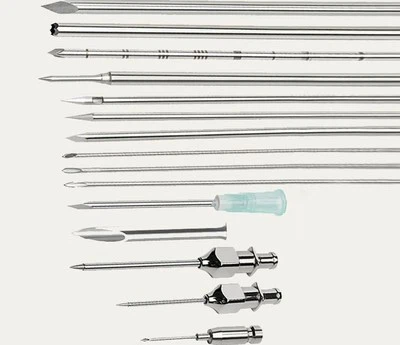
The core feature of the radiofrequency needle is a controllable energy emission platform that can be percutaneously inserted to reach deep targets within the body. This attribute enables an astonishingly wide range of applications, from cardiac electrophysiology to vascular closure, from gynecological fibroid treatment to skin rejuvenation, achieving interdisciplinary penetration. Its significance lies in the fact that it modularizes and standardizes the "precise puncture + controllable thermal energy" core technology, becoming a common technical interface that connects different medical specialties and solves diverse disease problems, promoting the minimally invasive transformation of various disease treatment models.
In the field of cardiac electrophysiology, the radiofrequency ablation catheter (a specially designed, bendable radiofrequency "needle") is inserted into the heart through a vascular pathway for the treatment of rapid arrhythmias. The electrode at the tip of the catheter, guided by a three-dimensional mapping system, precisely reaches the origin point of the abnormal "circuit" within the heart (such as atrioventricular bypass, pulmonary vein orifice, etc.), releases radiofrequency energy to cause focal myocardial necrosis, and permanently blocks the abnormal conduction pathway. Compared to open-heart surgery, the radiofrequency catheter ablation simplifies the treatment to a minimally invasive interventional procedure and has become the first-line curative therapy for most types of tachycardia. Here, the radiofrequency needle is the precise soldering pen of the "heart circuit repairman".
In the field of vascular surgery, the radiofrequency needle has revolutionized the treatment of varicose veins by taking the form of an intravascular closure catheter. The catheter is inserted into the diseased great saphenous vein under ultrasound guidance. Its electrodes release heat energy during withdrawal, causing the entire wall of the vein to close and undergo fibrosis. Compared with traditional vein stripping surgery, this technique has no incision, less pain, quick recovery, and good aesthetics, and has become the mainstream minimally invasive treatment option. At this point, the radiofrequency needle is the "vascular closure device".
In the field of gynecology, radiofrequency needles offer new options for patients who wish to retain their uterus. Under ultrasound guidance, a fine needle is inserted into the interior of uterine fibroids and heated to cause the fibroids to coagulate, die, and shrink. For abnormal uterine bleeding, balloon-shaped or array-type radiofrequency electrodes can be used for endometrial ablation. These techniques represent a conceptual advancement from "organ removal" to "precise removal of lesions". In this context, the radiofrequency needle is the "minimally invasive sculpting knife" for the uterus.
In the field of spinal intervention, in addition to the nerve radiofrequency used for pain treatment, radiofrequency needles are also employed for the treatment of discogenic pain. By inserting electrodes through a puncture into the affected intervertebral disc, thermal coagulation is performed on the posterior part of the ruptured annulus fibrosus (intra-discal electrothermal therapy), or the protruded nucleus pulposus is solidified (nucleus pulposus shaping procedure), providing a minimally invasive relief option for patients who are unwilling to undergo open surgery. Here, the radiofrequency needle is referred to as the "repair welding gun for the intervertebral disc".
In the fields of dermatology and medical aesthetics, radiofrequency technology is presented in the form of microneedles. The insulated needle shaft and the microneedle matrix with only the needle tip conducting electricity penetrate the dermis of the skin, releasing radiofrequency energy at the precise depth, stimulating collagen regeneration and reorganization. It achieves "targeted, deep, and quantitative" energy release, and is widely used in facial rejuvenation, acne scar treatment, and stretch mark therapy. At this time, the radiofrequency needles are the "precise inducers of skin regeneration".
From this, it can be seen that the platform significance of the radiofrequency needle lies in its strong functional adaptability. Different specialties, based on the anatomical characteristics of the target organ (cavities, lumens, entities, cortical layers), customize the form (straight needle, curved tube, closed catheter, micro-needle array), control method and energy parameters of the radiofrequency energy delivery terminal, can thereby develop specialized tools to solve specific problems in their respective fields. This promotes the technological integration and concept borrowing among disciplines, greatly enriching the connotation of "interventional medicine".
For medical institutions and surgeons, this platformization brings significant advantages. It simplifies the equipment configuration in the operating room and reduces the cost of separate purchases by multiple specialties. For doctors, after mastering the basic principles of radiofrequency energy and puncture techniques, the application logic is similar across different specialties, lowering the threshold for learning new technologies. Therefore, the radiofrequency needle is not only a treatment tool but also a key catalyst and universal technical language that drives modern medicine towards minimally invasive and integrated development.