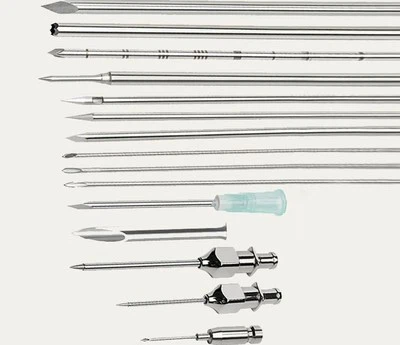
Ladder-Style Technology Diffusion: Building A Global Tiered System For Brachytherapy Needles And Professional Training
Apr 29, 2026
Ladder-Style Technology Diffusion: Building a Global Tiered System for Brachytherapy Needles and Professional Training
Lancet Oncology projections indicate that 2,246 additional brachytherapy centers will be required globally by 2050 to meet rising oncological demand, with the majority of new developments concentrated in low- and middle-income regions. Large-scale global expansion cannot rely on a single uniform high-standard model. A tiered technical framework tailored to national economic conditions, medical infrastructure and workforce capacity is urgently needed. This hierarchical system defines graded needle allocation standards and corresponding competency requirements for centers at different developmental stages, establishing a clear scalable upgrade roadmap. Beyond equipment procurement lists, it provides a comprehensive capacity development blueprint for global brachytherapy advancement.
I. Core Dimensional Framework for Tiered Classification
A robust tiered system integrates three interconnected evaluation dimensions:
1. Disease Spectrum Tiering: From single-indication care (cervical cancer only) to full-spectrum oncology coverage (prostate, breast and other malignancies).
2. Technical Complexity Tiering: From 2D image-guided standardized procedures to advanced 3D navigation and individualized inverse plan optimization.
3. Needle System Tiering: From basic simplified instrumentation to comprehensive high-complexity needle and applicator portfolios.
II. Four-Tier Center Classification and Matching Needle Configuration
Tier 1: Basic Treatment Point
- Core Position: Resolve basic access gaps for remote and low-income regions, focusing exclusively on cervical cancer management.
- Needle & Applicator Configuration:
- 2–3 sets of reusable size-variable uterine tandems and vaginal applicators.
- 5–10 high-durability basic interstitial needles with clear engraved depth scales, designed for tactile and basic ultrasound-guided insertion.
- Simplified reliable vaginal packing and fixation devices.
- Core Technical Competencies:
- Tumor assessment via standardized gynecological examination.
- Standardized limited interstitial insertion (2 needles) assisted by ultrasound or fluoroscopy.
- Orthogonal X-ray acquisition and conventional dosage calculation per Manchester/Paris system protocols.
- Standardized disinfection and integrity testing for reusable instruments.
- Operational Model: Primarily supported by mobile brachytherapy units and regional outreach programs.
Tier 2: Standard Treatment Center
- Core Position: Regional backbone facilities delivering standardized, safe definitive cervical cancer radiotherapy.
- Upgraded Needle Configuration (Based on Tier 1):
- Full-size-spectrum applicators accommodating diverse anatomical variations.
- Specialized vaginal insertion templates for parallel, uniformly spaced needle placement.
- Enhanced basic echogenic interstitial needles for optimized visualization on general ultrasound.
- Disease-specific auxiliary needles for vaginal wall invasion management.
- Core Technical Competencies:
- Routine CT-guided interstitial implantation, 3D target delineation (GTV/CTV) and CT-based dose optimization.
- Basic proficiency in inverse treatment planning for individualized dose modulation.
- Fully standardized brachytherapy quality control and safety management systems.
- Imaging Requirement: Mandatory CT simulation equipment.
Tier 3: Comprehensive Treatment Center
- Core Position: Provincial and national referral hubs managing complex, recurrent malignancies and multi-site brachytherapy indications.
- Expanded Needle Configuration (Based on Tier 2):
- Complete prostate brachytherapy systems, including 3D stepping templates and specialized puncture needles.
- Dedicated breast brachytherapy catheters and interstitial devices.
- MRI-compatible applicators and needles to support gold-standard MRI-guided intervention.
- Full-spectrum functional specialized needles for complex clinical scenarios.
- Core Technical Competencies:
- Independent MRI simulation and MRI-guided interstitial brachytherapy.
- Proficiency in multi-site radiotherapy covering prostate, breast and other malignancies.
- Salvage brachytherapy for recurrent and rare advanced tumors.
- Clinical research capabilities and standardized training for lower-tier centers.
- Imaging Requirement: Equipped with high-field MRI simulation systems.
Tier 4: Center of Excellence & Innovation
- Core Position: Global benchmark institutions defining industrial technical standards and driving cutting-edge research.
- Core Features: Integrated state-of-the-art instrumentation including robotic-assisted puncture systems, real-time in-vivo dose verification devices, and molecular imaging–guided biological targeted interstitial needles. Focus on unmet clinical needs, technological iteration and global technical leadership.
III. Ladder-Style Tiered Training and Certification System
A graded center framework must be matched with synchronized hierarchical talent development:
1. Modular Skill Training: Divide curricula into core mandatory modules (cervical intracavitary therapy) and advanced elective modules (cervical interstitial implantation, prostate brachytherapy), with formal certification upon competency assessment.
2. Tiered Training Hub System: Mandate high-tier comprehensive and excellence centers to provide systematic technical training for grassroots facilities. Develop condensed short-term standardized training packages tailored to Tier 1 centers, focusing on safe basic interstitial needle operation and standardized workflows.
3. Remote Guidance and Centralized Quality Control: Leverage telemedicine platforms to enable real-time expert guidance for complex implantation procedures and centralized plan reviews, forming a decentralized technical diffusion network with unified quality oversight.
IV. Policy and Supply Chain Guarantee Mechanisms
1. Tiered Government Procurement Catalogs: National health authorities formulate graded equipment and consumable procurement guidelines matching center tiers, optimizing rational resource allocation.
2. Differentiated Medical Insurance Reimbursement: Establish tiered reimbursement standards linked to technical complexity, incentivizing centers to upgrade service capabilities step by step.
3. Localized Supply Chain Cultivation: Support domestic manufacturing of cost-effective, durable basic needles and applicators for Tier 1 and Tier 2 centers, ensuring stable, sustainable localized supply chains.
Conclusion
Addressing the global brachytherapy access crisis requires systematic, organized technology diffusion rather than fragmented isolated equipment donations. A scientifically designed tiered center system, with standardized graded needle allocation and competency benchmarks, serves as the actionable roadmap for global radiotherapy equity. This framework enables every region to identify its current developmental stage and clarify scalable upgrade pathways, maximizing the efficiency of limited global medical resources. The gap between basic ultrasound-guided interstitial needles and advanced robotic intelligent needle arrays is not insurmountable, but a progressive ladder of achievable advancements. Through steady hierarchical development, the equitable vision advocated in Lancet research can be gradually translated into tangible clinical benefits for millions of cancer patients worldwide.