Core Tools Amid The Global Supply-Demand Divide: Technical Spectrum Of Brachytherapy Needles And Cost Analysis For Center Development
Apr 29, 2026
Core Tools Amid the Global Supply-Demand Divide: Technical Spectrum of Brachytherapy Needles and Cost Analysis for Center Development
The Lancet Oncology has exposed a shocking picture of severe global imbalance in the supply and demand of brachytherapy. Of the approximately 709,000 patients requiring this treatment annually, the overwhelming majority reside in low- and middle-income countries (LMICs), trapped in regions with zero local brachytherapy centers or forced to travel hundreds of kilometers for care. Establishing new brachytherapy centers is the fundamental solution to bridging this gap. Beyond buildings and large-scale equipment-such as afterloading machines and imaging systems-the core of center construction lies in the technical selection of brachytherapy needle systems. Different needle solutions directly determine startup costs, operational complexity, treatable disease spectrums, and ultimately, whether this life-saving intervention can take root and be sustained in resource-limited regions.
I. Brachytherapy Needles: Far More Than a Single "Needle"
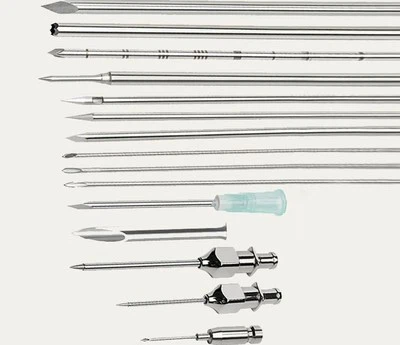
The term "brachytherapy needle" is a general designation covering a sophisticated technical spectrum, categorized by treatment site (cervix, prostate, breast, etc.) and surgical modality (interstitial implantation, intracavitary therapy). The uneven global distribution of brachytherapy centers is partially attributed to overreliance on high-complexity needle systems.
1. High-Complexity, High-Cost Needle Systems
- Representative Solution: 3D template-guided transperineal interstitial needle systems for definitive prostate cancer radiotherapy, consisting of 3D stereotactic positioning templates, dozens to hundreds of hollow fine needles, intraoperative ultrasound navigation, and matched 3D treatment planning software.
- Features & Challenges:- High Precision: Enables millimeter-level dose sculpting, serving as one of the gold standards for prostate cancer management.
- Prohibitive Costs: Premium pricing for integrated software, templates and needle sets; single-use or limited-cycle consumables result in extreme per-treatment expenses.
- High Technical Barrier: Demands long-term specialized training and close multidisciplinary collaboration among urologists, radiation oncologists, radiologists and medical physicists.
- Impact on Center Development: Such centers are predominantly concentrated in high-income nations (the United States accounts for 19.9% of global facilities). Large-scale promotion in LMICs faces insurmountable barriers, extending far beyond equipment procurement to sustainable talent retention and technical support.
2. Medium-Complexity, Core Therapeutic Needle Systems
- Representative Solution: Combined intracavitary and interstitial needle systems for cervical cancer, addressing the world's largest clinical demand (cervical cancer accounts for 59.3% of all brachytherapy indications). Core components include uterine tandems, vaginal applicators, and critical interstitial needles that deliver radioactive sources directly to tumor margins for bulky masses or parametrial invasion.
- Features & Challenges:- Therapeutic Cornerstone: Clinical evidence confirms that omitting interstitial implantation significantly reduces local control rates and overall survival in cervical cancer radiotherapy, making interstitial capability the minimum standard for qualified cervical cancer brachytherapy centers.
- Hierarchical Technical Pathways: Ranges from experience-dependent free-hand insertion to CT/MRI-guided template-assisted implantation, creating scalable upgrade routes for centers with varying resource levels.
- Controllable Consumable Costs: Interstitial needles are available in single-disposable and reusable sterilizable variants. Disposable models transfer costs to individual treatments, while reusable options require standardized cleaning, disinfection and integrity inspection protocols, imposing strict requirements on hospital logistics.
3. Low-Complexity, Disease-Specific Needle Devices
- Representative Solution: Surface mould applicators and simplified interstitial needles for skin cancers (e.g., basal cell carcinoma); single-lumen balloon catheters for accelerated partial breast irradiation after breast-conserving surgery.
- Features: Streamlined operation, short learning curves and highly integrated hardware, facilitating deployment in primary care facilities and specialized clinics. However, these indications account for a small proportion of global brachytherapy demand.
II. How Needle Selection Shapes Center Construction Models and Treatment Accessibility
New center development in resource-constrained regions must prioritize appropriate technology, with needle system selection as the core decision-making factor.
1. Cervical Cancer Priority Model (Optimal for High-Burden LMICs)
- Core Needle Configuration: Standard cervical intracavitary applicator sets + basic reusable interstitial needles, focusing exclusively on definitive cervical cancer afterloading treatment.
- Minimum Imaging Requirements: CT scanning for post-implant verification as the baseline, eliminating mandatory high-cost MRI; MRI contouring services can be shared with regional tertiary hospitals.
- Workforce Strategy: Concentrated training for a specialized cervical cancer radiotherapy team instead of pursuing full-spectrum oncology coverage.
- Economic Advantages: Targeting the largest patient population with focused capital investment to maximize public health benefits in the shortest timeframe. Cost-effective reusable sterilizable needles substantially reduce long-term consumable expenditure.
2. Multidisciplinary Comprehensive Model (Suitable for Regional Medical Hubs)
- Core Needle Configuration: Expanded instrumentation based on cervical cancer systems, including prostate puncture template sets, breast treatment catheters, and advanced imaging equipment (intraoperative ultrasound, MR simulation).
- Challenges: Massive capital investment, complex multidisciplinary operations and high maintenance costs. This dominant model in high-income countries often leads to equipment idleness and underutilization if directly replicated in low-resource settings.
3. Mobile & Shared Service Model (Solving Geographic Access Barriers)
- Core Concept: Decentralized fixed center construction replaced by mobile afterloading units and outreach medical teams delivering equipment and professionals to remote areas. Portable, rapidly deployable and easily sterilized needle kits become essential.
- Key Advantages: Effectively cuts the average travel distance of 341–551 kilometers documented in global research, resolving the final-mile access gap for underserved populations.
III. Policy Recommendations: Targeted Technology Transfer and Localization Centered on Needle Systems
Bridging the global shortage of 2,246 brachytherapy centers requires the international community to move beyond superficial equipment donations and implement targeted technical transfer initiatives:
1. Procurement & Funding Guidance: International aid funds should prioritize cost-effective, appropriate afterloading devices and cervical cancer-specific needle systems over high-end premium equipment.
2. Localized Production & Innovation: Support domestic manufacturers in LMICs to produce high-quality, low-cost reusable interstitial needles and applicators in compliance with international standards, stabilizing supply chains and reducing long-term treatment costs.
3. Standardized Training Packages: Develop specialized training programs featuring simulation modules, online courses and operational guidelines focused on cervical interstitial needle techniques to accelerate the cultivation of qualified clinical teams.
Conclusion
Achieving equitable global access to brachytherapy hinges on rational technological decision-making. As the final delivery vehicle for clinical intervention, brachytherapy needles and their tiered technical complexity directly reflect global disparities in medical resources. When planning the 2,246 new required centers, policymakers must abandon the pursuit of excessive technological advancement and adopt a public health–oriented mindset, prioritizing validated, economically viable and sustainable needle solutions targeting the world's highest disease burden-cervical cancer. Only by integrating precise radiotherapy tools with evidence-based public health strategies can cold epidemiological data from The Lancet be transformed into tangible survival hope for millions of patients. Health equity begins with the rational selection of the first therapeutic needle.