Overcoming Refractory Tumors: Breakthrough Strategies Of Interstitial Needles in Locally Advanced And Recurrent Cervical Cancer
Apr 29, 2026
Overcoming Refractory Tumors: Breakthrough Strategies of Interstitial Needles in Locally Advanced and Recurrent Cervical Cancer
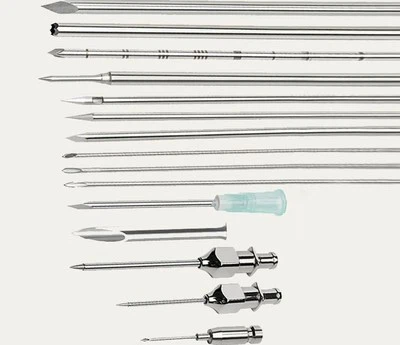
Cervical cancer prognosis is closely correlated with FIGO staging. Early-stage lesions confined to the cervix achieve excellent outcomes with conventional intracavitary brachytherapy plus external beam radiotherapy. Nevertheless, locally advanced disease (Stage IIB–IVA, especially tumors >4 cm) and post-treatment central recurrence lead to exponentially increased therapeutic difficulty. These refractory tumors are characterized by massive volume, irregular morphology, extensive parametrial infiltration and pelvic wall invasion. Under such clinical dilemmas, Interstitial Brachytherapy (ISBT) represented by interstitial needles acts as a strategic breakthrough weapon to reverse treatment deadlocks and secure curative chances.
I. Core Bottlenecks of Conventional Intracavitary Brachytherapy for Refractory Lesions
1. Mismatch Between Dose Distribution and Irregular Targets: Standard intracavitary dose presents a pear-shaped or elliptical gradient centered on the uterine tandem. Eccentric invasive tumors often exhibit crab-like lateral parametrial extension, where conventional dose coverage fails to reach peripheral margins. Insufficient peripheral irradiation becomes a major cause of local recurrence.
2. Organ-at-Risk Dose Limitation: Forced dose escalation of external beam or intracavitary irradiation inevitably exceeds the radiation tolerance of adjacent bladder and rectum (rectal D2cc < 65–70 Gy; bladder D2cc < 80–90 Gy), inducing irreversible radiation injuries such as ulceration, hemorrhage and fistula formation. Treatment falls into a paradox: insufficient tumor dose escalation versus unavoidable normal tissue damage.
II. Breakthrough Logic of Interstitial Needles: Redefining the Correlation Between Target Volume and Dosimetry
The core advantage of interstitial technology lies in reconstructing the spatial topological relationship among radiation sources, tumor targets and critical organs.
1. Dose Construction: From Central Outward Attenuation to Multi-Point Conformal Coverage
- Intracavitary brachytherapy: Radiation sources are confined to the uterine cavity and vagina, with dose gradually decaying from the center to the periphery, leaving persistent low-dose regions in eccentric tumor sides.
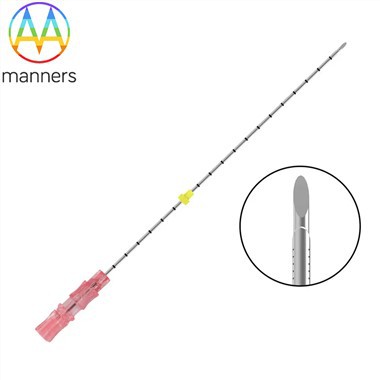
- Interstitial brachytherapy: Multiple needles implanted deep inside and at tumor margins establish distributed miniature radiation bases. Treatment planning systems flexibly adjust the dwell time and output of each source dwell point, assembling mosaic-like highly conformal, uniform dose fields with intensified marginal coverage to resolve parametrial invasion and eccentric mass challenges.
2. Expanded Therapeutic Window: Tumor Dose Escalation with Normal Tissue Sparing
This represents the most sophisticated clinical value of interstitial needles. High-dose regions are tightly constrained within tumor boundaries with steeper peripheral dose fall-off gradients. In comparison, pure intracavitary irradiation requires larger high-dose volumes to cover equivalent tumor ranges, inevitably increasing bladder and rectal exposure.
- Quantitative Example: For Stage IIIB cervical cancer with right parametrial invasion, combined tandem and right interstitial needle implantation easily achieves HR-CTV D90 ≥ 85 Gy, while controlling rectal D2cc < 65 Gy and bladder D2cc < 80 Gy - an unattainable target for single intracavitary treatment. Interstitial needles simultaneously optimize the dose-volume curve for malignant targets and normal organs, significantly broadening the safe therapeutic window.
III. Decisive Value in Recurrent Cervical Cancer Salvage Treatment
Central pelvic recurrent cervical cancer faces extremely limited therapeutic options. Repeated radical surgery requires highly invasive pelvic exenteration with severely impaired quality of life, while re-irradiation with external beam therapy is restricted by cumulative organ tolerance dose.
- Core Salvage Modality: Interstitial brachytherapy serves as the only feasible curative dose delivery approach. Precise image-guided needle implantation into recurrent lesions minimizes re-irradiation exposure to previously irradiated intestines and urinary organs. Ultra-local high-dose irradiation realizes long-term tumor control or radical cure without destructive surgery.
- Intraoperative Combined Application: For isolated resectable recurrent lesions, intraoperative interstitial needle placement by surgical teams enables perfect integration of cytoreductive surgery and precise brachytherapy.
IV. Clinical Decision-Making and Technical Threshold: High-Precision Multidisciplinary Craftsmanship
Interstitial intervention for refractory cervical cancer imposes stringent requirements on medical teams:
1. Accurate Target Delineation: High-resolution MRI (T2-weighted sequence) is mandatory to define GTV and HR-CTV as the fundamental navigation basis for needle placement.
2. Multidisciplinary Collaboration: Seamless cooperation among radiation oncologists, medical physicists, radiologists, anesthesiologists and nursing staff.
3. Advanced Implantation Proficiency: Profound pelvic anatomical mastery, real-time ultrasound/CT navigation, vascular avoidance and stable indwelling technique.
4. Inverse Plan Optimization Capability: Physicists customize individualized conformal dose distribution leveraging the flexible geometric advantages of multi-needle arrays.
Conclusion
For locally advanced and recurrent cervical cancer, interstitial needles have evolved from optional adjuvants to indispensable core therapeutic tools. By restructuring radiation source geometry, they fundamentally resolve the contradiction between tumor dose escalation and normal tissue protection, elevating the precision and clinical sophistication of radiotherapy to new heights. Representing the cutting-edge capability of high-level radiation oncology centers, individualized image-guided interstitial brachytherapy directly determines long-term survival and quality of life for complex cases. This technological advancement embodies a fundamental therapeutic philosophy upgrade: from passive adaptation to anatomical limitations to active dose remodeling for refractory tumor eradication.