One Second Determines Life Or Death: How The Intuitive Design Of IO Needles Lowers The Skill Barrier
Apr 12, 2026
One Second Determines Life or Death: How the "Intuitive" Design of IO Needles Lowers the Skill Barrier
Introduction: Certainty in Shaking Hands
At the scene of a cardiac arrest emergency, healthcare workers' hands often tremble; sweat blurs their goggles, and gloves are soaked with blood. Facing this extreme ergonomic dilemma, how can we ensure that even the most junior nurse achieves first-attempt success? This is not merely a medical issue but an industrial design challenge.
I. Historical Tracing: The Evolution from "Hammer Strikes" to "Pistol Grip"
Reviewing IO procedures from the last century, physicians relied on bone hammers to repeatedly strike the needle hub, judging needle tip entry by "feel." This method was not only laborious but also prone to needle bending due to uneven striking force. With the advent of products like EZ-IO, pistol-grip handling and pneumatic drivers became mainstream, yet the needle body structure itself remained unoptimized. Manners is dedicated to making the needle body itself a "guide device."
II. Principle Analysis: Helical Flutes and Haptic Feedback
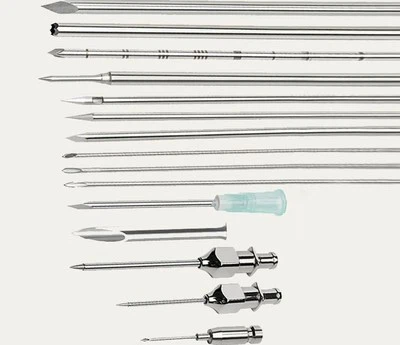
Why are precision helical flutes designed on the outer surface of IO needles?
This utilizes principles of tribology and haptic feedback. When切入 (cutting into) the bone cortex, the spiral flutes "bite" into the bone like wood screws, providing powerful axial feeding force and reducing the downward pressure required from the clinician's hand. More importantly, the moment the tip breaks through the cortex into the medullary cavity, the resistance torque plummets. This tactile sensation-known as "Loss of Resistance"-transmits through the needle body to the doctor, providing a clear breakthrough feel similar to lumbar puncture, drastically increasing first-pass success rates.
III. Standardization: ISO 7864 and Needle Tip Geometry
Standardization is required to regulate operational norms.
ISO 7864: "Hypodermic needles for medical use - Requirements and test methods."Although primarily for subcutaneous injection needles, its testing methodology for needle tip sharpness (penetration force) is adopted and adapted.
Penetration Force: Manners strictly controls the penetration force between 0.5 N and 1.0 N. This ensures the force required is neither so high as to cause dangerous needle slippage nor so low that it cannot penetrate dense adult cortical bone.
IV. Application Scenarios: Pre-hospital Emergency and Disaster Response
Ambulance Environment: Vehicles are bumpy, space is cramped, and large equipment is unusable. Ergonomically designed short, lightweight IO needles allow paramedics to operate effectively from highly unstable positions.
Neonatal Intensive Care (NICU): Infant bones are extremely soft; excessive pressure can damage the epiphyseal plate (growth plate). The precise haptic feedback design allows physicians to perform punctures with minimal force, protecting the infant's developing skeleton.
Conclusion
The best emergency tool is one that can be used instinctively amidst chaos. The design of the IO needle must simplify the complex process of bone drilling into an intuitive "rotate-and-breakthrough" action.