The High-Pressure Storm in The Medullary Cavity: How Do IO Needles Tame Hundredfold Atmospheric Pressures?
Apr 12, 2026
The "High-Pressure Storm" in the Medullary Cavity: How Do IO Needles Tame Hundredfold Atmospheric Pressures?
Introduction: When Infusion Speed Exceeds Physiological Limits
In the rescue of severe traumatic shock, medical staff often need to push infusion speeds to physiological extremes-as high as 1000 mL/min. This is equivalent to creating a "high-pressure storm" within the confined, minuscule space of the bone marrow cavity. A core engineering question arises: How can we prevent fluid turbulence, cavitation, or needle vibration under such high pressure, thereby protecting the delicate bone marrow sinusoids?
I. Historical Tracing: The Cognitive Shift from "Bone Drill" to "Fluid Conduit"
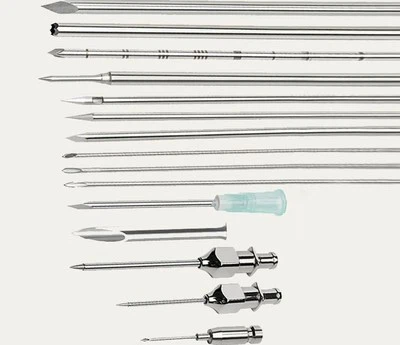
Early IO needle designs were crude, often borrowing directly from orthopedic drills, focusing solely on penetrating bone while completely ignoring fluid dynamics. It was not until the 1990s, with the application of fluid mechanics in microfluidic chips, that engineers realized the IO needle is not just a "drill" but a "conduit." Designing low-resistance, high-flow lumens became the core of next-generation IO needle R&D.
II. Principle Analysis: Laminar Flow Design and Critical Reynolds Number (Re)
Why does Manners' IO needle adopt a specific internal taper design?
According to the Hagen-Poiseuille equation, flow rate is proportional to the fourth power of the radius. To achieve ultra-high flow within a slender needle, Laminar Flow must be maintained. Through Computational Fluid Dynamics (CFD) simulations, we optimized the geometry of the needle tip outlet, controlling the flow channel's critical Reynolds number at an extremely low level. This prevents turbulent shear forces under high pressure from causing mechanical damage to hematopoietic stem cells.
III. Standardization: ISO 8536 and Flow Coefficient (Cv Value)
High-pressure infusion must follow established standards.
ISO 8536-4: While "Infusion equipment for medical use - Part 4: Infusion sets for single use, light-protected"primarily targets PVC tubing, its testing standards for flow smoothness are borrowed and applied.
Flow Coefficient (Cv Value): Manners conducts precision fluid testing to ensure the Cv value deviation of each IO needle remains below 2% under constant pressure (e.g., 300 psi). This ensures that in the emergency field, regardless of how many needles are changed, the pump's feedback pressure remains constant, eliminating overpressure injuries caused by flow instability.
IV. Application Scenarios: Major Hemorrhage and Hypovolemic Shock
Combat Casualty Care: On the battlefield, soldiers often lack peripheral venous access and face severe bleeding. IO needles must establish access within seconds and infuse plasma substitutes at extreme velocities. The streamlined tip design ensures that high-speed flushing does not cause hemolysis (red blood cell rupture) due to turbulence.
Disaster Medicine Rescue: In earthquakes or collapse accidents, crush injuries cause peripheral vascular collapse in numerous victims. High-pressure, stable-flow IO needles are the only means to rapidly replenish fluids and maintain blood pressure.
Conclusion
The bone marrow cavity is not an ordinary blood vessel. The fluidic design of the IO needle must maintain gentle laminar flow even under extreme high pressure-representing the ultimate clinical application of Newtonian fluid mechanics.