Minimally Invasive Surgery Through The Cortex: How Do IO Needles Protect The Bone Marrow Microenvironment?
Apr 12, 2026
"Minimally Invasive Surgery" Through the Cortex: How Do IO Needles Protect the Bone Marrow Microenvironment?
Introduction: The Forgotten Bone Marrow Ecosystem
For a long time, IO needles have been viewed as a "destructive" invasive tool. The focus has been solely on whether the drug was successfully administered, with little attention paid to the damage inflicted on the bone marrow microenvironment along the puncture path. An overlooked fact is that rough penetration can cause endosteal tearing, bone marrow fat embolism, and even secondary osteonecrosis. How can we achieve a truly "minimally invasive" intraosseous access?
I. Historical Tracing: The Technical Regression from "Reamers" to "Sharp Dissection"
Early IO needles prioritized stability, resulting in extremely large gauges (>14G) that caused massive trauma to the bone. With the rise of minimally invasive surgery (MIS) concepts, engineers began to reflect: Can we treat the bone cortex as delicately as an ophthalmic scalpel? This philosophy drove modern IO needles toward finer gauges (16G–18G) with sharper cutting edges.
II. Principle Analysis: Cutting Edge Geometry and Stress Concentration
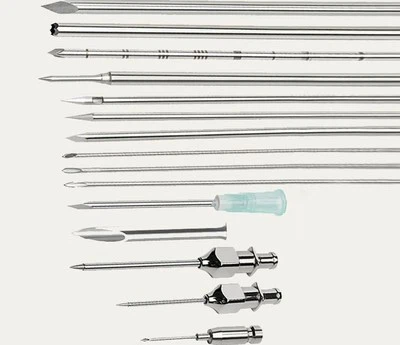
Why does Manners employ a tri-bevel (three-edge) cutting design instead of a traditional bevel?
According to Fracture Mechanics, a sharp cutting edge generates a stress concentration effect, creating immense pressure at a minimal contact point. This allows the needle to "incise" trabecular bone like a scalpel rather than "blast" through it like a punch. This design minimizes the extent of bone fissures and microfractures, protecting the rich vascular sinusoids within the marrow cavity.
III. Standardization: ASTM F543 and Biocompatibility

ASTM F543: "Standard Specifications and Test Methods for Metallic Bone Plates, Bone Screws, and Other Metallic Orthopedic Fixation Devices."Although primarily for implants, its testing logic for pull-out strength and fatigue resistance is borrowed and adapted.
Cytotoxicity (ISO 10993-5): As temporary implants, IO needles must be guaranteed non-cytotoxic. During production, we utilize strict ultrasonic cleaning and deionized water rinsing to ensure no cutting oil residue remains, preventing the induction of osteomyelitis.
IV. Application Scenarios: Hematopoietic Stem Cell Harvesting and Bone Metastasis Treatment
Bone Marrow Biopsy and Sampling: When extracting bone marrow fluid for genetic testing or chromosomal analysis, high-precision tips ensure the sample is free of bone grit and that cell morphology is not destroyed by mechanical shearing forces.
Intraosseous Chemotherapy: For patients with bone metastases requiring long-term, repeated IO infusions, the minimally invasive puncture method reduces local bone destruction and lowers the risk of pathological fractures.
Conclusion
Penetrating bone should not equate to destruction. The minimally invasive design of the IO needle reflects respect for this vital mineralized tissue, safeguarding the hematopoietic ecology while establishing a life-saving access route.