Tuohy Epidural Needle + Manufacturer: Professional Manufacturer's Strategic Positioning And Market Competitiveness Construction
Apr 21, 2026
Tuohy epidural needle + Manufacturer: Professional Manufacturer's Strategic Positioning and Market Competitiveness Construction
Tuohy, a professional manufacturer of epidural needles, holds a unique position in the global medical device market. Its strategic choices, capacity building, and resource allocation directly influence the enterprise's competitive position and development trajectory. In an industry environment characterized by rapid technological evolution, intensified competition, and increased regulatory requirements, professional manufacturers need to establish a sustainable leadership position in the market by clearly defining their strategic positioning and leveraging differentiated competitive advantages in specific market segments.
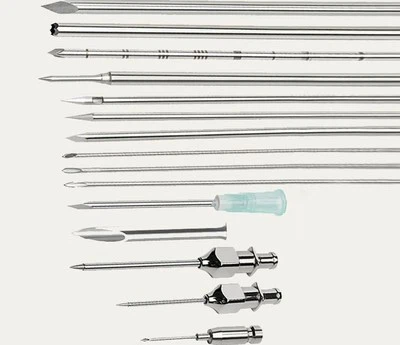
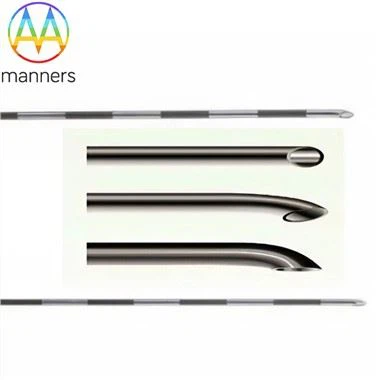
Specialization focus is Tuohy's core strategic choice for the manufacturer of epidural needles. Unlike large comprehensive medical device companies, specialized manufacturers typically opt for a deep rather than broad market coverage strategy, concentrating on the specific product category of Tuohy epidural needles, establishing professional advantages in one or more sub-sectors such as epidural anesthesia, pain management, and neuro-intervention. This focused strategy enables the enterprise to concentrate its R&D resources, deeply understand specific clinical needs, quickly respond to market changes, and form technical barriers and brand recognition. The needle specification range is from 25G to 14G, including ultra-long needles customized for obese patients and other customized sizes [citation: provided by the user]. This diverse product line meets different clinical needs, applicable to both novice and experienced injection physicians [citation: provided by the user].
The ability to innovate technologically is the core competitiveness source for professional manufacturers. The Tuohy epidural needle technology involves knowledge from multiple disciplines such as materials science, precision processing, anesthesiology, and pain medicine, and requires continuous investment in research and technological accumulation. Leading manufacturers have established advantages in several key technical areas: material innovation involves developing new alloys and coatings to enhance the strength, corrosion resistance, and biocompatibility of the needles; design optimization uses computational fluid dynamics and finite element analysis to improve the mechanical properties and puncture characteristics of the needles; manufacturing processes adopt advanced technologies such as multi-axis CNC machining, laser cutting, and electrolytic polishing to increase product accuracy and consistency; intelligent integration involves developing intelligent Tuohy needles that integrate sensors and feedback systems to enhance puncture safety and success rates. These technological innovations not only improve product performance but also form intellectual property barriers to protect the enterprise's market position.
The product portfolio strategy reflects the depth and breadth of market coverage. Professional manufacturers usually offer a complete product line, covering different specifications, lengths, and cutting-edge designs of Tuohy epidural needles, to meet diverse clinical needs. The basic product line is designed for routine applications, providing reliability and cost-effectiveness; the high-end product line integrates advanced functions to meet complex puncture requirements; customized services provide personalized solutions based on the specific requirements of hospitals or doctors. This multi-level product portfolio enables the enterprise to serve different customer groups, enhancing market coverage and customer loyalty. The wide range of application areas - from epidural anesthesia, combined spinal-epidural anesthesia to chronic pain management, and neurointerventional treatment, etc. [citation: provided by the user] - provides a natural extension path for product line expansion.
The quality control system is the foundation for professional manufacturers to gain market trust. The Tuohy epidural needle, as a type 2 or type 3 medical device directly used in the central nervous system, has extremely important quality and safety requirements. Leading manufacturers establish a comprehensive quality management system that covers the entire process from raw material procurement to finished product manufacturing. High-quality materials ensure that all items on the material list have material certificates [citation: provided by the user]; precise manufacturing guarantees an accuracy of ≤ ±0.01mm [citation: provided by the user]; good quality ensures no burrs and a smooth inner edge [citation: provided by the user]; thorough cleaning includes electrolytic polishing and ultrasonic cleaning [citation: provided by the user]. International certifications such as ISO 13485, FDA 510(k), and CE mark are not only requirements for market entry but also reflect the quality commitment.
The market entry and expansion strategies need to balance both depth and speed. Professional manufacturers usually adopt a gradual market entry strategy: first, establish a foundation in the familiar domestic market, accumulate clinical evidence and build brand reputation; then enter regional markets through distributors or direct sales; finally, enter the global market through strategic cooperation or mergers and acquisitions. At different market stages, enterprises need to adjust their market strategies: in the early stage, focus on clinical education and doctor training, and establish an expert network; in the growth stage, expand sales coverage and increase market penetration rate; in the mature stage, improve customer loyalty through product innovation and service value-added. The characteristics of regional markets determine specific strategies: the North American market values clinical evidence and insurance coverage; the European market focuses on technological advancement and environmental standards; the Asian market emphasizes cost-effectiveness and local support.
Supply chain management capabilities affect an enterprise's cost structure and market response speed. The production of Tuohy epidural needles involves various raw materials such as special metals, polymer materials, and packaging materials, making the supply chain management complex. Leading manufacturers optimize the supply chain through several strategies: diversifying suppliers to reduce the risk of a single source; long-term cooperation agreements to stabilize prices and supply; vertical integration of key component production to enhance control; inventory management to balance supply security and financial efficiency; and digital supply chain to improve transparency and response speed. Global supply chain fluctuations and changes in trade policies have made supply chain resilience an important source of competitive advantage.
Clinical support and services are an important means for professional manufacturers to differentiate themselves in the market. The effective use of Tuohy epidural needles requires professional knowledge and operational skills. Manufacturers provide systematic clinical support to help doctors master the techniques: training programs cover comprehensive contents such as basic theory, operational skills, and complication handling; the clinical expert network offers guidance on puncture and answers to difficult questions; technical hotlines and online support promptly solve usage problems; clinical research cooperation generates real-world evidence to support product improvement and market promotion. This deep clinical collaboration not only enhances product acceptance but also builds long-term customer relationships and creates competitive barriers.
In the face of industry challenges, professional manufacturers need to adopt multi-dimensional strategies. The rapid update of technology requires continuous investment in research and development. Enterprises need to balance short-term product improvements with long-term technological breakthroughs. The intensified market competition demands differentiated positioning. Enterprises should avoid price competition based on homogeneity and shift to value-based competition. Regulatory requirements for enhanced compliance increase the cost of compliance, and enterprises need to establish a strong regulatory affairs capability. Cost pressure requires optimizing operational efficiency. Enterprises can control costs through automation, lean production, and supply chain optimization. At the same time, enterprises need to pay attention to industry trends, such as the popularization of disposable products, the integration of intelligent technologies, and the requirements for sustainable development, and make early preparations to respond to changes.
In the Chinese market environment, professional manufacturers are confronted with unique opportunities and challenges. Policy support for the innovation of domestic medical devices and import substitution provides domestic enterprises with development space; the promotion of hierarchical medical care has popularized epidural anesthesia technology in grassroots hospitals, expanding the market capacity; the reform of medical insurance payment affects product pricing and market access; the diverse demands of patients require product differentiation and personalized services. Domestic manufacturers can break through foreign patent barriers through technological innovation, compete in the mid-to-low-end market through cost advantages, establish customer relationships through local services, and gradually achieve import substitution and participate in international competition.
The future development strategy may encompass several directions. Technological leadership is achieved through continuous research and development to maintain the advancement of products, exploring cutting-edge fields such as artificial intelligence, robotics, and nanotechnology; Market expansion involves entering new application areas and geographical markets, such as pediatric anesthesia and elderly pain treatment in emerging fields; Cooperative innovation involves collaborating with research institutions, clinical hospitals, and technology companies to accelerate technology transformation and product innovation; Digital transformation utilizes data analysis and artificial intelligence to optimize product design, production processes, and market strategies; Sustainable development focuses on environmental and social responsibility, developing green products and establishing ethical supply chains.
Corporate culture and organizational capabilities form the foundation of strategic execution. Tuohy's epidural needle manufacturer needs to cultivate an innovative culture, encourage technological exploration and risk-taking; establish a learning organization to quickly adapt to market changes; cultivate interdisciplinary teams to integrate knowledge from various fields such as engineering, medicine, and marketing; establish agile processes to shorten the product development cycle; and cultivate a global perspective to understand different market demands. These organizational capabilities enable the enterprise to effectively implement strategies and maintain competitiveness in a changing market.
Overall, Tuohy, a professional manufacturer of epidural needles, has established a sustainable competitive advantage in the highly competitive medical device market through strategies such as specialized focus, technological innovation, excellent quality, and close customer relationships. In the face of industry changes, the company needs to maintain strategic determination, continuously innovate, optimize operations, cultivate capabilities, contribute to the global medical and health cause, and achieve commercial success. With the development of precision medicine and minimally invasive treatment, Tuohy, the professional manufacturer of epidural needles, will play a more important role in the innovation of regional anesthesia and pain management.