Innovation Drives The Future: The Evolution, Challenges And Development Trends Of Spinal Puncture Needle Technology
Apr 22, 2026
Innovation drives the future: The evolution, challenges and development trends of spinal puncture needle technology
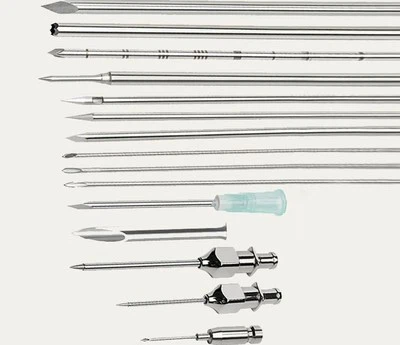
The history of spinal puncture needles is a story of continuous innovation aimed at achieving less trauma, higher precision, and greater safety. From the early bulky cutting needles to the current fine blunt-tipped pencil-point needles, each leap in technology has been accompanied by a reduction in clinical complications and an improvement in patient experience. Looking to the future, driven by the upgrading of clinical needs and the integration of cutting-edge technologies, the technology of spinal puncture needles is standing at a new turning point of change.
The current cutting-edge direction of technological evolution:
1. Ultra-minimally invasive and new material application: The trend is to continue developing towards smaller diameters (such as 27G, 29G), aiming to minimize tissue damage and post-operative headache risks. However, this requires materials with higher strength to prevent bending, and processing precision also needs to be simultaneously improved. The exploration of new alloy materials (such as highly elastic nickel-titanium alloys) and composite materials will provide the possibility of manufacturing "as thin as a hair yet unbreakable" puncture needles. Biodegradable material-made puncture needles are also in concept research, and they are expected to safely degrade in the body after fulfilling their mission.
2. Intelligence and sensor integration: Future puncture needles may no longer be passive tools for "blind puncture". Integrating micro-fiber pressure sensors at the needle tip can display the resistance changes of different tissue layers (skin, ligament, dura mater) encountered during puncture in real time and objectively, and provide clear audio-visual signals to indicate the "feeling of failure", greatly reducing the reliance on the operator's sense of touch and improving the success rate and overall safety of novice operators. In addition, integrating biological sensors to analyze the components of trace tissue fluid or cerebrospinal fluid in real time can achieve "diagnosis during puncture".
3. Precise navigation and robot-assisted: Deep integration of puncture needles with real-time navigation systems such as ultrasound, CT or MRI is the standard configuration for the future. Three-dimensional planning of the puncture path before the operation, tracking the needle tip position through optical or electromagnetic positioning during the operation, and real-time fusion display with the patient's images to achieve "millimeter-level" precise puncture, especially suitable for difficult cases such as obesity and spinal deformities. Robot-assisted puncture systems can filter out hand tremors and execute the preset path with extremely high stability and repeatability. They have already been applied in research and some clinical centers.
4. Functional design expansion: Besides traditional aspiration and injection, puncture needles can be designed as miniature interventional channels. For example, a cannula needle with a working channel designed for minimally invasive spinal endoscopy surgery, or a radiofrequency/laser transmission needle for targeted nerve ablation, achieving "multiple uses with one needle".
The main challenges faced by the industry:
1. Conflict between technological cost and accessibility: The development and production of advanced technologies (such as intelligent needles and navigation robots) are costly, which may lead to skyrocketing product prices. In the context of global uneven medical resources, this could exacerbate the "technology gap". How to enhance technology while controlling costs is a common challenge faced by global manufacturers.
2. Training of doctors and popularization of technology: New technologies often imply new learning curves. Intelligent navigation and robot-assisted systems require doctors to master both traditional anatomical knowledge and new human-computer interaction skills. Establishing a standardized and efficient training system is the key to whether new technologies can widely benefit patients.
3. Regulation and lagging standards: For integrated sensors and "smart" puncture needles with active feedback functions, the existing medical device classification and registration review framework may no longer be fully applicable. Regulatory agencies need to keep up with the times and establish assessment standards and approval paths that are compatible with the risks of new technologies.
4. One-time use and environmental pressure: To ensure absolute sterility and prevent cross-infection, high-end spinal puncture needles are generally used once and then discarded. This generates a large amount of medical plastic and metal waste. Developing environmentally friendly materials that are easy to recycle and degrade, or exploring designs that allow for the reuse of advanced components while ensuring safety, is a sustainable development issue that the industry must address.
Prospects for Future Development Trends:
The future of spinal puncture will move towards an era of personalization, precision and intelligence. By combining the CT/MRI data of individual patients, AI algorithms can pre-plan the optimal puncture path and simulate the operation. During the procedure, the puncture needle made of intelligent materials and integrated with multi-modal sensors, under the assistance of augmented reality navigation or robots, performs the surgery almost perfectly. The operation process is comprehensively quantified and the risk of complications is predicted in advance. This is not only an innovation in tools, but also an upgrade of the entire diagnosis and treatment paradigm. Despite numerous challenges, technological innovations centered on patient safety and efficacy will continue to drive this classic medical device, the spinal puncture needle, to exhibit greater vitality in the new era.