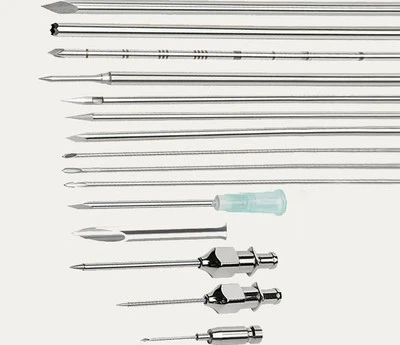
Tuohy Spinal Needle + Manufacturer: Industry Trends And Future Challenges Outlook
Apr 21, 2026
Tuohy Spinal Needle + Manufacturer: Industry Trends and Future Challenges Outlook
The Tuohy epidural needle industry is undergoing a profound transformation, influenced by various factors such as technological innovation, policy adjustments, changes in market demand, and evolution of the competitive landscape. From a global perspective to regional markets, from technological advancement to clinical applications, the industry is facing unprecedented opportunities and challenges. Its future development will exhibit distinct trends such as intelligence, personalization, minimally invasive procedures, and integration.
Technological innovation is the core driving force for industry development. Multiple technological directions are reshaping the landscape of the Tuohy epidural needle industry. Intelligent puncture systems integrate pressure sensors, position sensors, and imaging guidance, providing real-time feedback on puncture depth and resistance changes, achieving "intelligent puncture". This technology not only enhances puncture safety, reduces the risk of epidural puncture, but also reduces the reliance on the operator's experience. The epidural guidance system helps guide the needle placement by providing real-time imaging, auditory feedback, and other advanced tools to address the challenges of traditional technologies. The global epidural guidance system market is expected to be valued at 120 million US dollars in 2024. This market is likely to exceed 294 million US dollars in 2031, with a compound annual growth rate of 13.7% during the forecast period.
The navigation and imaging fusion technology integrates the Tuohy needle with ultrasound, CT, MRI and other imaging equipment, enabling real-time guidance and precise positioning. It is particularly suitable for punctures in complex anatomical structures and obese patients. The bone tissue contrast of Accuro combined with AI-supported landmark recognition provides an unprecedented level of accuracy for anesthesiologists when placing nerve block. Automatic identification and depth measurement: Accuro automatically identifies the epidural space, which is a key target for successful anesthesia delivery. It also measures the depth of this space, reducing guesswork and allowing for more precise needle selection based on the patient's anatomical structure. This is especially helpful for patients with high BMI.
Advances in materials science have led to improvements in product performance. New composite materials such as nano-coating technology enhance the surface properties of needles, reducing tissue friction and puncture resistance; shape memory alloys enable the needle body to adapt to complex anatomical paths; biodegradable materials have led to the development of absorbable epidural needles, avoiding the risk of reinsertion. These material innovations not only enhance product performance but also expand clinical application scenarios. High-quality materials guarantee product performance, and all items in the bill of materials have material certificates [citation: provided by the user]. 304 stainless steel was selected as the material for the Tuohy epidural needle due to its metallic luster, hardness, ease of cleaning, and resistance to damage, scratches, and corrosion by acids and alkalis.
The trend of personalized medicine drives the development of product customization. 3D printing technology based on patients' CT, MRI and other imaging data can produce customized Tuohy needles that perfectly match the individual's anatomical structure; artificial intelligence algorithms analyze patients' data and recommend the optimal needle parameters and puncture path; advancements in genomics and proteomics make treatment more precise, and select the most suitable anesthesia plan for specific disease types. This personalized treatment model improves treatment effectiveness, reduces complications, and represents the development direction of precision medicine.
Minimally invasive and non-invasive approaches are important development trends. The design of Tuohy needles is evolving towards smaller specifications and more flexible steering, reducing tissue damage and patient discomfort; ultrasound-guided punctures reduce the risk of blind punctures and improve success rates; non-invasive nerve monitoring technology assesses the anesthetic effect through physiological signals and is currently in the research stage. These technologies make anesthesia and pain management more minimally invasive or even non-invasive, improving patient acceptance and quality of life.
The evolution of the market landscape features the coexistence of centralization and specialization. International medical device giants, through mergers and acquisitions, have integrated to create complete solutions ranging from puncture needles to anesthetics, forming a "devices + drugs" closed-loop ecosystem; specialized Tuohy needle manufacturers have focused on specific fields, establishing professional advantages in applications such as obstetric anesthesia, chronic pain management, and neurointervention; emerging local enterprises in the market have gradually expanded their market share by leveraging cost advantages and local services. This diversified competitive landscape drives technological innovation and product differentiation.
Regulatory environment changes have a profound impact on the industry. Countries are becoming increasingly strict in regulating medical devices. Institutions such as the US FDA, the EU MDR, and the Chinese NMPA have strengthened pre-market approval and post-market supervision; the requirements for the unique device identification system have enhanced product traceability; clinical evidence requirements have become more stringent, and real-world data is needed to support the safety and effectiveness of the products. These regulatory changes have increased market entry barriers and compliance costs, but they have also promoted industry standardization and improvement in product quality.
Medical economic factors are reshaping the industry's business model. The global pressure to control medical costs has led to a downward trend in product prices, and manufacturers need to optimize their cost structure while ensuring quality. The value-based medical concept emphasizes treatment outcomes and patient experience rather than just product prices. The pay-for-effectiveness model links treatment costs to clinical results, prompting manufacturers to focus on long-term efficacy and patient satisfaction. These changes require enterprises to transform from mere product suppliers to solution providers.
Sustainable development requires promoting the green transformation of industries. Stringent environmental regulations call for reducing energy consumption and waste emissions during production; the concept of circular economy drives the use of recyclable materials and packaging; carbon footprint calculation and carbon neutrality commitment have become important components of corporate social responsibility. Tuohy, an epidural needle manufacturer, needs to balance clinical performance with environmental impact and develop more sustainable products and processes.
There are challenges in talent cultivation and knowledge transmission. Tuohy's research, manufacturing, and application require multidisciplinary knowledge, including materials science, precision processing, anesthesiology, pain medicine, etc.; the retirement of experienced engineers and doctors leads to the loss of knowledge; new technologies such as artificial intelligence and robotics require new skill combinations. Enterprises need to establish a sustainable talent cultivation system through school-enterprise cooperation, on-the-job training, and knowledge management systems.
The Chinese market exhibits unique development dynamics. The domestic substitution policy has driven domestic manufacturers to enhance technological innovation and increase their market share; the tiered medical treatment system has popularized epidural anesthesia technology in grassroots hospitals; the reform of medical insurance payment has influenced product pricing and market access; the aging population has increased the demand for chronic pain treatment. These factors jointly drive the rapid growth of the Tuohy epidural needle market in China. Domestic enterprises have gradually achieved import substitution and participated in international competition through technological innovation and cost advantages.
Challenges and opportunities coexist in the future. The rapid pace of technological updates requires continuous investment in research and development; intense market competition demands differentiated competitive strategies; strict regulatory requirements increase compliance costs; cost pressure calls for optimizing supply chains and production efficiency. At the same time, the burden of chronic pain diseases is increasing, leading to higher treatment demands; the preference for minimally invasive treatments drives market growth; improvements in healthcare in emerging markets create new opportunities; technological innovation opens up new application areas.
Industry consolidation may accelerate. Large enterprises acquire new technologies and market channels through mergers and acquisitions; small and medium-sized enterprises survive and develop through specialization; cross-border cooperation, such as the collaboration between medical equipment companies and technology companies, promotes digital transformation. This consolidation increases industry concentration, but it may also suppress the diversity of innovation, and a balance between economies of scale and innovation vitality needs to be achieved.
Ethics and social responsibility are becoming increasingly important. Data privacy protection is crucial in intelligent medical devices; health equity ensures that technology benefits all populations; environmental responsibility reduces the environmental impact of products throughout their lifecycle; patient safety is always the top priority. Tuohy's epidural needle manufacturer needs to pursue commercial success while also fulfilling corresponding ethical and social responsibilities.
Overall, the Tuohy epidural needle industry is at a critical juncture of technological upgrading, market restructuring, and regulatory changes. Professional manufacturers need to address multiple challenges and seize development opportunities. By continuously innovating, improving quality, and expanding the market, they can achieve sustainable development. With the deepening of precision medical and minimally invasive treatment concepts, Tuohy epidural needles and related technologies will continue to evolve, providing safer, more effective, and more personalized anesthesia and pain management options for global patients, and playing a more important role in the medical and health field.