The Silent Revolution Of Cleanliness: The Critical Role Of Ultrasonic Cleaning In The Manufacturing Of Single-Use High-End Medical Devices
Apr 18, 2026
The Silent Revolution of Cleanliness: The Critical Role of Ultrasonic Cleaning in the Manufacturing of Single-Use High-End Medical Devices
Core Product Terms: Ultrasonic Cleaning, Cleanroom ProcessingRepresentative Manufacturers: BD (Becton Dickinson), Johnson & Johnson (Ethicon), Shandong Weigao Group
Prior to the final packaging and sterilization of high-end medical devices including single-use puncture needles and trocars, any micron-level particulate contaminants, processing greases or biological residues are strictly unacceptable. Featuring high efficiency, non-contact and non-damaging properties, ultrasonic cleaning technology has become the ultimate solution to ensure medical devices meet "ultra-clean" standards.
I. Working Principle: Microscopic Implosion Based on Cavitation Effect
The core mechanism of ultrasonic cleaning is the cavitation effect. An ultrasonic cleaner converts high-frequency electrical energy (usually 20–40 kHz) into mechanical vibration via transducers, generating dense alternating pressure waves in the cleaning solution (mostly a mixture of deionized water and specialized cleaning agents).
During the negative-pressure phase of the pressure wave, numerous tiny vacuum cavities (cavitation bubbles) form instantaneously in the liquid. In the subsequent positive-pressure phase, these bubbles collapse and implode at an extremely high velocity. The moment of collapse produces localized high temperature (approximately 5000 K), high pressure (about 1000 atmospheres) and intense shock waves, which powerfully detach contaminants from complex surfaces, blind holes, threads and every hidden crevice of medical devices. The entire process is physical cleaning without mechanical friction or scrubbing, so it causes absolutely no damage to precision needle tips, sharp cutting edges or fragile insulating coatings.
II. Irreplaceability in Trocars Manufacturing
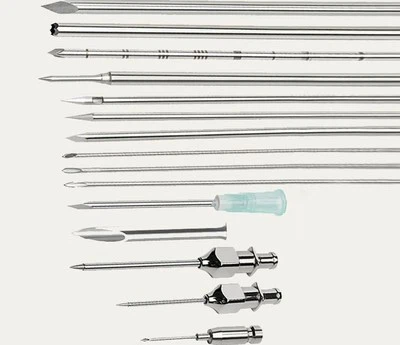
Single-use trocars feature sophisticated structures, typically assembled from stainless steel stylets, polymer cannulas, sealing valves and multiple connecting components. Contamination risks arise from multiple sources:
Processing residues: metal cutting oils, plastic release agents, metal chips;
Assembly contamination: glove powder, environmental particulates;
Human contact: skin oils introduced during final assembly and adjustment.
Traditional cleaning methods such as soaking and spraying cannot effectively clean the long internal channels of trocars, the complex cavities of sealing valves or gaps between connected parts. In contrast, cavitation bubbles generated by ultrasonic cleaning penetrate everywhere, achieving full-range, dead-angle-free cleanliness. BD and Johnson & Johnson have deployed multi-tank in-line fully automatic ultrasonic cleaning systems for their single-use laparoscopic trocar production lines, which perform rough cleaning, fine cleaning, rinsing and drying sequentially to reduce the bioburden of each product to an extremely low level before sterilization.
III. Process Control and Water Quality Requirements
Ultrasonic cleaning is not a simple "wash-and-go" procedure. Its effectiveness relies on a set of precise parameters:
Frequency selection: Low frequencies (20–30 kHz) create large cavitation bubbles with strong energy, suitable for removing large particles; high frequencies (above 40 kHz) produce small, dense bubbles with strong penetration, ideal for precision parts and micro-particles.
Cleaning solution management: Regular monitoring and replacement are required to prevent redeposition of contaminants. Cleaning agents must deliver excellent wetting, emulsifying and dispersing performance, and must be completely rinsed away without any chemical residues.
Water quality is critical: Rinsing must use ultrapure water with a resistivity as high as 18.2 MΩ·cm. Any ionic residues may compromise the device's biocompatibility or cause stains after sterilization.
To satisfy international market and domestic high-end demands, leading domestic manufacturers such as Shandong Weigao Group adopt high-standard ultrasonic cleaning processes for medical device cleaning lines in their cleanrooms, and have established rigorous process water systems and cleaning validation protocols.
IV. The Cornerstone of Quality and Safety
For single-use sterile medical devices, cleaning is a prerequisite for sterilization and one of the most critical steps in quality control. Incomplete cleaning may result in sterilization failure (organic matter shields microorganisms) or pyrogen reactions. With superior cleaning efficiency and controllable processes, ultrasonic cleaning has become a foundational technology to ensure patient safety and comply with strict quality regulations including ISO 13485 and FDA 21 CFR Part 820. It makes "single-use" not only a matter of convenience, but also a promise of reliable sterility assurance.