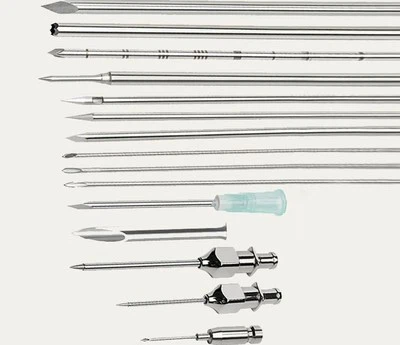
Simplifying Complex Clinical Challenges — How Tapered Shaver Blades Resolve Classic Dilemmas in Arthroscopic Surgery
Apr 29, 2026
Simplifying Complex Clinical Challenges - How Tapered Shaver Blades Resolve Classic Dilemmas in Arthroscopic Surgery
Abstract: Focusing on clinical practice, this article analyzes multiple typical and intractable arthroscopic surgical scenarios. It illustrates how arthroscopic tapered shaver blades convert complex open surgical challenges into predictable, controllable minimally invasive procedures through proprietary structural design, serving as critical instruments to address unmet clinical needs.
Main Text
The ultimate value of arthroscopy lies in resolving debilitating conditions and intractable clinical dilemmas. Numerous disorders that once required extensive open incisions and prolonged recovery can now be managed through keyhole-sized portals. In such procedures, tapered shaver blades act as the primary operative instrument and core functional executor for tackling surgical difficulties. They minimize macroscopic trauma via microscopic manipulation and break down intricate anatomical challenges into standardized, actionable surgical steps.
Clinical Challenge 1: Precise Meniscal Resection for Complex Tears While Preserving Intact Meniscal Tissue
Meniscal tears rank among the most prevalent sports-related injuries. The core treatment principle is maximum preservation of healthy meniscus, a vital shock-absorbing structure of the knee joint. For irreparable complex tears, partial meniscectomy is indicated: only unstable torn fragments are removed, and residual margins are contoured smoothly. Such manipulation must be completed within the extremely narrow space between the femur and tibial plateau.
- Limitations of Traditional Open Surgery: Requires large surgical incisions and patellar eversion. Although providing broad exposure, it causes severe tissue trauma and prevents refined contouring under natural joint tension.
- Solution Enabled by Tapered Shaver Blades: Specialized small-caliber tapered meniscal trimmers serve as the first choice. Their slender conical tips effortlessly penetrate tight joint spaces. Under magnified arthroscopic visualization, surgeons can clearly distinguish avulsed meniscal fragments from healthy fibrocartilage. Utilizing lateral cutting ports, surgeons refine unstable margins layer by layer, analogous to precise nail trimming, until a stable, smooth inclined transitional surface is formed. The tapered profile allows flexible angular adjustment in confined spaces and avoids iatrogenic damage to adjacent intact articular cartilage. The entire procedure delivers high precision and minimal invasion, maximally sustaining physiological meniscal function.
Clinical Challenge 2: Establishing a Clean, Vascularized Bone Bed for Rotator Cuff Repair Within the Narrow Subacromial Space
Rotator cuff repair is a routine shoulder arthroscopic procedure. A key determinant of surgical success is the preparation of a decorticated, vascularized bone bed at the humeral greater tuberosity to facilitate tendon healing. Nevertheless, the subacromial space is inherently constricted and filled with bursal and scar tissues.
- Limitations of Traditional Open Surgery: Associated with severe soft tissue trauma and deltoid muscle detachment, compromising postoperative rehabilitation.
- Solution Enabled by Tapered Shaver Blades: Firstly, full-radius tapered shavers efficiently resect subacromial bursa and fibrous scar tissue to optimize surgical exposure. Tapered burrs are then applied to precisely decorticate the cortical bone of the greater tuberosity, removing sclerotic bone and exposing bleeding cancellous bone for bone bed freshening, without injuring surrounding articular cartilage. The tapered burr enables accurate control of grinding range and depth to prevent excessive bone resection. This standardized process creates optimal conditions for suture anchor implantation and tendon suturing, laying a solid foundation for durable rotator cuff reconstruction.
Clinical Challenge 3: Management of Femoroacetabular Impingement (FAI) in the Deep, Neurovascular-Dense Hip Region
FAI correction requires resection of excessive bony overgrowth at the femoral head–neck junction for cam-type impingement and hypertrophic acetabular rims for pincer-type lesions. This deep anatomical region is surrounded by vital neurovascular structures including the sciatic nerve and femoral nerve, with extremely limited surgical access, demanding superior high-precision sculpting performance from surgical instruments.
- Limitations of Traditional Open Surgery: Necessitates extensive incisions and trochanteric osteotomy, resulting in massive trauma and elevated complication risks.
- Solution Enabled by Tapered Shaver Blades: Ultra-fine high-power tapered burrs function as specialized instruments for FAI osteoplasty. Their slim tapered configuration reaches deep bony protrusions through minimal anterolateral or anterior hip portals. Assisted by dynamic arthroscopic examination with hip traction, surgeons identify real-time impingement sites between bony overgrowth and the acetabulum. Bony hyperplasia is resected layer by layer with controlled grinding, restoring the physiological concave contour of the femoral head–neck junction and eliminating mechanical impingement. The tapered design ensures superior stability and maneuverability during high-speed deep-tissue operation, preventing unintended slippage and subsequent injury to cartilage or soft tissues.
Clinical Challenge 4: Maintaining Clear Visualization During Surgery in Highly Vascular Regions such as the Intercondylar Notch
Arthroscopic surgery relies on continuous fluid perfusion for joint distension and hemostatic irrigation. Persistent oozing often occurs in highly vascular anatomical regions even with tourniquet application, severely obscuring the surgical field.
- Hydrodynamic Advantages of Tapered Shaver Blades: Tapered shavers serve as auxiliary visualization-maintaining instruments. Optimized internal luminal channels and customized port geometries generate powerful localized negative pressure, functioning as an underwater suction system. While resecting hyperplastic synovium and lesional tissues, the blade instantly evacuates tissue debris and intraoperative hemorrhage, ensuring immediate clarity at the operative site. This simultaneous resection and debris clearance enables surgeons to establish a stable visual field in high-bleeding areas, significantly boosting surgical efficiency and intraoperative safety.
Conclusion
Arthroscopic tapered shaver blades are far beyond simple cutting tools; they are targeted problem-solvers for complex anatomical and pathological conditions. Optimized tapered geometries and diversified cutting edge designs transform invasive open surgical pathways into minimally invasive access routes targeting focal lesions. They convert standardized surgical intentions - including resection, contouring, grinding and debridement - into repeatable, quantifiable high-precision arthroscopic maneuvers. For common clinical obstacles including confined spaces, fragile soft tissues and obscured visualization, customized tapered blade variants deliver targeted solutions. Tapered shaving systems have elevated arthroscopy from an optional alternative to the gold-standard, safe and effective treatment for a wide spectrum of joint disorders. Mastering their application logic across diverse clinical scenarios is fundamental to proficient arthroscopic practice.