The Evolution Of Arthroscopic Surgery And The Core Mission Of Tapered Shaver Blades
Apr 29, 2026
From "Peeping" to "Precise Sculpting" - The Evolution of Arthroscopic Surgery and the Core Mission of Tapered Shaver Blades
Abstract: Starting from the developmental history of arthroscopy, this article elaborates on how it has evolved from a simple diagnostic tool into a sophisticated minimally invasive surgical platform. It focuses on analyzing the powered shaver system as the "tentacle" and "scalpel" of this platform, especially the design philosophy of tapered shaver blades, which serves as the core hardware support for realizing precision functional arthroscopic surgery and further defines the paradigm of modern arthroscopic procedures.
Main Text
The history of arthroscopy is an evolutionary journey centered on "vision", "access" and "control". Its original concept was simple and straightforward: to visualize the internal "black box" of the joint with minimal trauma. From the first proposal of the term "arthroscopy" by Nordentoft in 1912 to the arduous explorations of pioneers including Kenji Takagi and Masao Watanabe, early devices were primarily constrained by limitations in optics and illumination. The primitive arthroscope was more akin to a cumbersome monocular telescope, featuring a narrow field of view and dim yellow lighting. Merely completing intra-articular observation was a remarkable achievement, with therapeutic intervention entirely out of reach.
At this stage, the value of arthroscopy remained confined to diagnostics, acting as a critical supplement to indirect imaging modalities such as X-ray and early MRI. Surgeons could only examine the joint as if peering through frosted glass: able to identify the general outline of bony structures, yet unable to detect subtle lesions including synovial lesions, chondral damage, and minor tears of ligaments and menisci. Arthroscopy broke this barrier, enabling direct intra-articular visualization for the first time.
Nevertheless, the ultimate goal of clinical medicine is treatment. With direct visualization achieved, the demand for targeted intra-articular intervention became inevitable. This triggered the first qualitative leap of arthroscopic technology: transforming from a mere observational scope to a comprehensive surgical platform. Three collaborative core systems underpin this platform: the camera and video system as the "eyes", the perfusion system for intra-articular environmental maintenance, and the powered shaver system - the most dynamic component functioning as the surgeon's "hands".
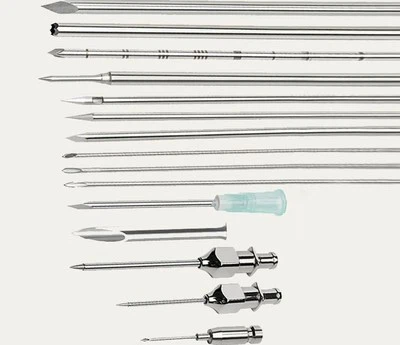
The introduction of the powered shaver system laid the foundation for arthroscopy to become a mainstream orthopedic surgical technique. Through tiny access ports of only 4 to 5 millimeters in diameter, surgeons are empowered to not only visualize joint lesions but also perform targeted palpation, cutting, shaving and burring. As the core functional component of the shaver system, various specialized blades have been continuously optimized. Among them, arthroscopy tapered shaver blades represent the pinnacle of structural design and stand out as the most versatile and widely adopted instrument in clinical practice.
The tapered configuration is no coincidental design choice, but a sophisticated response to joint anatomical characteristics and standardized surgical logic.
1. Optimal Adaptation to Anatomical Spaces
The joint cavity is not an open cavity, but a complex three-dimensional space crowded with delicate structures such as ligaments, cartilages and synovial folds. Key lesion areas - including the subacromial space, anterior ankle compartment, and periacetabular labral region - feature extremely narrow and confined gaps. Traditional cylindrical blades suffer from limited maneuverability and extensive blind spots in these tight spaces. The tapered conical design features a slender tip for easy penetration into narrow anatomical recesses, while the robust proximal shaft ensures structural stability and sufficient driving torque, striking a perfect balance between deep tissue access and stable surgical manipulation.
2. Hierarchical Precision in Tissue Resection
Arthroscopic surgery emphasizes refined reparative debridement rather than aggressive tissue removal. Intra-articular tissues present distinct structural differences: hypertrophic inflammatory synovium requires efficient suction and cutting, while frayed meniscal margins and worn articular cartilage demand smooth contouring to form stable transitional zones. Equipped with diversified cutting openings (serrated edges, sharp teeth, lateral cutting ports), tapered blades allow graded tissue management via differentiated regional functions. The slender tip enables pinpoint debridement and fine sculpting, and the mid-shaft delivers high-efficiency regional resection, achieving controlled, gradient treatment of lesions with varying textures and volumes.
3. Optimized Hydrodynamic Performance
Arthroscopic surgery relies on continuous fluid perfusion to maintain a clear surgical field, and tissue debris generated during resection severely compromises visualization. The tapered shaft structure optimizes intra-articular fluid hydrodynamics, enhances the Venturi effect at the cutting port, and strengthens local negative pressure. This facilitates efficient suction and evacuation of resected tissue debris out of the joint cavity, which is essential for maintaining instantaneous intraoperative clarity - an indispensable prerequisite for precise surgical operation.
Accordingly, the development and widespread application of tapered shaver blades marked a pivotal shift of arthroscopic surgery from feasible intervention to refined intervention. Beyond a simple structural upgrade of surgical instruments, it symbolizes the evolution of surgical philosophy: shifting from extensive lesion debridement to precise morphological and functional reconstruction with maximum preservation of normal physiological tissues. Serving as the surgeon's extended fingers and intelligent sculpting tools in the microscopic intra-articular environment, these blades replicate the fine hand-eye coordinated maneuvers of open surgery through mechatronic integration within millimeter-scale access ports.
Clinically, tapered shaver blades perform delicate meniscal contouring in the knee joint to facilitate subsequent suture repair; resect subacromial hyperplastic tissues in the shoulder to create sufficient space for rotator cuff reconstruction; and carefully debride labral lesions and impinging osteophytes in the hip joint. They are universally applied in almost all arthroscopic procedures. Though less high-profile than flagship implants such as suture buttons for ligament reconstruction or suture anchors, tapered shaver blades are the most frequently used intraoperative instruments throughout surgery, serving as the cornerstone for smooth surgical progression and favorable postoperative outcomes.
In summary, arthroscopy originated from the demand for direct intra-articular observation and was revolutionized by the advent of powered shaver systems. The iterative optimization of refined instruments represented by tapered shaver blades has further expanded the clinical boundaries of arthroscopy. Bridging historical technological exploration and modern clinical practice, it serves as an exemplary model of perfect integration between engineering innovation and unmet clinical needs.