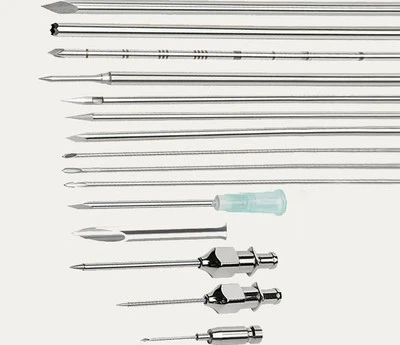
Crafted Precision Instruments — Decoding The Design Philosophy And Manufacturing Technology Of Tapered Shaver Blades
Apr 29, 2026
Crafted Precision Instruments - Decoding the Design Philosophy and Manufacturing Technology of Tapered Shaver Blades
Abstract: From the perspectives of engineering and material science, this paper deeply deconstructs the design logic and manufacturing barriers of arthroscopic tapered shaver blades. It explores geometric configuration design, metal material selection, surface treatment processes, power transmission efficiency and sterile barrier technology, revealing how sophisticated industrial manufacturing converts surgeons' operational intentions into accurate, atraumatic movements within the confined joint cavity.
Main Text
In arthroscopic surgery, surgeons visualize lesions via monitors and manipulate handheld devices manually. Their tactile perception and mechanical force are transmitted through elaborate electromechanical systems and ultimately executed by the tapered shaver blade penetrating into the joint. This centimeter-scale metallic component acts as the final execution terminal connecting the macroscopic operating environment and the microscopic intra-articular surgical field. Its performance directly determines intraoperative handling feel, operational efficiency and patient safety. Accordingly, its design philosophy and manufacturing craftsmanship embody profound cross-disciplinary engineering wisdom.
I. Geometric Design: Triangular Balance Among Efficiency, Structural Strength and Safety
1. Taper Angle and Flow Channel Design
The taper angle is the core geometric parameter. An overly gentle taper brings limited improvement in accessibility, while an excessively steep taper compromises structural rigidity and induces high-speed vibration. Optimized tapered design ensures smooth rigidity transition from the proximal shaft to the distal tip, delivering superior penetration in narrow anatomical spaces. Meanwhile, the internal hollow lumen adopts hydrodynamic optimization, which directly governs debris suction efficiency and anti-clogging performance. The refined flow channel reduces internal turbulence and ensures rapid, smooth debris evacuation, maintaining sustained clarity of the intraoperative visual field.
2. Port Configuration and Cutting Mechanism
The cutting window is the core functional area for tissue resection. Its size, shape and edge finishing define instrumental performance.
- Caliber: Large-bore designs enable rapid mass debridement of soft tissues such as synovium, while small-caliber variants are tailored for ultra-fine procedures including labral debridement.
- Shape: Circular, elliptical and lateral slot designs differentiate tissue contact areas and cutting trajectories for diverse surgical demands.
- Edge Type: Full-radius smooth edges, serrated edges and incising teeth form a complete functional spectrum ranging from blunt dissection and debridement to sharp transection. The consistency of edge sharpness, wear resistance and structural uniformity guarantees predictable and stable cutting performance.
II. Material Science and Heat Treatment Technology
1. Material Selection
High-end tapered shaver blades are commonly fabricated from high-performance stainless steel such as 440C and 17-4PH, or specialized medical alloys. Qualified materials must meet rigorous criteria:
- High Strength and Hardness: Resist centrifugal force and cutting resistance under high-speed rotation of thousands of revolutions per minute, especially during osseous grinding.
- Superior Wear Resistance: Sustain cutting sharpness after prolonged friction against cartilage, soft tissue and bone, reducing intraoperative instrument replacement frequency.
- Outstanding Corrosion Resistance: Withstand repeated cleaning, high-pressure steam sterilization, hydrogen peroxide plasma disinfection, and complex biochemical environments in human tissues to avoid rusting and performance degradation.
2. Heat Treatment and Surface Modification
Precise quenching and tempering processes regulate internal metallographic structures, achieving an optimal balance of strength, hardness and toughness. Advanced surface treatment technologies, including diamond-like carbon coating, titanium nitride coating and specialized passivation, further reduce friction coefficients, enhance surface hardness, and improve wear and corrosion resistance. Customized color coding via surface treatment also facilitates rapid intraoperative instrument identification.
III. Manufacturing Precision and Quality Control
1. Micron-scale Machining
Stringent standards are enforced on dimensional tolerance, concentricity and dynamic balance. Tiny structural deviations will trigger high-speed vibration, blurred visual artifacts and accidental injury to normal intra-articular tissues. Modern production relies on high-precision CNC machine tools, laser processing and automated polishing to meet ultra-high precision requirements.
2. Power System Interface
The connecting joint between the blade and powered handle is the core link for torque transmission. It requires rapid, secure locking, lossless power output and reliable sealing, preventing retrograde perfusion fluid and tissue debris from damaging high-value powered handpieces. Universal quick-connect designs demand high interchangeability and long-term structural durability.
3. Sterile Barrier and Single-use Trend
Reusable conventional metal blades suffer from inevitable drawbacks including difficult decontamination, cross-infection risks caused by residual biological proteins, and progressive performance attenuation. Disposable high-quality tapered shaver blades have therefore become the mainstream clinical choice. Such products integrate high-precision metal cutting heads for reliable resection performance and medical-grade engineered plastic shafts for cost control and independent sterile packaging, balancing clinical efficacy and scalable industrial production.
Conclusion
The seemingly simple tapered shaver blade represents an integrated achievement of material science, mechanical engineering, fluid dynamics, ergonomics and ultra-precision manufacturing. Its design is the result of continuous optimization amid anatomical constraints, tissue characteristics and surgical demands for efficiency, accuracy and safety. Its manufacturing embodies industrial stability and reliability at the microscopic scale. When surgeons operate these instruments proficiently, they are not only applying clinical surgical skills but also leveraging a highly sophisticated industrial system. These understated, exquisitely engineered instruments underpin the safety, efficiency and repeatability of modern minimally invasive orthopedic surgery, ensuring stable and trustworthy performance for every arthroscopic procedure.