From Burrs To Mirror Finish: How Electropolishing Reshapes The Surface Art Of Minimally Invasive Surgical Instruments
Apr 18, 2026
From "Burrs" to "Mirror Finish": How Electropolishing Reshapes the "Surface Art" of Minimally Invasive Surgical Instruments
Core Product Terms: Electropolishing, Surface Finishing
Representative Manufacturers: Medtronic (Covidien), Stryker, Olympus, Shanghai MicroPort Medical (Group) Co., Ltd.
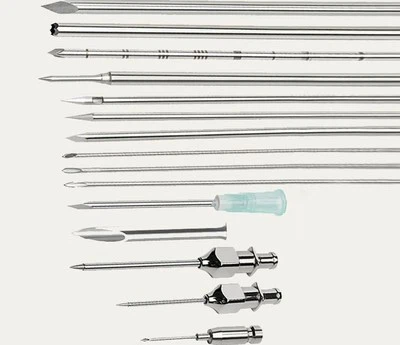
In the manufacturing of minimally invasive surgical instruments-particularly puncture needles and trocars-surface finish is far more than an "aesthetic" concern. It directly impacts the degree of tissue trauma, the risk of bacterial adhesion, and the long-term reliability of the device. Electropolishing, a critical surface treatment technology, is the "magic" that transforms rough metal blanks into smooth, safe, and high-performance surgical tools.
I. Technical Principle: The "Intelligent Subtraction" of Electrochemistry
Electropolishing is an electrochemical process whose core lies in "selective dissolution." Unlike mechanical polishing (e.g., grinding, buffing wheels), which removes material through physical friction, electropolishing treats the metal instrument (e.g., stainless steel trocar tube) as an anode, immersing it in a specific electrolyte (typically a mixture of phosphoric and sulfuric acids) and applying direct current (DC).
Under the influence of the electric current, microscopic protrusions on the metal surface experience a higher current density and thus dissolve much faster than recessed areas. This process acts like an electrical current "ironing out" the metal surface, uniformly removing approximately 10–40 microns of surface material. This eliminates machining-induced burrs, micro-cracks, and stress concentration points, resulting in a near-mirror-smooth surface.
II. Clinical Value: Three Advantages Beyond Smoothness
Maximizing the Reduction of Tissue Trauma: Traditional mechanical polishing can leave behind microscopic grooves. The ultra-smooth surface created by electropolishing significantly reduces tissue drag force during puncture, allowing the trocar to penetrate layers of the abdominal wall more smoothly. This minimizes tearing of the fascia and muscles, thereby alleviating postoperative pain for patients and potentially reducing the risk of incisional hernias. Medtronic, for instance, emphasizes its advanced electropolishing processes in its Covidien-branded disposable trocar product lines.
Ultimate Cleanliness and Corrosion Resistance: Electropolishing thoroughly removes embedded metal particles and impurities, forming a dense, uniform passive oxide film (e.g., chromium oxide) on the surface. This layer dramatically enhances the device's corrosion resistance, enabling it to withstand repeated sterilization cycles and complex physiological environments inside the body. Simultaneously, the extremely smooth surface prevents the adherence of biological contaminants like proteins and lipids, facilitating easier cleaning and sterilization while lowering the risk of cross-contamination.
Enhancing Fatigue Strength: Eliminating surface micro-cracks means removing the origin points for fatigue fractures. For instruments like trocars that must withstand torsional forces and axial pressure, this significantly improves their mechanical reliability and service life.
III. Manufacturing Challenges and Industry Benchmarks
The challenge of electropolishing lies in precise control. Electrolyte formulation, temperature, current density, and processing time must all be meticulously optimized based on the specific material (e.g., 316L stainless steel, Nitinol alloy) and geometry of the device. Over-polishing can lead to dimensional deviations, while insufficient polishing fails to achieve the desired effect.
International giants like Stryker integrate electropolishing with automated production lines in their laparoscopic instrument manufacturing to achieve high-consistency batch processing. Japanese leader Olympus, a pioneer in endoscopy, is also renowned for the superior surface treatment of its trocars, ensuring unhindered synergy with optical lenses.
In China, leading minimally invasive surgery platform enterprise Shanghai MicroPort Medical (Group) Co., Ltd. has extensively applied electropolishing technology to its high-end puncture and interventional devices. The company has established corresponding process validation and quality control systems to meet increasingly stringent regulatory requirements.
IV. Conclusion: An Invisible Process with Visible Results
Electropolishing is an "invisible" manufacturing process-patients and surgeons cannot see it, yet they can tangibly feel the benefits it brings: lighter operational feel, fewer tissue reactions, and higher surgical safety. As minimally invasive surgery strives for ultimate "minimal invasion" and "precision," electropolishing has become an indispensable "surface art" for high-end surgical instruments and a testament to the core process capabilities of medical device manufacturers.