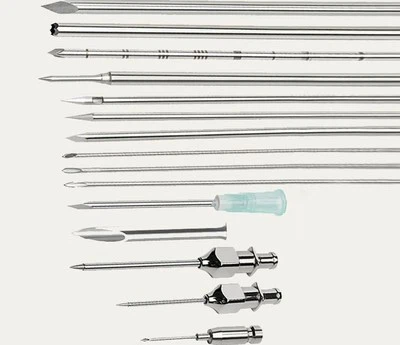
The Guardians Of The Security Boundary - Risk Control Logic in The Proper Operation Of PTC Needles
Apr 27, 2026
The guardians of the security boundary - Risk control logic in the proper operation of PTC needles
In interventional treatment, efficacy and safety are like the two ends of a balance. The literature "Experience and Application Value of Interventional Ultrasound Sclerotherapy for Renal Cysts" achieved an excellent result of 100% effectiveness with no complications. Behind this safe report lies a set of rigorous and meticulous risk control logic established based on the use of PTC needles. Every operation detail is the clear definition and protection of the safety boundary.
Risk Control 1: Strict patient and indication screening - Set up "entry checkpoints" for PTC needles. Not all renal cysts are suitable for puncture and sclerotherapy treatment. The literature clearly lists the exclusion criteria: coagulation disorders, communication between the cyst and the renal pelvis, severe heart and lung diseases, poorly controlled hypertension/diabetes, etc. This screening mechanism ensures that patients who may pose a serious risk due to the puncture (even by the most fine PTC needle) are excluded before the PTC needle puncture. For example, those with coagulation disorders are prohibited to use it to prevent needle tract bleeding; those with communication between the cyst and the renal pelvis are prohibited to use it to prevent the sclerotic agent from flowing into the urinary tract and causing damage. This ensures that the PTC needle is only used in the most suitable and safest battlefield.
Risk Control 2: "Safe Path" Planning Based on Imaging Guidance - Creating a "Navigation Map" for the PTC Needle. "Select the safest puncture route closest to the cyst location, and try to avoid the renal parenchyma and adjacent vital organs and blood vessels." This is the core safety principle of the operation. The virtual path planned on the ultrasound screen is the blueprint of the actual trajectory of the PTC needle. The purpose is to allow this slender metal wire of the PTC needle to travel along a "harmless" corridor in the complex human structure directly to the target. Avoiding the liver on the right, the spleen on the left, and avoiding major blood vessels, precisely to prevent serious complications such as bleeding and bile leakage caused by the accidental injury of the PTC needle. Path planning under visual guidance is the "lifeline" for the safe use of the PTC needle.
Risk Control 3: Real-time Monitoring and Adjustment During Puncture and Operation - The "Dynamic Risk Avoidance System" of the PTC Needle. Puncture is not a one-time process but an ongoing dynamic adjustment process. "Real-time ultrasound guidance and dynamic observation of the needle tip position" is the core. During the fluid aspiration process of the cyst, the cyst will collapse and shift. If the needle tip of the PTC needle cannot be adjusted to remain in the center accordingly, it may puncture the opposite cyst wall, damage the renal parenchyma, or result in incomplete aspiration. The literature emphasizes "keeping the needle tip always in the center of the cyst", which requires the surgeon to dynamically track the target by fine-tuning the depth and angle of the PTC needle. In addition, "adjusting the needle tip position at any time according to the continuous shrinking of the cyst" is an additional safeguard to prevent the needle tip from accidentally injuring tissues. In this regard, the PTC needle is not only a tool but also a "cursor" that can be precisely controlled on the ultrasound screen.
Risk Control 4: Precise Control and Operation of the Dosage of the Hardening Agent - The PTC needle acts as a "safe dose delivery system". Chia-Guiol alcohol is used as the hardening agent. Insufficient dosage may affect the therapeutic effect, while excessive dosage may increase the risk of systemic absorption. The dosage principle proposed in the literature (1/10 - 1/5 of the withdrawn volume, and ≤ 30 ml) is a scientific summary based on clinical experience. The role of the PTC needle in this process is a "precise measurement delivery pipeline". Through it, doctors can accurately inject the calculated dose and achieve repeated rinsing within the sac cavity, ensuring that the drug fully acts on the sac wall and can be maximally extracted after that, reducing residual amounts in the body. The detail of "be careful not to allow air to enter the sac cavity due to negative pressure" during the operation is not only to ensure clear imaging but also a subtle safety consideration to prevent air embolism.
Risk Control 5: Standardized Exit and Postoperative Observation after Surgery - Closing the "Safe Channel" by Reopening the PTG Needle Tip. After the treatment is completed, removing the PTG needle is not a simple process of just pulling it out. "Inserting the needle core" is a crucial step. Its purpose is to use the needle core to seal the needle tip during the withdrawal process, preventing the needle tip from cutting the tissues along the path or carrying cyst fluid or cells to contaminate the needle passage. "Applying sterile gauze to press the puncture point for 5 minutes" and applying pressure for bandaging is to promote needle passage closure and prevent bleeding or exudation. Postoperative observation of vital signs and local conditions serves as the final safety net.
Therefore, the results of "no adverse reactions" and "no complications" mentioned in the literature are not accidental. They are the inevitable outcome of a comprehensive safety control system that uses the PTC needle as the operational platform, integrating rigorous screening, precise planning, real-time monitoring, dose control, and standardized closure. Under the constraints of this system, the PTC needle can fully exert its therapeutic value while firmly containing risks within a controlled framework.