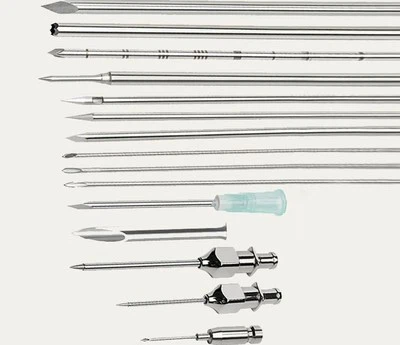
From Renal Cysts To The Future — Application Prospects And Technical Extension Of PTC Needles In Interventional Ultrasound
Apr 27, 2026
From Renal Cysts to the Future - Application Prospects and Technical Extension of PTC Needles in Interventional Ultrasound
The article Operational Experience and Application Value of Interventional Ultrasound Sclerotherapy for Renal Cysts vividly demonstrates the excellent performance of PTC needles in the treatment of a single disease, simple renal cysts. Nevertheless, this is only a tiny fraction of the extensive capabilities of PTC needles across the broad field of interventional ultrasound. From this starting point, we can gain insight into the broader application prospects and future developmental directions of PTC needle technology.
Horizontal Expansion of Application Prospects: Sclerotherapy for Multiorgan Cystic Lesions
The proven successful model of PTC needle therapy for renal cysts can be directly replicated and promoted for cystic lesions in other anatomical sites, forming a robust standardized platform for cyst intervention.
Hepatic Cyst Treatment: The therapeutic principle is fully consistent with that for renal cysts. Under ultrasound guidance, PTC needle puncture, fluid aspiration and sclerotherapy have become the preferred treatment for symptomatic hepatic cysts.
Ovarian and Thyroid Cyst Treatment: For selected types of ovarian and thyroid cysts, ultrasound-guided puncture, drainage and sclerotherapy using PTC needles deliver equivalent curative effects, while avoiding the trauma and cosmetic defects caused by conventional open surgery.
Pancreatic Pseudocysts and Splenic Cysts: For patients meeting clinical indications, PTC needle puncture drainage or sclerotherapy serves as a vital minimally invasive alternative. The core operational logic of these expanded applications - visualized puncture, complete fluid aspiration, and targeted sclerosant administration - is fully aligned with renal cyst management, fully verifying the universal adaptability and platform value of PTC needle technology.
Vertical Deepening of Application Prospects: From Benign Cystic Lesions to Oncological Interventions
The clinical value of PTC needles extends far beyond the management of fluid-filled cystic lesions. Their capability to accurately establish percutaneous access makes them an indispensable tool in tumor interventional therapy.
Tumor Biopsy: For solid tumors of the liver, kidney and other visceral organs, fine-caliber PTC needles (typically 21G and other thin-gauge specifications) are classic devices for percutaneous core needle biopsy, enabling histological sampling and definitive pathological diagnosis. High puncture precision is critical to improving biopsy accuracy and reducing procedural complications.
Tumor Ablation Therapy: In radiofrequency, microwave and cryoablation for small solid tumors, PTC needles and upgraded modified versions such as ablation electrode needles function as core energy delivery devices. Diagnostic PTC needles are first applied for precise localization, while therapeutic ablation needles may be directly inserted to achieve targeted tumor destruction.
Chemical Ablation: For unresectable small hepatocellular carcinoma and other inoperable malignancies, chemical ablative agents such as absolute ethanol can be percutaneously injected into tumor lesions through PTC needles to achieve local therapeutic effects. This innovative application adapts the mature sclerotherapy principle of cystic lesions to solid tumor intervention.
Technical Extension and Future Trends
Integration with Advanced Imaging Modalities: In the future, PTC needle guidance will no longer rely solely on conventional grayscale ultrasound. It will be further combined with contrast-enhanced ultrasound, multimodal fusion imaging (real-time integration of ultrasound, CT and MRI), and artificial intelligence-assisted puncture navigation systems. These advances will enable intelligent puncture trajectory planning and significantly improve the targeting accuracy for tiny or occult lesions.
Intelligent and Multifunctional Needle Innovation: Next-generation PTC needles are expected to be embedded with miniature sensors, enabling real-time intraoperative monitoring of tissue impedance, temperature and pressure at the needle tip to provide comprehensive intraoperative feedback for physicians. Controllable PTC needles with side ports and adjustable bending angles will also be developed to adapt to complex anatomical structures and diverse personalized treatment demands.
Continuous Expansion of Therapeutic Boundaries: As core instruments for establishing initial precise percutaneous channels, PTC needles hold irreplaceable value in pain management such as nerve block, vascular intervention including percutaneous transhepatic portal vein puncture, and lymphatic interventional procedures. Supported by advanced new materials such as high-visibility echo-enhanced coatings and flexible high-strength alloys, alongside optimized precision manufacturing processes, the overall comprehensive performance of PTC needles will continue to be upgraded.
In conclusion, sclerotherapy for renal cysts represents a mature, highly validated and successful clinical application of PTC needle technology. Acting as a key breakthrough, it has unlocked new possibilities for minimally invasive interventional ultrasound. Beyond this boundary lies a vast medical landscape centered on PTC needles, guided by the core concepts of precision, minimal invasiveness and real-time visualization, and continuously expanding to cover the diagnosis and treatment of multisystem diseases throughout the human body.
Though appearing as simple, slender medical devices, PTC needles rely on outstanding precision and flexible clinical adaptability to drive the continuous evolution of modern diagnosis and treatment models toward greater humanization and clinical efficiency.
解密规格密码:为何肾囊肿硬化治疗常选"B 18G×200mm"PTC针? 文献明确指定了器械:"日本八光介入穿刺针 PTC Needle(B 18G×200 mm)".这一型号选择,是临床需求与PTC针工程学设计精密匹配的典范,蕴含着深刻的规格逻辑. "B型"的针尖构型:平衡显影,锋利与创伤 "B型"通常代表一种经过优化的针尖几何设计.在肾囊肿治疗中,其优势在于: * 更佳超声显影:特殊的斜面或针尖处理工艺,使其在超声下产生更清晰,更稳定的回声,是实现"实时观察针尖位置"的技术基础. * 降低穿刺阻力:优化切割刃,使穿刺过程更顺滑,减少组织推挤,提升"一次性进针成功率". * 控制组织损伤:锋利的针尖与适当的角度,旨在形成整洁的穿刺孔道,利于术后闭合,减少出血和渗液风险. "18G"(约1.2mm)的直径哲学:流量与微创的黄金平衡 直径是PTC针核心参数,18G是肾囊肿治疗的"甜点"规格: * 流量保障:足够的内径(约0.84mm)可快速抽吸大量(最高达270mL)且可能粘稠的囊液,避免堵塞,并确保后续硬化剂冲洗时能形成有效流体循环. * 微创体现:相较于更粗的穿刺针(如16G),18G对肾实质及针道周围组织的损伤显著减小,是实现"无并发症"报道的重要物理前提.相较于更细的针(如21G),其抽吸和冲洗效率更高,实用性更强. "200mm"长度的战略纵深:应对复杂性与确保安全性 长度提供了操作冗余和安全性保障: * 全覆盖的穿刺深度:无论囊肿位于肾上极,中极还是下极,也无论患者体型胖瘦,200mm的长度确保了PTC针有足够的"纵深"触及目标,避免了针体过短导致的"够不着"困境. * 稳定的操作基点:充足的长度允许术者将针的夹持部位(针座)稳定置于体表,远离超声探头,从而获得更佳的操作杠杆和稳定性,便于精细调整. * 动态追踪能力:在抽吸过程中囊肿塌陷,位置改变时,较长的针体允许术者有足够的空间调整PTC针深度,确保针尖持续位于囊腔中心工作区域. 材质与工艺的隐形基石 高品质PTC针采用的医用级不锈钢,确保了针体具有足够的刚性以保持笔直的穿刺轨迹,同时兼具韧性以应对可能的组织阻力.精密的针尖研磨与内壁抛光技术,共同实现了锋利穿刺,顺畅流通和最小组织附着的目标. 结论:"B 18G×200mm"并非随意选择,而是针对肾囊肿治疗的临床场景(需大量抽吸,需冲洗,需微创,目标位置不定)所给出的"最优解".它代表了PTC针规格学与临床应用完美结合的经典案例.
翻译为 English
Decoding Specification Logic: Why "B 18G×200mm" PTC Needle Is Widely Adopted in Renal Cyst Sclerotherapy
Clinical literature clearly specifies the device: HAKKO interventional puncture PTC Needle (B 18G×200 mm). This precise model selection serves as a classic example of perfect alignment between clinical demands and the engineering design of PTC needles, embodying rigorous and professional specification logic.
Type B Needle Tip Configuration: Balancing Ultrasonic Visibility, Sharpness and Tissue Trauma
Type B features an optimized geometric design for the needle tip. Its core advantages in renal cyst intervention are as follows:
Enhanced ultrasound visibility: The specialized bevel structure and tip finishing process generate clearer, more stable ultrasonic echoes, forming the technical foundation for real-time needle tip localization under ultrasound monitoring.
**Reduced puncture resistance: The refined cutting edge enables smoother penetration, minimizes tissue compression, and improves the one-step needle insertion success rate.
Controlled tissue injury: The sharp tip with a rational bevel angle creates a neat puncture tract, facilitating postoperative tract closure and lowering the risks of bleeding and exudative leakage.
18G Diameter Philosophy: The Golden Balance Between Fluid Flow and Minimally Invasion
Outer diameter is a core functional parameter of PTC needles, and 18G stands as the optimal "sweet spot" specification for renal cyst treatment:
Guaranteed drainage efficiency: With an inner diameter of approximately 0.84 mm, it enables rapid aspiration of large-volume cyst fluid (up to 270 mL) and viscous contents while preventing lumen blockage. It also supports effective fluid circulation and complete cavity irrigation during sclerosant administration.
Superior minimally invasive performance: Compared with thicker gauges such as 16G, 18G significantly reduces trauma to the renal parenchyma and peritract soft tissues, serving as a critical physical prerequisite for low complication rates in clinical practice. Meanwhile, it delivers far higher aspiration and irrigation efficiency than finer needles (e.g., 21G), ensuring outstanding clinical practicality.
200mm Strategic Length: Coping with Anatomical Complexity and Ensuring Procedural Safety
Adequate length provides operational redundancy and comprehensive safety safeguards:
Full-coverage puncture depth: Whether the cyst is located at the upper, middle or lower pole of the kidney, or in patients with varied body constitutions including obese individuals, the 200mm shaft delivers sufficient working depth to reach target lesions and avoid insufficient length limitations.
Stable operational fulcrum: The extended shaft allows the needle hub and clamping section to be stably placed on the body surface away from the ultrasound probe, optimizing operational leverage, enhancing procedural stability, and enabling precise fine adjustment.
Dynamic lesion tracking: As cysts collapse and shift during fluid aspiration, the extra shaft length allows flexible depth adjustment, keeping the needle tip steadily positioned within the central working zone of the cyst cavity throughout the procedure.
Invisible Foundation: Premium Materials and Precision Manufacturing
High-grade medical stainless steel is adopted for formal PTC needles, endowing the shaft with sufficient rigidity to maintain a linear puncture trajectory, as well as appropriate toughness to withstand tissue resistance. Precision tip grinding and inner lumen polishing technologies jointly realize sharp atraumatic penetration, unobstructed fluid circulation, and minimal tissue adhesion.
Conclusion
The specification B 18G×200mm is never a random choice, but a customized optimal solution tailored to the unique clinical requirements of renal cyst sclerotherapy - including high-volume fluid aspiration, intracavitary irrigation, minimal invasiveness, and variable lesion locations. It represents a mature and classic model that perfectly integrates PTC needle specification design with real-world interventional ultrasound applications.