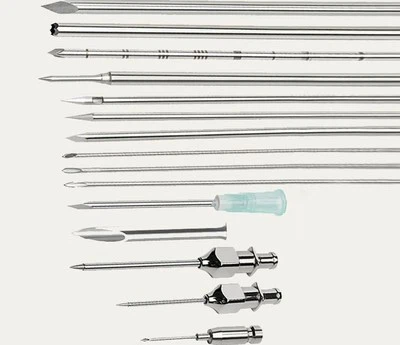
Reshaping The Clinical Value Chain: How PTC Needles Define New Standards In Renal Cyst Treatment
Apr 27, 2026
Reshaping the Clinical Value Chain: How PTC Needles Define New Standards in Renal Cyst Treatment
Medical literature has verified the efficacy and safety of ultrasound-guided sclerotherapy for renal cysts. In an in-depth analysis, as the core technical carrier, PTC needles have thoroughly reshaped the entire clinical value chain of renal cyst management, from diagnosis to treatment.
Value Innovation I: A Minimally Invasive Revolution in Therapeutic Paradigms
Traditionally, the treatment of large symptomatic renal cysts relied on open surgery or laparoscopic surgery, which required general anesthesia, invasive skin incisions, and prolonged hospitalization and recovery periods. PTC needles simplify the entire procedure into percutaneous access with a fine needle (approximately 1.2 mm in outer diameter). Under real-time ultrasound guidance, drainage and sclerotherapy are completed through the PTC needle. The patient experience is fundamentally upgraded, featuring local anesthesia, nearly trauma-free penetration, completion in outpatient or day-care wards, immediate postoperative mobility, and significantly reduced medical costs. This marks a paradigm shift from highly invasive surgery to precise pinhole intervention.
Value Innovation II: Precision Upgrade of Operational Modes
Conventional surgery relies on surgeons' macroscopic vision and tactile experience. In contrast, PTC needles propel interventional management into a new era of image-guided precision intervention. The ultrasound monitor acts as the physician's fluoroscopic vision, while the PTC needle tip serves as a real-time traceable cursor on the imaging screen. Key clinical requirements emphasized in clinical research, including real-time visual monitoring and continuous central positioning of the needle tip, fully reflect high-precision manipulation. This delivers dual core advantages: maximized procedural safety through visualized avoidance of vital tissues and risky structures, and optimized therapeutic outcomes via uniform distribution and sustained action of sclerosants. This serves as the fundamental rationale for achieving a nearly perfect clinical response rate.
Value Innovation III: Integrated Consolidation of Diagnosis and Treatment Workflow
The percutaneous channel established by PTC needles functions as a multifunctional clinical platform:
Diagnostic Platform: Aspirated cyst fluid can be immediately sent for biochemical and cytological examination to rule out cystic renal malignant lesions, realizing rapid and definitive differential diagnosis.
Therapeutic Platform: Sclerotherapy can be performed instantly through the same access route. This one-stop diagnosis-and-treatment model greatly improves clinical efficiency and spares patients from repeated invasive procedures.
Value Innovation IV: Standardization and Replicability of Clinical Pathways
Relevant documents elaborate the complete clinical pathway covering preoperative preparation, intraoperative manipulation and postoperative follow-up. The standardization of this workflow is fundamentally based on the widespread application of PTC needles with stable performance and unified specifications. It quantifies and standardizes core procedural steps including puncture, fluid aspiration and drug injection, reducing excessive reliance on individual surgical experience and tactile proficiency. Accordingly, this minimally invasive technique is highly suitable for systematic professional training and large-scale clinical promotion, strongly supporting the conclusion of widespread clinical application value.
Value Innovation V: Optimized Allocation of Medical Resources
This minimally invasive intervention can be performed in routine ultrasound examination rooms, without occupying operating theaters, anesthesiologists and other scarce medical resources, effectively lowering the overall operational cost of the healthcare system. It enables broader and more convenient access to standardized treatment for patients, and comprehensively improves the accessibility and operational efficiency of clinical medical services.
Conclusion
The clinical application of PTC needles in renal cyst treatment is far more than a simple replacement of traditional surgical instruments. By establishing a brand-new medical model featuring minimal invasiveness, high precision, integrated diagnosis and treatment, and standardized manipulation, PTC needles reconstruct every key link in the clinical value chain. Ultimately, they deliver superior clinical efficacy and improved medical experience for patients, while creating higher operational and resource utilization efficiency for the modern healthcare system.