The Extension Of The Fingertips: How The Meniscal Repair Needle Shapes The Surgeon's Tactile Map And Decision Space
Apr 28, 2026
The Extension of the Fingertips: How the Meniscal Repair Needle Shapes the Surgeon's Tactile Map and Decision Space
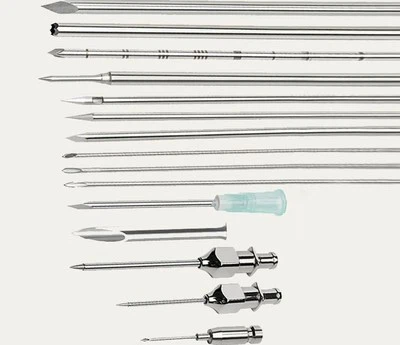
The success of the "triple cross-locking technique" is described as relying on "advanced arthroscopic skills." Within this, the tactile feedback that the surgeon obtains through the meniscal repair needle, which far exceeds visual information, is the invisible dimension constructing this "skill map." This needle is the surgeon's "tactile probe" within the fluid-filled, vision-limited joint cavity, exploring tissue texture, assessing tear characteristics, and ultimately executing precise suturing. Its design directly determines the efficacy of the surgeon's "hand-eye coordination."
I. Tactile Diagnosis: The "Language" of the Needle Tip
Before formal suturing, the repair needle is often used as an exploratory tool. An experienced surgeon, by touching the meniscus with the needle tip, can perceive:
- Tissue Texture: Degenerated, edematous meniscal tissue feels soft and spongy, whereas healthy fibrocartilage is tough and elastic. The resistance feedback provided by the repair needle during puncture is distinctly different.
- Tear "Mobility" and "Quality": Gently probing the tear edge with the needle tip can determine if it's a simple radial tear, a complex flap tear, or a root avulsion as mentioned in the text. The range of motion of the avulsed portion, the blood supply of the residual tissue (indirectly judged by the bleeding response upon needling)-these "soft information" not fully obtainable from a高清 camera are conveyed through the tactile sensation of the needle tip.
- Tension and Safety of the Posterior Capsule: When puncturing the capsule, clearly perceiving the breakthrough sensation from the tough capsular wall to a sudden "give way" (entering the space behind the capsule) is a critical safety feedback for avoiding injury to posterior vital structures. Every slight vibration and change in resistance of the needle body narrates the underlying anatomical story.
II. "Force Feedback" and Precision Control During Operation
When performing complex sutures like the triple cross-lock, the repair needle is the transmitter and modulator of force.
1. "Clarity" of Puncture Resistance: When puncturing the posterior horn of the meniscus, an ideal needle tip should provide definite but not excessive resistance. Resistance that is too low might indicate the tip is滑移 within loose or degenerated tissue, failing to grasp an effective load-bearing structure. A sudden spike in resistance may提示 contact with subchondral bone or deviation from the intended path. The emphasis on using a specific angled curved needle is precisely because it optimizes the puncture path, making this force feedback more linear and predictable. The surgeon can judge the appropriateness of puncture depth by feel.
2. Micro-manipulation Sensation of "Hooking" and "Passing" Suture: Using the repair needle to hook a pre-placed suture loop, or passing the suture it carries through another loop, is the core step of the cross-locking technique. This requires the needle tip to possess excellent "suture-finding" ability and stable "suture-holding" ability. The subtle tactile sensation transmitted through the handle-the slight "click" when a loop is caught, the smooth or dragging friction when pulling suture through tissue-directly guides the surgeon to adjust force and angle. A poorly designed needle may repeatedly drop the suture or have difficulty passing it, forcing the surgeon to rely on vision for major adjustments, disrupting surgical rhythm, and increasing tissue damage.
3. "Proprioception" for Spatial Positioning: In the two-dimensional view of the arthroscope, judging the three-dimensional spatial relationship between the needle tip and tissue involves parallax. The surgeon needs to rely on the "muscle memory" of the hand regarding the needle shaft's angle, depth, and rotational state to compensate. An ergonomic, well-balanced repair needle handle makes this proprioception more precise, allowing the surgeon to感知 the general orientation of the needle tip in space almost without looking at the hand, enabling "blind操作" or rapid adjustments.
III. The Game Between "Tool Adapting to Hand" and "Hand Adapting to Tool"
The design of repair needles essentially seeks a balance between the surgeon's operating habits and engineering optimal solutions.
- Learning Curve and Personalization: Different surgeons have varying preferences for needle curvature, length, and handle thickness, stemming from their unique operating habits and anatomical understanding. Instrument manufacturers offer multiple models precisely to适配 this personalized需求. A surgeon finding the repair needle that "suits their hand" often signifies their operational efficiency and precision will peak.
- "Empowerment" and "Constraint" of Complex Procedures: Ingeniously conceived procedures like the triple cross-lock must be implemented by tools capable of precisely executing their designed actions. Conversely, if existing repair needles cannot meet the operational demands of a certain step (e.g., unable to hook extremely posterior tissue at a specific angle), the procedure becomes clinically unfeasible. Therefore, the invention of new procedures often accompanies the development of new repair needles.
Conclusion
In the world of arthroscopic meniscal repair, the meniscal repair needle is the ultimate extension of the surgeon's tactile sense. It translates invisible tissue mechanical properties into perceptible resistance, supplements abstract two-dimensional images with a立体 spatial map. An excellent repair needle should become one with the surgeon's hand, allowing them to "feel" the fragility and strength of the tissue, to "perceive" the trajectory and tension of the suture. In the pursuit of极致 minimally invasive and biomechanically stable outcomes today, surgical success increasingly depends on these毫米-scale tactile interactions. Therefore, selecting and improving the meniscal repair needle is not merely choosing a tool; it is optimizing the surgeon's most important sense-touch-enabling more precise "tactile decisions" on the microscopic battlefield.