The Precision Hook: From Suture Passer To Mechanical Architect – The Technological Leap Of The Meniscal Repair Needle in Root Reconstruction
Apr 28, 2026
The Precision Hook: From Suture Passer to Mechanical Architect – The Technological Leap of the Meniscal Repair Needle in Root Reconstruction
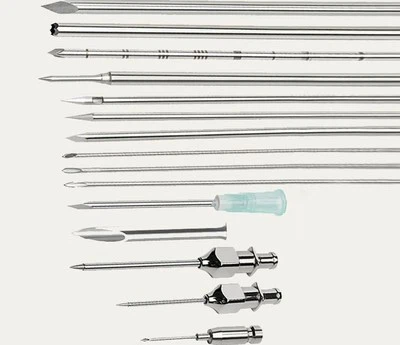
The repair of medial meniscal root tears (MMRT) is akin to "micro-sculpting" in arthroscopic surgery. Its success depends not only on the surgeon's skill but also on a seemingly inconspicuous yet vital tool: the meniscal repair needle. The exquisite physical realization of the "triple cross-locking technique" described relies fundamentally on the repeatedly passing "45° curved hook." This curved hook has evolved far beyond the scope of a simple suture passer, transforming into a "precision engineer" that constructs stable mechanical frameworks within the confined joint space.
I. Functional Evolution: From "Thread Guide" to "Mechanical Framework Builder"
Early meniscal repair placed relatively basic demands on suture passing instruments: the ability to hook tissue and pass suture. However, root repair, especially posterior root repair, imposes nearly stringent requirements on fixation strength. The high failure rates of traditional simple sutures due to the "cut-through effect" have spurred reinforced techniques like "double repair" and "hammock sutures," simultaneously posing new challenges for repair needles:
1. Accurate, Reproducible Needle Pass Trajectory: Constructing a cross-locking structure requires that the needle passes through the posterior horn of the meniscus twice or more, maintaining precise relative positions and angles in three-dimensional space. Passes too close risk tissue tearing; passes too far apart fail to form an effective interlock. Curved needles with specific angles like 45° are precisely calculated. Their curvature helps surgeons, relying on tactile feel and vision within the limited visual and operational field, establish stable, predictable puncture paths-a level of precision difficult to achieve with freehand "feel-based" puncturing.
2. "Weaver" of Complex Mechanical Configurations: The core of the triple cross-lock lies in making sutures pass through each other's loops, forming a stable, interwoven "you-in-me, I-in-you" network structure. The repair needle acts as the "weaving shuttle" here. It must not only accurately deliver a single suture to the designated location but, more crucially, be able to carry a shuttle suture (like PDS) to "introduce" subsequent sutures into the loops formed by prior ones. This "suture-through-suture" operation places extremely high demands on the needle tip design (e.g., depth and width of the hook groove) and the overall balance of rigidity and toughness. A dull tip struggles to capture small suture loops; a brittle one may break when applying force to manipulate tissue.
3. "Connector" for Capsular-Meniscal Combined Fixation: The third pass in the technique fixes the posterior capsule, considered by the authors key for providing proprioception and additional stability. Puncturing here requires passing through relatively tough and mobile capsular tissue, accurately hooking the capsule wall without damaging underlying neurovascular structures. The design of specialized curved needles makes safe and effective capsular puncture and suture possible under the narrow arthroscopic view, realizing the concept of a bone-meniscus-capsule complex repair.
II. Design Essence: Engineering Serving "Micro-Mechanics"
To胜任 the aforementioned complex tasks, modern meniscal repair needles (especially curved needles for root repair) are crystallizations of engineering design:
- "Customization" of Angle and Curvature: Beyond the mentioned 45°, curved needles of 30°, 60°, 90°, and even adjustable angles exist on the market. Different angles are optimized for different joints (knee, shoulder, ankle) and different quadrants within the same joint (e.g., anterior horn, body, posterior horn). The curvature of a curved needle for posterior root repair must match the spatial morphology behind the femoral condyle, allowing the needle body to绕 bypass bony obstructions like the intercondylar notch, reaching the target area via a "detour."
- "Micro-geometry" of the Needle Tip: The bevel cut angle of the tip and the "narrowing" design of the hook groove jointly determine its smoothness in "catching" and "passing" suture. An excellent hook groove firmly holds the suture, preventing it from slipping out when passing through tough meniscal fibrocartilage. Simultaneously, its entrance design facilitates the easy introduction of another suture loop. Some high-end needle tips even use diamond particle coatings to maintain极致 sharpness and durability.
- Mechanical Transmission of the Needle Shaft: The shaft requires sufficient bending stiffness to resist the force of tissue penetration, avoiding the "nodding" phenomenon that leads to puncture deviation. It also needs appropriate elasticity to bend slightly rather than break upon encountering bony obstruction, protecting intra-articular structures. The ergonomic design of the handle ensures the surgeon has clear perception and control over the needle tip's posture and force during prolonged, delicate操作.
III. As an "Enabling Tool" for Surgical Concepts
The "triple cross-locking" concept is not凭空 imagined; its feasibility is highly dependent on the technical level of the repair needle. It can be said that the advent of precise repair needles enabled the translation of such advanced procedures emphasizing biomechanical optimization and complex configurations from theory to clinic.
- From "Point Fixation" to "Structural Fixation": Simple straight needles or gun-type suture passers easily achieve single-point suturing. Curved needles make it possible to create multiple, interconnected suture points within the meniscal tissue, thereby upgrading repair from isolated "tethering" to holistic "structural reconstruction."
- Lowering the Technical Threshold, Improving Reproducibility: A well-designed, appropriately angled curved needle acts as a standardized "surgical template" for the surgeon. Even for complex procedures, it can "standardize" parts of the operation, reducing extreme reliance on the surgeon's纯 manual dexterity. This allows more surgeons to perform such repairs relatively safely and effectively, promoting the dissemination of advanced techniques.
Conclusion
Therefore, in the context of meniscal root repair, the meniscal repair needle (especially specialized curved needles) has been promoted from an auxiliary tool to a core surgical instrument. It is a precision shuttle capable of "mechanical weaving" on a microscopic scale, a bridge connecting innovative surgical concepts with concrete clinical practice. Each optimization of its angle, curvature, stiffness, and tip subtly propels meniscal repair from "patching" towards "reconstruction," from instability towards biomechanical solidity. In the future, with advancements in materials science and minimally invasive robotics, repair needles may integrate smarter sensing and actuation units. However, their core role as "micro-mechanical architects" will undoubtedly become increasingly vital.