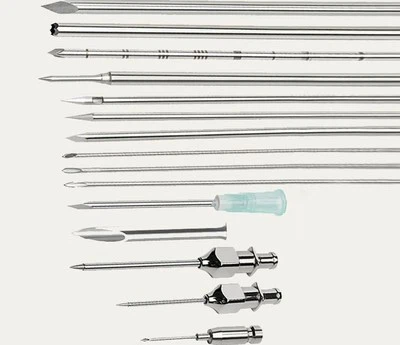
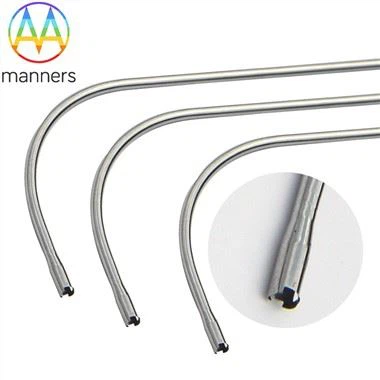
The Lever Of Efficiency And Stability: Evaluating The Value Of The Meniscal Repair Needle in Root Repair From A Health Economics Perspective
Apr 28, 2026
The Lever of Efficiency and Stability: Evaluating the Value of the Meniscal Repair Needle in Root Repair from a Health Economics Perspective
The "triple cross-locking technique" is hoped to reduce recurrence rates and delay osteoarthritis progression, offering significant long-term health economic benefits. However, from the immediate perspective of hospital operations and医保 payment (like DRG/DIP), the value of this technique and its central tool-the meniscal repair needle-requires a meticulous "cost-effectiveness-efficiency" analysis. Its value manifests not only in the price tag but also in its profound impact on the overall surgical process, first-attempt success rate, and long-term re-intervention rate.
I. Increasing Surgical Process Certainty, Reducing "Hidden Costs"
Complex root repair surgery is time-consuming, and time is cost. The performance of the repair needle directly affects operational fluidity.
1. Reducing "Technical Time Consumption": A curved needle with precise angulation and持久 sharpness helps the surgeon complete multiple punctures and suture passes quickly and accurately. If the needle hooks suture poorly, easily drops it, or requires excessive force for puncture, it leads to重复操作 of单个 steps, significantly prolonging手术 time. In time-based operating room billing, every additional 15 minutes represents considerable increases in labor and equipment occupancy costs. The operational efficiency gains from a high-quality repair needle are its hidden economic value.
2. Lowering "Revision Rate" and "Conversion-to-Open Rate": If limitations in repair needle performance result in suboptimal suture configuration, insecure fixation, or intraoperative suture cutting, it may force the surgeon to change the plan on the spot (e.g., adding anchors) or even convert to open surgery due to inability to complete arthroscopic repair. The trauma, cost, and recovery time of open surgery far exceed those of arthroscopy. A reliable repair needle is "insurance" ensuring first-attempt arthroscopic repair success, avoiding the costly intraoperative plan changes.
3. Optimizing Instrument Preparation and Turnover: Specialized needles with reliable performance reduce the time wasted searching for替代 tools due to poor器械 performance. Modular needle systems, where one handle adapts to various angled needle heads, simplify the preparation process and inventory management complexity for the Central Sterile Supply Department (CSSD).
II. Influencing Clinical Outcomes, Driving "Value-Based Healthcare"
Within the framework of value-based healthcare and case-based payment, hospitals benefit most from a single successful treatment with few complications.
1. Increasing Repair Biomechanical Strength, Reducing Early Failure Rate: As indicated in the text, the cross-locking configuration aims to evenly distribute tension and avoid cut-through. The key tool to achieve this configuration is the repair needle. A biomechanically superior repair means a lower risk of early reoperation due to suture cut-through or fixation failure. Early revision surgery represents a second trauma for the patient and, for the hospital, another loss-making case under DRG (as treatment for the same disease complication).
2. Potentially Reducing Long-Term Total Healthcare Costs: Although long-term data is pending, a more stable repair theoretically better restores meniscal function, delaying articular cartilage wear, thereby potentially postponing or avoiding the patient's future need for Total Knee Arthroplasty (TKA). The difference in individual and societal healthcare costs between a successful root repair and a TKA is immense. Here, the repair needle is an early key variable influencing the patient's economic total cost of care over decades.
III. "Total Cost of Ownership" Analysis: Beyond Purchase Price
Evaluating the economics of a repair needle requires a "Total Cost of Ownership" (TCO) analysis:
- Direct Procurement Cost: The purchase price of the needle.
- Indirect Efficiency Costs: Costs arising from prolonged手术 time, extra consumable use (e.g., excess suture), or even intraoperative complication management due to poor needle performance.
- Quality Risk Costs: Costs associated with revision surgery due to repair failure, potential costs of medical disputes, and damage to hospital reputation.
- Processing and Depreciation Costs: Costs for清洗, sterilization, inspection,损耗, and eventual报废 of reusable needles.
A slightly more expensive, high-end, single-use repair needle that significantly increases surgical success rate, shortens手术 time, and lowers revision risk may have a much lower TCO than a low-priced, mediocre-performing product that could lead to various hidden losses. Especially when dealing with difficult cases like MMRT, investing in the most reliable tool is an economically rational risk-aversion strategy.
IV. Supporting High-Value-Added Procedures, Enhancing Disciplinary Competitiveness
Innovative techniques like "triple cross-locking" showcase a hospital's and discipline's technical prowess. The ability to routinely perform such surgeries helps attract complex case patients and提升 regional influence. The prerequisite for performing these techniques is having the corresponding工具储备. High-performance, specialized repair needles are the material foundation for departments to undertake高难度 surgery, conduct clinical research, and even participate in setting industry technical standards. The academic brand value and long-term patient流量 they bring are difficult to measure with short-term costs.
Conclusion
Therefore, under the scrutiny of health economics, the role of the meniscal repair needle (especially specialized needles for complex repair) shifts from a "cost item" to an "investment item." It is a strategic investment in surgical process efficiency, first-treatment success rate, long-term patient outcomes, and disciplinary development potential. Hospital administrators and procurement departments, when making decisions, should collaborate with clinical experts to establish a comprehensive evaluation system based on clinical evidence, efficiency data, and TCO, recognizing the巨大的杠杆效益 brought by using卓越 tools in critical treatment links. In the era of精细化管理, a deep understanding of the value of core surgical tools is itself a significant form of competitiveness.
Industry Insight 4: The Arena on the Needle Tip: The Innovation Landscape and Localization Path of the Meniscal Repair Needle Industry
The described technique uses a specific