Comprehensive Analysis Of Standard Sizes Of Breast Biopsy Needles And General Industrial Specifications
Jul 19, 2026
https://www.mayoclinic.org/tests-procedures/breast-biopsy/about/pac-20384812
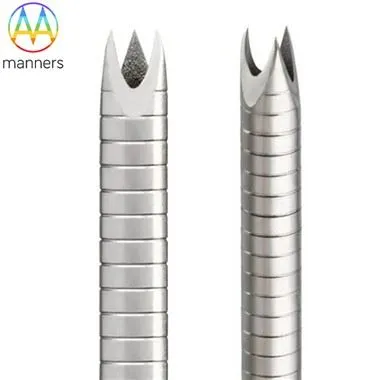
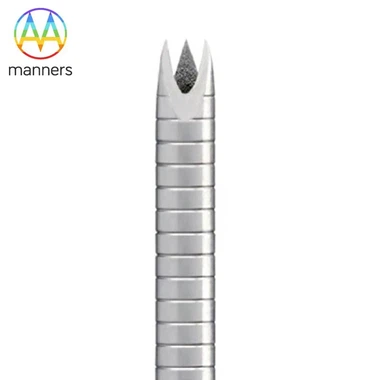
The gauge size of breast biopsy needles acts as a core fundamental parameter for pathological puncture and diagnosis of breast lesions, directly determining tissue core volume, puncture trauma, diagnostic accuracy and procedural safety. It serves as a key reference indicator for medical institution procurement, clinical operations, R&D and production of medical devices. Gauge (G) is the universal measurement unit adopted in domestic clinical practice and the medical device industry for breast biopsy needles. The higher the gauge number, the thinner the needle outer diameter and smaller the inner lumen; conversely, lower gauge numbers correspond to thicker needles with larger lumens for tissue harvesting. Supported by the standardized product portfolio of Manners breast biopsy needles, the full range of mass-produced standard sizes covers 8G, 11G, 13G, 14G, 15G, 16G, 18G and 20G. Custom non-standard sizes are also available to accommodate all types of breast lesion puncture biopsy scenarios, forming a complete size system for breast puncture instruments.
From the perspective of industrial standard definition, each gauge specification of breast biopsy needle carries distinct physical parameters and basic characteristics. 8G, 11G and 13G are large-bore thick needle gauges featuring thin-wall construction for maximal inner lumen volume, enabling retrieval of intact full-thickness lesion tissue samples in a single pass. They are mainly applied to large breast masses, deep lesions with high suspected malignancy risk, vacuum-assisted biopsy and other clinical scenarios requiring substantial tissue specimens. Fabricated precisely from medical-grade 304 and 316 stainless steel, these thick-gauge needles balance structural rigidity and puncture stability while expanding the core sampling area to resolve long-standing industry pain points of traditional thick needles: excessive wall thickness, insufficient tissue yield and severe trauma. Equipped with a forward-throw-free design, they eliminate risks of accidental deep tissue injury during thick-needle penetration.
14G, 15G and 16G represent mainstream medium gauges, the universal first choice for breast departments and ultrasound intervention units across all tiers of hospitals, suitable for puncture sampling of most benign, borderline and suspected malignant breast nodules. This gauge range strikes an optimal balance between trauma control and sampling efficiency. With moderate thickness, strong penetration capacity and ultra-sharp precision-ground tips, these needles easily penetrate skin, subcutaneous fat and mammary gland layers with minimal tissue dragging trauma. Echogenic markings integrated on both stylet tip and cannula support accurate ultrasound-guided positioning and controllable sample notch placement. They deliver sufficient tissue for routine pathological testing and immunohistochemistry while drastically lowering incidence of complications such as bleeding, hematoma and postoperative pain, making them the most cost-effective and widely adopted gauge range in clinical practice.
Thin-gauge minimally invasive options including 18G and 20G feature ultra-slender bodies and tiny puncture wounds, prioritizing low trauma and superior safety. They are primarily indicated for micro breast lesions, superficial nodules, patients with thin mammary tissue, elderly populations and physically sensitive individuals. While retaining all core product craftsmanship advantages such as thin-wall construction for optimized sampling efficiency, precision-ground ultra-sharp tips to reduce penetration resistance and forward-throw-free architecture to prevent accidental injury to deep tissue and pleura, these thin gauges maximize patient comfort. Though single-pass tissue yield is slightly lower than thick gauges, they enable targeted sampling of micro lesions without unnecessary damage to normal mammary tissue, fully aligning with the refined minimally invasive development trend of the medical industry.
Beyond standard gauges, fully customizable breast biopsy needle sizes are available. Custom non-standard tube diameters, needle lengths and special curved profiles can be manufactured according to clients' 2D/3D engineering drawings or physical sample requirements to meet personalized demands for puncture of complex lesions, special surgical procedures and scientific research trials. All standard and custom-sized products hold authoritative medical device certifications including ISO9001:2015, SGS and ISO13485, with fully compliant dimensional precision, craftsmanship and safety performance meeting global industrial regulatory standards. Covering clinical and market demands worldwide through standardized parameterization and diversified customization, this complete size system establishes a benchmark for minimally invasive breast diagnosis instruments.