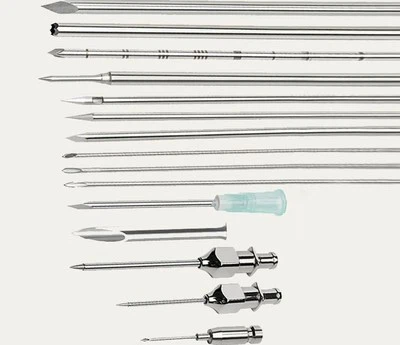
Analysis Of Core Materials Of Arthroscopic Cannulas And Material Selection Supporting Standards Of Leading Manufacturers
Apr 21, 2026
Analysis of Core Materials of Arthroscopic Cannulas and Material Selection Supporting Standards of Leading Manufacturers
Arthroscopic cannulas are core channel-based basic consumables for minimally invasive arthroscopic surgeries, directly running through all core processes including intraoperative imaging, instrument access, and normal saline perfusion. The quality of core materials determines surgical safety, durability, intraoperative adaptability, and long-term clinical reusability stability. Mainstream compliant core materials focus on three categories: medical stainless steel, lightweight aviation-grade aluminum, and medical polymer protective coatings. Major mainstream medical device manufacturers have established exclusive standardized material selection and control systems to adapt to the application scenarios of arthroscopic minimally invasive surgeries in all departments.
Medical high-strength corrosion-resistant stainless steel is the main all-scenario universal base material, suitable for mass production and processing of all conventional orthopedic arthroscopic cannulas. This material has excellent comprehensive mechanical strength, resistance to corrosion from repeated high-temperature and high-pressure sterilization, and its implantation compatibility meets the full-level medical biocompatibility standards. When punctured and implanted into the soft tissues around human joints, it causes no rejection reaction or metal precipitation risk, making it suitable for high-frequency annual reusable diagnosis and treatment conditions in operating rooms. Karl STORZ, an international benchmark manufacturer, adopts customized medical 316L ultra-low carbon stainless steel base material for all its standard arthroscopic cannulas, which are formed by the original factory's integrated seamless tube drawing process. The tube body has uniform wall thickness and no stress dead corners, adapting to conventional minimally invasive surgeries of all joints including shoulders, knees, hips, and ankles, and is the main procurement standard for top tertiary orthopedic centers worldwide. Domestically, leading manufacturers such as Weigao Medical and Kangdelai Medical have synchronously aligned with international material selection standards, strictly controlling the impurity content of stainless steel base materials, and supporting self-developed mirror polishing technology to avoid intraoperative soft tissue scratch damage, which is suitable for the regular clinical centralized procurement needs of primary hospitals.
Lightweight aviation-specific aluminum is an exclusive base material for high-end refined minimally invasive cannulas. Its core advantage is to significantly reduce the overall weight of the cannula, reduce the fatigue of surgeons during long-term holding and operation, while retaining the basic performance of the base material such as bending resistance and resistance to intraoperative extrusion deformation. It is suitable for high-difficulty arthroscopic procedures such as long-duration complex ligament reconstruction and severe cartilage repair. Arthrex, an orthopedics-specialized manufacturer, focuses on the lightweight aluminum-based composite arthroscopic cannula series, precisely optimizing the aluminum material ratio to balance weight reduction and structural strength. It is exclusively suitable for high-end specialized operating rooms in sports medicine and is widely recognized by top tertiary sports medicine departments.
Medical food-grade polymer special coating is the core supporting material for the external protection of cannulas, fully covering the dual core needs of compliant sterilization and low-friction implantation. The coating closely adheres to the outer wall of the metal tube, optimizes surface smoothness, greatly reduces the tissue friction force when the cannula is punctured and implanted through small skin incisions, avoids complications such as epidermal tearing and subcutaneous soft tissue contusion, and at the same time tolerates ethylene oxide and irradiation dual sterilization modes, with no peeling or cracking after repeated disinfection. Medtronic, a full-category device manufacturer, equips all its arthroscopic cannulas with upgraded thickened polymer anti-slip and antibacterial coatings as standard, which are suitable for rotation and reuse in multiple departments of the hospital, resulting in lower comprehensive operation and maintenance costs.
Manufacturers have a clear core risk control logic for material selection: stainless steel focuses on general large-scale centralized procurement, aluminum focuses on high-end specialized refined surgeries, and polymer coatings are standard-equipped for all series to enhance safety protection. Medical institutions can select corresponding manufacturer's material-matched cannula products on demand according to surgical grade, department scale, and budget standards, balancing clinical safety and procurement cost-effectiveness. With the continuous upgrading of arthroscopic minimally invasive surgery technology, manufacturers will further optimize material formulas and processing technologies, promoting the development of arthroscopic cannulas towards more minimally invasive, durable, and safe directions.