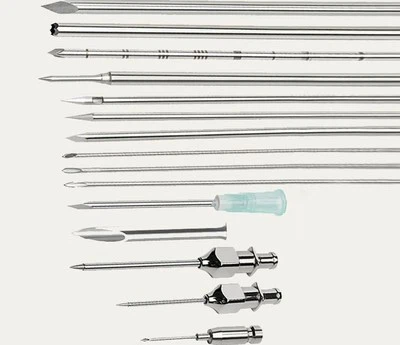
Deconstructing Clinical Application Scenarios And Targeted Arthroscopic Sleeve Solutions From Leading Manufacturers
Apr 21, 2026
Deconstructing Clinical Application Scenarios and Targeted Arthroscopic Sleeve Solutions from Leading Manufacturers
Introduction: The Indispensable Conduit for Minimally Invasive Orthopedics
As an irreplaceable carrier for minimally invasive access, the arthroscopic sleeve supports a wide spectrum of orthopedic procedures. Its utility spans five core clinical scenarios: non-invasive imaging, debridement of pathological tissues, cartilage restoration, ligament/tendon reconstruction, and postoperative efficacy monitoring. The requirements for material, dimensions, surface finish, and compatibility vary drastically across these applications. Consequently, mainstream medical device manufacturers have developed targeted product matrices to precisely align with the distinct clinical demands of medical institutions at all levels.
Section 1: Non-Invasive Imaging and Early Screening
This foundational scenario involves outpatient and inpatient screening where the core surgical诉求 (requisites) are minimal trauma, rapid placement, high-definition visualization, and immediate postoperative ambulation. The preferred specification is an ultra-fine 2–3 mm outer diameter sleeve constructed from standard stainless steel with a polymer anti-slip coating. These do not require complex ancillary instruments and are ideal for high-frequency screening.
Domestically, Kindly Medical (KDL) leads in this segment by offering outpatient-specific basic sleeves. These feature sterile individual packaging and outstanding cost-performance, with complete compliance certifications. They are perfectly suited for high-volume, routine procurement by secondary hospitals and community orthopedic clinics looking to reduce operational costs.
Section 2: Pathological Debridement and Inflammatory Synovectomy
Addressing conditions like synovial hyperplasia, loose body removal, and adhesion lysis requires continuous saline irrigation and frequent passage of small cutting instruments. Here, the critical requirements are an inner lumen that is smooth enough to prevent tissue snagging and an outer wall resistant to friction-induced damage to normal soft tissues.
The international leader, Karl Storz, optimizes this process with mirrors-polished inner walls and proprietary anti-clogging fluted sleeves. This design effectively prevents the obstruction caused by tissue debris, ensuring the efficient execution of day-surgery procedures in tertiary Grade-A hospitals.
Section 3: Cartilage Defect Restoration and Meniscal Shaping
High-difficulty procedures like cartilage repair demand stringent performance from the sleeve. The instrument must protect fragile cartilage while allowing stable passage for delicate instruments. Lightweight, low-profile aluminum alloy sleeves with thin yet strong walls are the optimal choice, balancing minimal pressure trauma with structural stability.
Arthrex, a pioneer in sports medicine, offers dedicated lightweight sleeve kits. These are tailored for the precise repair surgeries required by professional athletes and young patients with severe joint damage, significantly shortening the postoperative rehabilitation cycle and earning top-tier clinical reputation.
Section 4: Ligament Reconstruction and Tendon Anchor Fixation
Complex reconstructive surgeries, such as ACL reconstruction, involve operative times twice that of routine procedures and place significant stress on instruments. High compressive forces necessitate the use of thickened-walled, large-bore stainless steel sleeves to prevent deformation and ensure uninterrupted visualization.
Medtronic addresses this with its heavy-duty reinforced sleeves. Every batch undergoes dynamic mechanical compression testing to ensure compliance, making them suitable for complex major surgeries and challenging case consultations in comprehensive tertiary hospitals.
Section 5: Postoperative Monitoring and Clinical Research Trials
In research scenarios requiring long-term follow-up, the consistency of the instruments is paramount. Requirements include batch-to-batch uniformity, long-term sterile stability, and full traceability. Weigao Medical has implemented a digital traceability QC system, binding each sleeve to a unique code. This makes their products ideal for academic research in university-affiliated hospitals and long-term clinical outcome tracking programs.
By aligning specific clinical scenarios with these targeted manufacturer solutions, healthcare institutions can ensure operational efficiency and safety across all orthopedic subspecialties.