What are the pathological examination methods of prostate biopsy? What exactly?
May 03, 2022
Biopsy is an important method of disease diagnosis. With the continuous improvement of puncture needles and puncture techniques, the puncture success rate and safety have been greatly improved. The diagnosis of prostate mass depends on the pathological examination of the tissue. Prostate biopsy is an important method for the diagnosis of prostate mass. Most of the puncture methods are transperineal or transrectal prostate puncture.
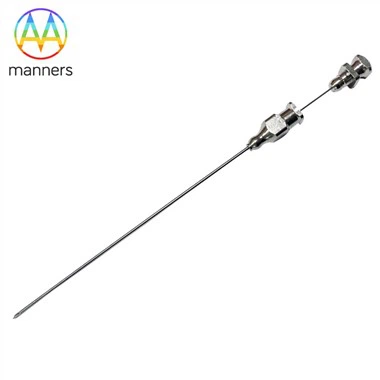
The advantages of transrectal prostate aspiration cytology are high success rate and less damage, while the disadvantage is the possibility of infection. Generally, a Franzen needle and an introducer are used for transrectal puncture. The Franzen puncture device includes a long needle, a 10ml needle tube with a special handle, and a finger sleeve designed to guide the direction and angle of the puncture needle.
(1) Operation method The patient is placed in the lateral decubitus position or the chest-knee position, and the perianal area is disinfected. The operator wears a sterile glove on the left hand, and the index finger is used to find the suspicious lesions of the prostate through the anus. Puncture the lesion site, and use the negative pressure generated by the Franzen puncture needle to suck the suspicious tissue into the needle for cytological examination. To prevent infection, antibiotics are given the day before and after the puncture. This method is relatively simple to operate and can be performed in outpatient clinics, or repeated puncture to observe the therapeutic effect.
(2) Clinical significance The exfoliated cells of the prostate include prostate epithelial cells, seminal vesicle epithelial cells, urothelial cells, and occasionally sperm.
1. Normal prostate exfoliated cells (1) Prostate epithelial cells: columnar, cubic or polygonal, distributed in groups or scattered under the microscope, cytoplasmic Pap staining, moderate amount, clear cell boundary, round nuclei, center position.
(2) urothelial cells: urothelial cells include transitional cells, squamous epithelial cells and granular epithelial cells, which are different due to different distribution sites. Most of the urethra of the prostate is covered by transitional epithelium, most of the urethra is covered by stratified columnar epithelium, and the external orifice of the urethra is covered by stratified squamous epithelium.
(3) Amyloid corpuscle: It is a substance secreted by the prostate, which is round or oval, with different sizes and a concentric structure. Prostate stones are formed after the deposition of calcium salts. Amyloid bodies are found in patients with prostatitis and in normal prostatic fluid.
2. Abnormal prostate exfoliated cell components (1) Prostatitis: neutrophils, pus cells or old red blood cells can be seen in varying numbers. Degenerated epithelial cells are seen in chronic prostatitis. Langhans giant cells are a typical hallmark of prostate tuberculosis.
(2) Prostate adenocarcinoma: According to the degree of differentiation, it can be divided into two types: well-differentiated and poorly-differentiated. Well-differentiated prostate adenocarcinoma cells were round and oval, with moderate cytoplasm, vacuoles, different nuclear sizes and shapes, located in eccentric positions, and increased chromatin and unevenness. Poorly differentiated prostate adenocarcinoma exfoliated cells in clusters, compactly arranged, small cells, abnormal nucleocytoplasmic ratio, coarse chromatin, and mitotic figures.
(3) Prostate adenocarcinoma: The incidence rate is low, but the cancer cells are easy to fall off, so the positive rate of cytological examination is high, so that early diagnosis can be achieved. Groups of exfoliated cells can be seen in the smear, and the nuclear volume increases and the edge Unclear, the cytoplasm contains secretory granules of varying sizes.
(4) Transitional cell carcinoma of the prostate: It mostly originates from the primary prostate duct around the urethra, and may be associated with transitional epithelial carcinoma of the bladder. Cancer cells are easy to fall off, malignant transitional cells are mostly round, the ratio of nucleocytoplasm is abnormal, the large nuclear cytoplasm is less and deformed, nucleoli can be seen, and the nuclear chromatin is increased and unevenly distributed. Less cytoplasm, visible azurophilic granules.
(5) Squamous cell carcinoma of the prostate: its incidence is very low, the cell volume is large, the cytoplasm contains keratin, eosinophils, the nucleus is large, the coloration is dark, and the shape is deformed.
Prostate biopsy can be divided into two ways: transperineal and transrectal biopsies according to the way of specimens. The final diagnosis of prostate cancer relies on a prostate biopsy, therefore, a prostate biopsy should be performed when clinically suspected prostate disease cannot be determined to be benign or malignant.
(1) Transperineal biopsy of prostate biopsy Transperineal biopsy of prostate has the disadvantage of low accuracy. In the absence of ultrasound positioning, correct operation is very important. Because the puncture needle needs to go through the skin, subcutaneous tissue, muscle and fascia, etc., when the lesion is small, it is difficult to accurately select suspicious tissue. Some scholars believe that the satisfaction rate of perineal biopsy of prostate biopsy by inexperienced physicians is less than 2/3. The correct operation method should be as follows: the patient takes the lithotomy position, the perineum is locally disinfected and anesthetized, the left hand index finger is used to find and fix the suspicious lesions of the prostate through the anus, and the Silrman or Tru-cut needle is used for perineal puncture. specimen. Complications such as urethral injury, hematuria, and perineal hematoma may occasionally occur in transperineal prostate biopsy, which should be paid attention to during the operation.
(2) Transrectal ultrasound-guided prostate biopsy biopsy In recent years, the accuracy of transrectal ultrasound examination technology has surpassed other methods, and has been widely used in clinical practice. Biopsy biopsy under the guidance of transrectal B-ultrasound has a high accuracy. Indications for prostate biopsy under the guidance of transrectal B-ultrasound: ①PSA>4ng/ml and abnormal DRE or transrectal ultrasonography (TRUS), suspicious site biopsy; ②PSA>10ng/ml, systematic randomization in different directions of the prostate Biopsy; ③ PSA between 4-10 ng/ml, abnormal DRE or TRUS, systematic random biopsy; ④ normal PSA, abnormal DRE or TRUS, suspicious site biopsy.
Operation steps: Oral antibiotics were started 3 days before the puncture, and continued for 3 days after the puncture. Clean the colon 1 hour before puncture. The patient takes the left flexion supine position, first apply an appropriate amount of couplant to the tip of the ultrasound probe, put a condom on it, and then apply a layer of couplant to the tip of the probe. A sterile biopsy needle holder is then mounted on the probe. Slowly insert the probe into the rectum, locate the biopsy site with cross-sectional and sagittal scans, and move the biopsy site to be punctured or the suspicious lesion area to the puncture line to achieve the range of the automatic ejection biopsy device (referred to as biopsy gun). Then, push the biopsy gun with the sterile 18-gauge Tru-cut biopsy needle installed along the biopsy needle fixing device, and press the firing button when the needle pushes up the rectal mucosa. If necessary, it can pass through the rectal mucosa and enter the prostate gland. in vivo. After shooting, pull out the biopsy gun, press the front push button, gently scrape the tissue in the needle groove and place it in the biopsy bottle. The biopsy needle can be punctured again after sterilized with 75% alcohol. Systematic biopsy can learn: ① the extent (volume) of the prostate; ② estimate the full Gleason grade of the entire tumor; ③ determine the location of the tumor at the apex of the prostate or bladder neck to help avoid positive margins; ④ for palpable For stage B cancer, a systematic biopsy is the only way to know if the tumor has invaded another lobe.
If you have any questions, please contact us. Our company can produce various customized needles, medical needles, puncture needles, hypodermic needles, biopsy needles, vaccine needles, injection needles, syringe needles, veterinary needles, pencil point needle, ovum pick up needles, spinal needles, etc. If you need customized needle products, please contact us. We look forward to your inquiry! The quality of the products manufactured in our factory will surely satisfy you!
Please contact us if you need: zhang@sz-manners.com