The Spear And Shield Of Percutaneous Biopsy: The Technical Duel Between Chiba Needles (FNA) And Franseen Needles (FNB) And Clinical Selection
Apr 18, 2026
The "Spear and Shield" of Percutaneous Biopsy: The Technical Duel Between Chiba Needles (FNA) and Franseen Needles (FNB) and Clinical Selection
Core Product Terms: Chiba Needle (FNA), Franseen Needle (FNB), Core Biopsy, Cytology vs. Histology
Representative Manufacturers: Cook Medical (Chiba), Boston Scientific (Acquire™ Franseen), Medtronic (ProCore™)
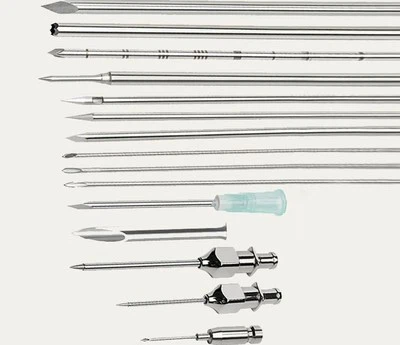
In the realm of percutaneous biopsy, the selection of the needle is not merely a matter of preference; it is a critical decision that dictates the type and quality of the sample obtained, ultimately determining the accuracy of the pathological diagnosis. The Chiba Needle, representing Fine Needle Aspiration (FNA), and the Franseen Needle, representing Fine Needle Biopsy (FNB), represent two mainstream philosophies with distinct technical approaches. Understanding the rivalry and synergy between these two instruments is key to grasping the evolution of modern biopsy techniques.
I. Technical Principles and the Fundamental Difference in Sample Type
1. The Chiba Needle: The "Master of Aspiration" for Cytological Diagnosis
Design Philosophy: To obtain cellular samples with minimal tissue trauma. Its design features a long, single-bevel tip that acts like a "wedge," gently displacing tissue fibers to create a pathway rather than aggressively cutting through them.
Mechanism: Aspiration. Once the tip is positioned within the target lesion, the physician applies negative pressure via a connected syringe, "sucking" loose cells and fluid into the needle lumen. This process relies primarily on capillary action and suction.
Sample Type: Cytological specimens. The yield consists of dispersed cell clusters, individual cells, or fluid. Pathologists examine the morphological characteristics of these individual cells under a microscope to render a diagnosis.
Advantages: Minimal trauma, low risk of hemorrhage, and relatively simple, rapid execution. It is particularly suitable for cystic lesions (e.g., thyroid cysts) or the preliminary screening of hypercellular tumors with rich vascularity.
2. The Franseen Needle: The "Cutting Expert" for Histological Diagnosis
Design Philosophy: To actively cut and capture intact micro-cores of tissue. Its tip is ground into three symmetrically distributed cutting teeth, resembling a crown, making its structure significantly more complex.
Mechanism: Cutting and capture. As the needle is inserted and rotated within the tissue, the three sharp teeth act like miniature planers or trephines, shearing off a tiny cylindrical core of tissue. It relies less on negative pressure and more on mechanical cutting action.
Sample Type: Histological specimens. The yield is a micro-core that preserves the original tissue architecture, including cellular arrangement, stroma, and vascular structures.
Advantages: Provides critical architectural information. This is essential for diagnosing lymphoma, subtyping tumors, assessing the degree of fibrosis, or performing ancillary tests like immunohistochemistry and genetic sequencing. Studies have shown that in biopsies of fibrous solid tumors like pancreatic and liver cancers, Franseen needles typically obtain significantly larger sample volumes and higher diagnostic yields than traditional Chiba needles.
II. Clinical Selection: Based on Lesion Characteristics and Diagnostic Needs
The choice between FNA (Chiba) and FNB (Franseen) is not a simple judgment of superiority but a decision based on precision medicine principles:
Scenarios Favoring Chiba Needle (FNA):
Cystic-solid nodules in the thyroid, breast, or superficial lymph nodes, especially when the cystic component is dominant.
Situations requiring immediate cytological smears and Rapid On-Site Evaluation (ROSE).
Patients with coagulopathy, where minimizing bleeding risk is paramount.
Target lesions with extremely rich blood supply, where cutting biopsy might induce severe hemorrhage.
Scenarios Favoring Franseen Needle (FNB):
Cases requiring definitive histological classification and grading, such as pancreatic cancer, hepatocellular carcinoma, cholangiocarcinoma, and gastric cancer.
Suspicion of lymphoma, where evaluating nodal architecture is mandatory.
Situations demanding molecular pathology testing (e.g., NGS, PD-L1 testing) that require sufficient, high-quality DNA/RNA.
When previous FNA results were inconclusive or non-diagnostic.
III. Manufacturing Complexity and Cost Considerations
The manufacturing difficulty differs dramatically between the two, influencing their market positioning:
Chiba Needle Manufacturing: Relatively standardized. The core lies in the precision grinding and polishing of a single bevel. The production process is mature, allowing for large-scale manufacturing at a relatively low cost.
Franseen Needle Manufacturing: Extremely complex. It requires high-precision 5-axis CNC grinding machines to create three perfectly symmetrical cutting teeth. Any microscopic asymmetry can cause vibration during puncture, leading to patient pain and suboptimal samples. Furthermore, deburring and electropolishing requirements are more stringent. Consequently, the production cost is significantly higher than that of Chiba needles.
Represented by products like Boston Scientific's Acquire™ Franseen needle and Medtronic's ProCore™ needle, these high-end FNB devices command higher prices but are often the preferred choice for complex oncological biopsies due to their superior diagnostic efficacy.
IV. Convergence and Future Trends
The current trend is not one of mutual exclusion but of convergence and complementarity. Many interventional radiologists employ a "coaxial technique": first, a slightly larger Chiba needle or sheath is used to establish a safe access tract. Through this single channel, the operator can then alternate between using FNA and FNB needles for sampling. This hybrid approach maximizes diagnostic yield by obtaining both cytological and histological samples in a single procedure.
Looking ahead, smart needles (integrating Optical Coherence Tomography or RFID technology) may further revolutionize biopsy paradigms. However, the foundational principles established by the Chiba needle-safe, minimally invasive access-and the precise tissue-capturing capability of the Franseen needle will remain the two cornerstones of percutaneous biopsy technology.