Global Chiba Needle Market Landscape: Growth Drivers, Competitive Dynamics, And The Rise Of Chinese Manufacturers
Apr 18, 2026
Global Chiba Needle Market Landscape: Growth Drivers, Competitive Dynamics, and the Rise of Chinese Manufacturers
Core Product Terms: Chiba Biopsy Needles Market, Minimally Invasive Diagnostic ProceduresRepresentative Manufacturers: Cook Medical, Becton Dickinson (BD), INRAD, Argon Medical Devices, Weigao Group, Geotek Medical
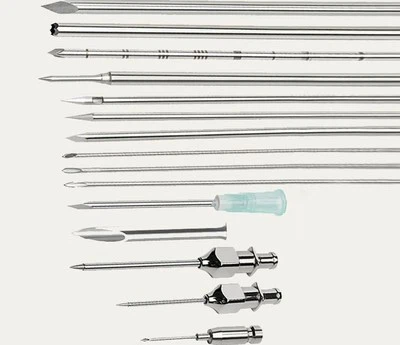
As a foundational tool for percutaneous interventional procedures, the global Chiba needle market is experiencing steady expansion, fueled by the accelerating shift toward minimally invasive diagnostics and rising global demand for early cancer screening. The market landscape is defined by a dynamic dual structure: multinational corporations continue to dominate the high-end segment through technological superiority and established brand equity, while manufacturers from emerging economies are rapidly closing the gap through cost efficiency and targeted product innovation.
I. Core Drivers of Market Growth
The sustained expansion of the Chiba needle market is underpinned by four powerful long-term trends reshaping modern healthcare.
First, rising global cancer incidence and the imperative of early diagnosis and treatment are driving rigid demand. As the global cancer burden intensifies, annual new cancer cases are projected to reach 29 million by 2040. Biopsy of organs including the liver, breast, and thyroid remains the gold standard for oncological diagnosis. As the most widely used instrument for initial puncture and fine‑needle aspiration, Chiba needles have seen consistent growth in clinical demand.
Second, the rising penetration of minimally invasive procedures has redefined diagnostic pathways. Compared with open surgical biopsy, image‑guided percutaneous biopsy offers clear advantages: minimal tissue trauma, faster patient recovery, and lower overall healthcare costs. This approach has become the standard of care in general surgery, oncology, interventional radiology, and ultrasound clinics, directly boosting consumption of single-use puncture consumables such as Chiba needles.
Third, advances in imaging guidance technology have expanded clinical applications. Widespread and increasingly precise ultrasound, CT, MRI, and even PET‑CT navigation have enabled safe and accurate puncture of deep and small lesions that were previously inaccessible. This expansion has also raised performance expectations, particularly for enhanced needle visibility under ultrasound through specialized echogenic coatings.
Fourth, the growth of outpatient and ambulatory surgery centers has accelerated the transition from reusable to disposable devices. To improve efficiency and reduce healthcare expenditures, an increasing number of diagnostic biopsies are performed in outpatient settings. This has significantly increased demand for ready-to-use, single-use Chiba needles, reinforcing the industry-wide shift away from reprocessed instruments.
II. Competitive Landscape: A Multi-Tiered Market Structure
The global Chiba needle market features a clearly stratified competitive hierarchy, with distinct players occupying different value segments.
The first tier consists of multinational medical device giants, led by Cook Medical and Becton Dickinson (BD). These companies boast comprehensive product portfolios spanning puncture needles, guidewires, drainage catheters, and interventional sets. Supported by robust global distribution networks, extensive clinical education, and strong brand recognition, they set industry benchmarks. Cook's Chiba needles are widely used in professional training programs, while BD leverages its leadership in vascular access to maintain market penetration. Together, they dominate high-end hospitals across North America and Europe.
The second tier comprises specialized interventional-focused manufacturers, including Argon Medical Devices, INRAD, and Merit Medical Systems. These firms concentrate on interventional radiology, oncology, and vascular interventions, driving active product innovation. For instance, Argon Medical complements its standard Chiba needles with semi-automatic biopsy guns and integrated aspiration systems, competing through specialization rather than broad diversification.
The third tier includes regional leaders and emerging industrial powers, such as PAJUNK GmbH (Germany), GALLINI (Italy), TSK and Dr. Japan (Japan), as well as leading Chinese manufacturers including Weigao Group and Shanghai Kindly. These enterprises benefit from strong local distribution channels and cost advantages, while increasingly expanding into international markets. Chinese manufacturers, in particular, are evolving beyond basic commodity products to develop mid-to-high-end Chiba needles featuring enhanced echogenicity, MRI compatibility, and improved tip performance.
III. Innovation and Differentiation: Beyond Price Competition
Market competition has evolved from pure price rivalry to clinically driven value innovation. Key focus areas include:
Improved visualization through advanced echogenic coatings and micro-engineered tip surfaces for clearer ultrasound detection.
Enhanced sample yield via refined bevel geometries that preserve the atraumatic nature of Chiba needles while boosting cellular acquisition efficiency.
Safety and convenience through integrated pre-attached syringes and safety-engineered needle shields to prevent needlestick injuries.
Expanded applicability through MRI-compatible designs using non-magnetic materials to minimize imaging artifacts during magnetic resonance-guided procedures.
IV. Opportunities and Challenges for Chinese Manufacturers
Chinese enterprises led by Weigao Group face a historic window of opportunity. Domestic healthcare expansion, policies supporting import substitution, and market access via the Belt and Road Initiative have created favorable conditions. However, formidable challenges remain:
Brand and technological barriers: Physicians in high-end markets maintain strong loyalty to established brands such as Cook and BD. Domestic manufacturers still lag in premium materials, precision grinding consistency, and long-term clinical evidence.
Regulatory and certification hurdles: Entering U.S. and European markets requires FDA 510(k) clearance or CE certification, demanding ISO 13485-compliant quality systems that are costly and time-consuming to implement.
Supply chain dependence: High-grade medical stainless steel tubing, precision grinding equipment, and specialized coating materials still rely partially on imports.
V. Future Outlook
The global market will continue along a dual development path: high-end innovation and affordable accessibility. In developed markets, the future lies in smart needles integrated with robotic-assisted puncture and AI image navigation. In emerging markets, cost-effective, reliable basic Chiba needles will remain dominant. For Chinese manufacturers, success will depend on strengthening quality control, pursuing clinical innovation, and achieving greater self-sufficiency in core supply chains. By mastering these pillars, they are well-positioned to secure a more influential role in the global Chiba needle industry.