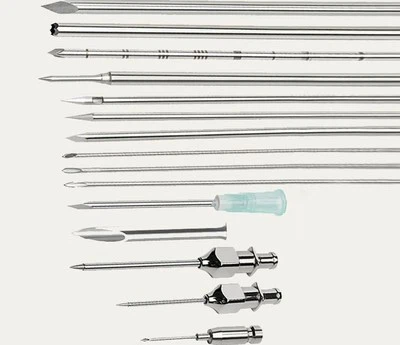
Precision And Safety Engineering: An In-Depth Analysis Of Chiba Needle Design, Materials And Manufacturing Processes
Apr 18, 2026
Precision and Safety Engineering: An In-depth Analysis of Chiba Needle Design, Materials and Manufacturing Processes
Core Product Terms: Fine Needle Aspiration (FNA) Needle, Stainless Steel Cannula, Echogenic CoatingRepresentative Manufacturers: Argon Medical Devices, PAJUNK GmbH, Merit Medical Systems, Shanghai Kindly Medical
Despite its seemingly simple structure, the Chiba needle embodies sophisticated engineering design, rigorous materials science, and complex manufacturing processes. Every qualified Chiba needle must balance four core properties-sharpness, flexibility, visibility, and mechanical strength-to ensure safe and effective clinical performance.
I. Core Design: Geometry Built for Aspiration
The primary design objective of the Chiba needle is to enable minimally invasive puncture and efficient cell/fluid aspiration, rather than cutting tissue cores.
Needle Tip Geometry (Single Bevel): Standard Chiba needles feature a long bevel tip, typically at 22–25 degrees. Acting as a slender wedge, this design separates tissue fibers with minimal resistance instead of cutting them, thus minimizing tissue trauma and bleeding risk. This stands in sharp contrast to Franseen needles, which feature a trifaceted crown tip designed for core tissue cutting.
Thin-Walled Cannula Design: While maintaining adequate puncture rigidity, the cannula wall is made as thin as possible. This delivers two key benefits: a larger inner diameter, allowing greater sample aspiration or passage of thicker guidewires at the same outer diameter; and enhanced flexibility, enabling the needle shaft to gently curve along anatomical structures and avoid penetration of non-target tissues.
Depth Markings and Adjustable Stoppers: Clear centimeter graduations on the needle shaft are a signature feature, allowing clinicians to precisely control insertion depth under imaging guidance. Many models also include a sliding depth stopper as a physical barrier to prevent over-insertion.
II. Material Selection: The Foundation of Biocompatibility and Performance
Base Material: Medical-Grade Stainless Steel: Most Chiba needles are manufactured from AISI 316L or 304 stainless steel, chosen for its exceptional overall performance: high strength to maintain needle shape, excellent corrosion resistance for in vivo environments and sterilization, and well-proven biocompatibility. Premium Chiba needles use vacuum-melted medical-grade stainless steel to ensure material purity and consistency.
Surface Finishing and Coatings:
Electropolishing: A critical post-processing step for high-end puncture needles. An electrochemical process removes micro-burrs and impurities, creating a mirror-smooth inner and outer surface. A smooth inner lumen reduces frictional damage to cells during aspiration and ensures smooth guidewire passage, while a smooth outer surface lowers penetration resistance.
Echogenic Coating: For improved visibility under ultrasound guidance, many Chiba needles feature a specialized polymer coating on the tip. With micro-textured surfaces that strongly reflect ultrasound waves, the coating appears as a bright hyperechoic dot on the monitor, significantly enhancing ultrasound visualization.
III. Manufacturing Process: From Steel Wire to Precision Instrument
The production of Chiba needles exemplifies precision machining:
Tube Drawing and Cutting: Stainless steel capillary tubing is drawn to the target outer diameter and wall thickness, then cut to specified lengths.
Tip Grinding: One of the most critical steps. Using precision CNC grinders, one end of the tubing is ground to a bevel of exact angle and sharpness. Symmetry and sharpness directly determine puncture feel and tissue trauma.
Marking and Heat Treatment: Permanent graduations are applied via laser or specialized inks. Heat treatment such as passivation may follow to further improve surface corrosion resistance.
Assembly and Cleaning: The cannula is assembled with a plastic hub, usually transparent for easy visualization of blood return or aspirated samples. Multiple ultrasonic cleaning cycles remove all processing oils and particulates.
Sterilization and Packaging: Finished products undergo ethylene oxide sterilization and are sealed in high-barrier medical packaging to maintain a sterile barrier until use.
IV. Process Focus of Leading Manufacturers
U.S. manufacturers such as Argon Medical Devices emphasize extreme tip sharpness and consistency, as well as controlled shaft rigidity for complex puncture procedures.
Germany-based PAJUNK GmbH is renowned for expertise in ultrasound visualization technology, with its echogenic coating widely recognized across the industry.
Chinese manufacturers including Shanghai Kindly deliver cost-effective products at scale through optimized manufacturing and supply chains, while complying with ISO 13485 and FDA QSR requirements. They also actively develop mid-to-high-end models with enhanced features such as echogenicity.
V. Conclusion: Complexity Beneath Simplicity
From raw material to finished device, a Chiba needle undergoes dozens of precision processes and strict inspections. Every design detail-from tip angle and graduation accuracy to material purity and surface smoothness-directly impacts puncture success, patient comfort, and diagnostic sample quality. More than an extension of an interventionalist's hand, it represents the deep integration of materials science, mechanical engineering, and clinical medicine.