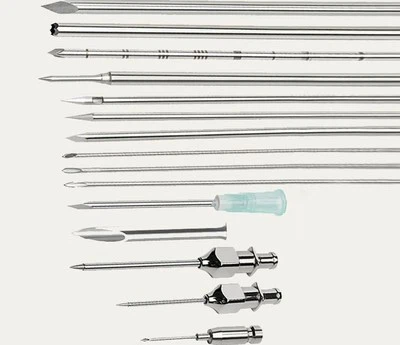
The Large Market in A Biopsy Needle: Competitive Landscape, Domestic Breakthroughs, And Innovation Trends in The Bone Marrow Biopsy Needle Industry
Apr 28, 2026
The "Large Market" in a Biopsy Needle: Competitive Landscape, Domestic Breakthroughs, and Innovation Trends in the Bone Marrow Biopsy Needle Industry
Bone marrow aspiration, as a routine procedure in hematology, underpins a considerable medical device sub-market. The bone marrow biopsy needle, as the core product of this market, reflects the typical trajectory of "import substitution" in China's high-end medical device sector: from technological dependence to independent innovation, from the market periphery to core competition. This field is at a critical intersection where international brands have deep moats and domestic companies are striving to break through.
I. Market Drivers: The Twin Engines of Precision Diagnostic Demand and Technological Iteration
The Steadily Growing Base of Clinical Demand: The incidence of hematologic malignancies (leukemia, lymphoma, myeloma, etc.) remains stable or slightly increasing. With an aging population, diagnostic demand for diseases like myelodysplastic syndromes (MDS) is rising. Bone marrow aspiration is essential for diagnosis and follow-up, ensuring stable market demand.
Product Upgrade Demand Driven by "Precision": The crude requirement of "being able to aspirate marrow" has been upgraded to the refined need for "high sample quality, low procedural trauma, and standardized workflow." This pushes the market from low-value-added普通 aspiration needles towards high-value-added integrated biopsy needles and specialized needles with unique safety or sampling features, raising unit prices and profit margins.
The Trend Towards Single-Use: Driven by infection control, operational convenience, and avoidance of cross-contamination, sterile, single-use bone marrow biopsy needles have become the absolute mainstream. This establishes their business model as "high-value consumables," creating a continuous market revenue stream.
II. Competitive Landscape: The "System Ecosystem" of International Giants and the "Breakthrough Battle" of Domestic Firms
The global market has long been dominated by a few international giants, such as Medtronic, BD, and Integra. Their advantages are built on:
"Device + Consumable" Ecosystem: Many giants offer complete solutions including biopsy guns and needles, binding customers through system compatibility.
Deep Patent and Technology Moats: Core patents in needle tip heat treatment, precise geometry of cutting notches, tissue capture mechanisms, and special coatings build technological barriers.
Strong Academic Promotion and Physician Education: By supporting academic conferences and training, and collaborating with top hematology centers, they deeply associate their products with the "gold standard" and "expert choice," influencing clinical habits.
Domestic bone marrow biopsy needle companies (like some Chinese medical device firms) employ multi-pronged strategies for breakthrough:
Cost Advantage and Market Penetration: Offering significantly more price-competitive products while ensuring basic safety and efficacy, quickly penetrating the cost-sensitive mid- and lower-tier hospital market, achieving a "surround the cities from the countryside" strategy.
Differentiated Innovation and Rapid Iteration: Innovating around specific pain points while avoiding the patent-dense "heartland" of international giants. Examples include optimizing needle length and stiffness for Asian patient physiques, designing handles more suited to domestic physicians' habits, and developing more economical products focused on core sampling functions.
Supply Chain Autonomy and Quality攻坚: Gradually mastering the full industry chain technology, from medical-grade stainless steel materials to precision machining, tip grinding, and polishing. Stable, reliable quality is the cornerstone for domestic products to win trust, requiring跨越 strict process consistency thresholds.
From "Imitation and Following" to "Application Innovation": Some leading domestic firms are no longer content with imitation and are exploring innovations like needles with superficial tissue separation features (to reduce pain) or designs more convenient for integration with imaging guidance (e.g., ultrasound), attempting to build advantages in specific application scenarios.
III. Technological Development Trends and Future Challenges
Materials and Precision Manufacturing are the Lifelines: Exploring more wear-resistant, sharper, and biocompatible needle tip materials (e.g., special alloys) and achieving automated machining and inspection with micron-level precision are fundamental for product升级.
Forward Look on Integration and Intelligence:
Integrated Sensing: Could future biopsy needles integrate微型 pressure sensors to provide objective visual/tactile feedback when the tip contacts the periosteum or breaches the cortex, assisting less experienced operators?
Instant Sample Quality Feedback: Technically, could a simple optical or electrical detection be integrated into the needle to instantly indicate if the red blood cell/nucleated cell ratio in the obtained sample meets standards?
Integration with Robotic-Assisted Biopsy: For more complex scenarios (e.g., vertebral biopsy), specialized disposable smart needles could become the "end-effector" for robotic systems.
Profound Impact of Volume-Based Procurement (VBP): As a high-value medical consumable, bone marrow biopsy needles have been included in VBP programs in multiple provinces. VBP trades "volume" for "price," drastically compressing price markups,淘汰 low-end capacity. For domestic firms, this is a strategic opportunity to accelerate market consolidation and gain volume through price reduction, but it also forces them to survive through extreme cost reduction and economies of scale. For international giants, it presents a challenge to adjust market strategies, strengthen high-end innovative product lines, or seek partnerships with domestic companies.
Conclusion:
The bone marrow biopsy needle market is a microcosm for observing the upgrade of China's medical device industry. It has high technical barriers, strong and inelastic demand, and is influenced by both policy and clinical technology. Currently, the market is transitioning from the "absolute dominance" of international brands to a new stage of "platform competition and tiered competition" between Chinese and foreign firms. The success of import substitution is by no means a simple price war but a comprehensive contest围绕 breakthroughs in core technology, leaps in product quality, creation of clinical value, and supply chain cost control. For the entire industry, the evolution of the bone marrow biopsy needle is a vivid portrayal of "Made in China" progressing from "usable" to "good to use," and now seeking to be "leading." Its future landscape will be defined by those enterprises that can deeply integrate technological innovation with localized needs.