The Art And Science At Fingertips: How Bone Marrow Puncture Needles Serve As Tactile Extensions For Hematologists
Apr 28, 2026
The Art and Science at Fingertips: How Bone Marrow Puncture Needles Serve as Tactile Extensions for Hematologists
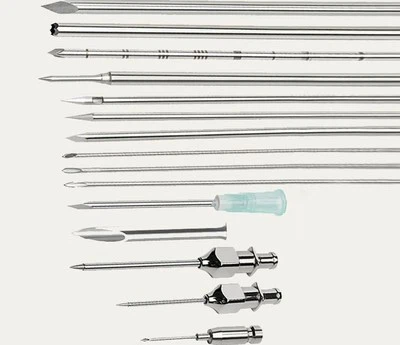
Popular science materials on bone marrow puncture elaborate on procedural workflows and clinical significance. For practicing hematologists, successful puncture and optimal sample retrieval rely on integrated medical expertise, clinical experience and tactile sensitivity. The bone marrow puncture needle functions as the critical tactile interface connecting clinicians' hands to patients' bone marrow tissue. A well-engineered puncture needle accurately transmits mechanical feedback, amplifies clinical operational intuition, and minimizes technical variables, allowing physicians to focus entirely on diagnostic accuracy rather than operational limitations imposed by suboptimal instruments.
I. Ergonomic Engineering: The Tactile Logic Behind Streamlined Operations
Bone marrow puncture is a highly tactile-dependent procedure. Distinct sensory feedback at each stage-skin penetration, cortical bone breakthrough, bone marrow cavity entry, and sample extraction-guides clinical manipulation.
1. Clarity and Predictability of Tissue Breakthrough Sensation
Physicians require distinct tactile "give-way sensations" to confirm successful entry into the bone marrow cavity upon penetrating dense cortical bone. Needle tip design, including sharpness and bevel geometry, must generate perceptible yet controllable penetration resistance to prevent abrupt operational instability. Standardized tactile feedback eliminates ambiguous sensory cues that cause clinical hesitation, reducing patient discomfort and procedural duration while mitigating judgment interference from variable bone density across patients.
2. Stable Grip and Precise Manipulation
The contour, material and anti-slip texture of needle handles directly influence stability and force control during rotational and axial pressure application. Ergonomically optimized handles distribute mechanical stress and reduce hand fatigue during prolonged biopsy procedures. Balanced instrument design integrates the needle seamlessly with the operator's hand for intuitive manipulation.
3. Smooth and Reliable Component Connectivity
Modern integrated one-step puncture biopsy needles comprise outer cannulas, inner core needles, syringes and multiple modular components. Tight, friction-free, coaxial connections between parts ensure operational continuity. Loose fittings, mechanical sticking or misalignment during fluid aspiration or biopsy core harvesting compromise sampling quality and exacerbate patient pain.
II. Sample Quality Upgrade: From Basic Feasibility to Diagnostic Excellence
Clinical priorities extend beyond successful sample retrieval to acquiring diagnostically valuable specimens, with puncture needle design governing overall sample integrity and purity:
- Peripheral Blood Contamination Control in Bone Marrow Fluid Aspiration: High-quality bone marrow fluid must be enriched with nucleated cells and free from excessive peripheral blood dilution. The position, size and quantity of lateral needle ports, combined with regulated negative pressure aspiration, optimize specimen purity. Specialized needle configurations facilitate centralized intra-medullary sampling for high-concentration hematopoietic cell acquisition.
- Integrity of Bone Marrow Biopsy Cores: The definitive performance benchmark for biopsy needles. Sharp, precision-machined cutting edges and optimized needle groove geometries enable clean dissection and intact containment of uncompressed bone marrow tissue. Tissue compression disrupts histological architecture and impairs pathological interpretation. Tactile feedback during needle rotation and withdrawal enables real-time clinical assessment of biopsy core integrity.
III. Safety Boundary Protection: A Physical Barrier for Patient Safety
While pursuing superior sample quality, puncture needle design prioritizes patient safety as the primary design principle:
- Depth Limitation and Anti-Penetration Mechanisms: Sternal puncture carries inherent risks of mediastinal tissue injury, mandating puncture needles equipped with adjustable depth locking systems as standard safety configurations. Variable needle length specifications for iliac punctures further establish physical safety limitations.
- Soft Tissue Protection Protocols: Sharp needle tips are rapidly enclosed by protective cannulas following skin and soft tissue penetration for fluid aspiration needles, while biopsy needle cutting edges remain concealed except during bony penetration to prevent unnecessary soft tissue laceration.
- Improved First-Pass Sampling Success Rate: Ergonomically refined, tactily intuitive puncture needles enhance single-attempt procedural success. Minimizing repeated puncture attempts reduces patient suffering, local hematoma incidence and healthcare-associated infection risks.
IV. Clinical Training and Standardization: A Standardized Carrier for Technical Inheritance
Bone marrow puncture constitutes a fundamental clinical skill for hematologists. Standardized puncture needle systems underpin clinical training and medical quality control:
- Reproducible Operational Experience: Uniform, standardized instrument specifications ensure consistent tactile feedback and operational techniques for trainees under senior physician supervision, stabilizing learning curves by eliminating performance discrepancies from variable equipment.
- Complication Prevention Training: Skill development in controlled force application, angulation adjustment and depth regulation using standardized puncture needles mitigates high-risk complications such as inner iliac plate perforation and post-sternal soft tissue damage.
Conclusion
From a hematologist's clinical perspective, the bone marrow puncture needle acts as a tactile amplifier, procedural actuator and comprehensive safety guardian. Premium needle systems deliver imperceptible yet high-performance functionality-distinguishing tissue breakthrough sensations, ensuring seamless manipulation, preserving sample integrity, and regulating procedural risks. Well-designed instruments eliminate operational barriers and seamlessly extend clinical capabilities. Selecting high-quality bone marrow puncture needles represents not merely equipment procurement, but the adoption of a reliable, efficient and safe clinical workflow. In the sophisticated hematological diagnostic field centered on bone marrow assessment, specialized puncture needles provide the scientific foundation for the fingertip precision of hematological clinicians.