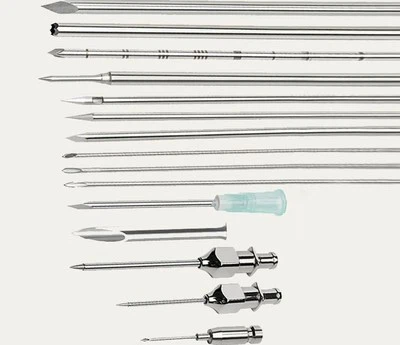
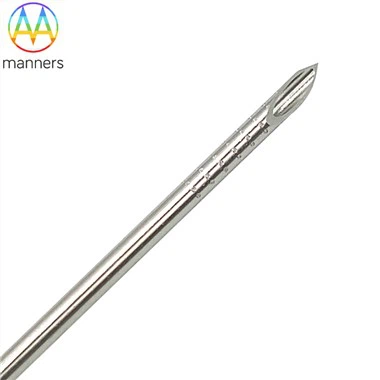
From Cost Centers To Value Creation: Economic Significance And Full-Cycle Management Value Of Bone Marrow Puncture Needles in The Precision Medicine Era
Apr 28, 2026
From Cost Centers to Value Creation: Economic Significance and Full-Cycle Management Value of Bone Marrow Puncture Needles in the Precision Medicine Era
Clinical evaluations of bone marrow puncture emphasize safety and efficacy. Nevertheless, amid refined hospital management reforms and diagnosis-related group (DRG) / diagnosis intervention payment (DIP) reimbursement frameworks, procedural value requires comprehensive assessment from a macro health economics perspective. As core high-value medical consumables for bone marrow puncture procedures, the selection of bone marrow puncture needles transcends basic procurement decisions, profoundly impacting departmental operational efficiency, overall diagnostic pathway costs, and hospital value creation capabilities within the precision medicine landscape.
I. Enhancing Diagnostic Pathway Efficiency and Reducing Recessive Costs
The diagnostic value of bone marrow puncture is ultimately reflected in comprehensive laboratory testing reports, with puncture needle sampling quality serving as the upstream entry point for the entire diagnostic workflow.
1. Eliminating Procedural Interruptions and Repeat Procedures Caused by Unqualified Samples
Substandard needle performance, including fragmented biopsy cores and severely diluted bone marrow fluid, frequently results in insufficient cellularity for flow cytometry, non-diagnostic pathological sections, and failed nucleic acid extraction. Such outcomes necessitate repeat puncture procedures, incurring duplicated costs for consumables, labor and equipment occupancy, alongside diagnostic delays and patient dissatisfaction. Under DRG reimbursement policies, unqualified samples directly contribute to financial losses per case. High-performance puncture needles ensure exceptional first-pass success rates and sample qualification rates, avoiding substantial recessive costs associated with diagnostic failure.
2. Shortening Procedural Duration and Optimizing Resource Turnover
Ergonomically optimized puncture needles with intuitive tactile feedback accelerate standardized clinical operations. In outpatient and day ward settings, reduced procedural time increases patient throughput, elevating overall medical service capacity and resource utilization efficiency.
3. Streamlining Integrated One-Step Workflows and Reducing Logistics Expenses
Integrated combined aspiration-biopsy puncture needles consolidate dual procedural functions into a single device, eliminating the need for separate instrument sets and staged operations. This simplifies nursing preparation protocols, reduces supply errors, minimizes sterile packaging varieties, and optimizes logistics and sterilization costs for central sterile supply departments.
II. Empowering Precision Diagnosis and Delivering Clinical Decision-Making Value
In precision medicine, diagnostic depth and accuracy directly determine therapeutic efficacy and long-term healthcare expenditure:
1. Supplying High-Quality Specimens for Advanced Testing Modalities
Cutting-edge diagnostic technologies including NGS and minimal residual disease monitoring impose strict quantitative and qualitative requirements on specimen nucleic acid and cellular integrity. Premium bone marrow samples are indispensable prerequisites for high-value molecular testing. Investing in high-performance puncture needles enhances institutional precision diagnostic capabilities, enabling individualized treatment planning and preventing excessive medical expenses from ineffective or inappropriate interventions.
2. Underpinning Longitudinal Disease Monitoring and Therapeutic Evaluation
Chronic management of leukemia, multiple myeloma and other hematological malignancies requires serial bone marrow punctures for therapeutic response assessment. Standardized, high-consistency puncture needles maintain stable tissue harvesting volume and cellular composition across repeated procedures, ensuring reliable longitudinal evaluation of minimal residual disease and fibrosis progression to guide targeted treatment adjustments and reduce long-term recurrence-related medical costs.
III. Risk Control and Reimbursement Safety Assurance
Under case-based payment models, procedural complications directly induce cost overruns:
1. Mitigating Direct Complication-Related Expenses
Advanced sharp-tip designs minimize iatrogenic soft tissue trauma, robust structural engineering reduces needle breakage risks, and integrated depth control mechanisms prevent catastrophic invasive injuries. These design features lower direct medical expenditures for managing hematomas, infections and nerve injuries, while mitigating potential medical dispute liabilities.
2. Comprehensive Total Cost of Ownership Analysis
Evaluations of puncture needle economic efficiency must transcend unit procurement pricing to incorporate holistic total cost of ownership, including direct procurement expenses, quality failure risks, operational efficiency losses, and reusable component maintenance, disinfection and replacement costs. Premium puncture needles with moderately higher procurement prices often deliver superior long-term economic benefits by reducing quality risks and operational inefficiencies, optimizing institutional profitability under DRG reimbursement constraints.
IV. Facilitating Clinical Research and Disciplinary Development
High-quality standardized biological samples form the cornerstone of clinical research and biobank construction. Specimens harvested using high-performance puncture needles generate high-quality research data, supporting high-level clinical trials, enhancing institutional academic influence, and attracting complex patient populations to establish sustainable disciplinary development cycles.
Conclusion:
Therefore, within the framework of value-based healthcare, the economic positioning of the bone marrow biopsy needle has fundamentally shifted. It has been upgraded from a "consumable" whose cost needs compression to a "value-creating tool" capable of generating diagnostic value, improving operational efficiency, controlling systemic risk, and ultimately enhancing patient outcomes. When making selections, hospital administrators and clinical departments should establish a comprehensive evaluation system based on Total Cost of Ownership, clinical output value, and support capability for precision diagnostics. Choosing an excellent bone marrow biopsy needle is a strategic investment in the efficiency and quality of the entire hematologic disease diagnostic-treatment chain, a wise choice for hospitals on the path of high-quality development.