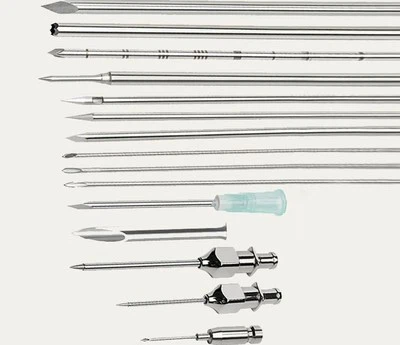
The Foundation Of Minimally Invasive Surgery: How The Needle Enables A Quantum Leap in The Core Value Of Laparoscopic Procedures
Apr 27, 2026
The Foundation of Minimally Invasive Surgery: How the Needle Enables a Quantum Leap in the Core Value of Laparoscopic Procedures
Laparoscopic surgery is hailed as a "revolutionary advancement" in surgery. Its advantages of minimally invasive procedures and quick recovery have been widely recognized. And the physical foundation of all these values lies in that first puncture needle that pierces the abdominal wall. This special topic will explain how the puncture needle lays the foundation and amplifies the entire value system of laparoscopic surgery.
Value Pillar One: Minimization of the Limitations of Physical Injuries
Compared with the dozens of centimeters of incision in open surgery, the trauma of laparoscopic surgery is reduced to several 0.5-1.2 centimeter puncture and incision holes. The puncture needle is the executor of this extreme reduction. It replaces the rough cutting with precise punctures and the linear trauma with point-like channels. This not only means less tissue damage, less bleeding (the direct cause of "minimal bleeding" in the literature), but also means significantly reduced postoperative pain and lower demand for analgesics. The micro holes created by the puncture needle, after healing, have almost invisible scars, greatly meeting the aesthetic needs of patients, especially young female patients.
Value Pillar Two: The Revolution in Perspective from "Macro Exposure" to "Micro Insight"
Open surgery relies on the direct vision and tactile feedback obtained through large incisions. The channel established by the puncture needle introduces the laparoscopic lens, transforming the surgeon's view from the limited range visible with the naked eye to a "God's-eye" perspective displayed on the screen, which is magnified and free of shadows. This is not only an expansion of the field of vision, but also a leap in the quality of observation. Fine anatomical structures and tiny nerves and blood vessels can be clearly presented, providing the possibility for precise surgical operations. And all of this begins with the first optical channel established by the puncture needle.
Value Pillar Three: Stability and Controllability of the Surgical Environment
The puncture sheath connected to the puncture needle is a functional integrated platform. The pressure-regulating valve and gas injection valve on it enable the abdominal cavity to maintain a stable CO₂ pneumoperitoneum pressure during the surgery. This constant operating space separates the organs from the abdominal wall, providing a spacious and stable stage for instrument operations. Without the sealed channel established by the puncture needle, pneumoperitoneum cannot be maintained, and minimally invasive surgery would be impossible. It transforms "exploring in the deep and fluctuating abdominal cavity" into "working in a stable and spacious space".
Value Pillar 4: The Chain Reaction of Efficiency Enhancement and Rapid Recovery
The reduction of trauma directly leads to a decrease in physiological disturbances. Patients recover their gastrointestinal function more quickly after surgery, get out of bed to move around earlier, and have significantly shorter hospital stays ("short hospitalization time"), thus returning to normal life and work more quickly. From the perspective of the medical system, the turnover of hospital beds speeds up and the efficiency of medical resource utilization improves. This series of benefits of "rapid rehabilitation surgery", whose initial trigger is the minimally invasive approach achieved by the puncture needle, is significant.
Value Pillar Five: Provide access possibilities for highly complex and difficult surgeries
For surgeries on deep organs (such as the prostate, rectum, and lower part of the esophagus), traditional open surgeries require large incisions and extensive tissue separation. However, through the multi-point laparoscopic channels established by puncture needles, the instruments can precisely reach the deep targets from different angles like "mechanical hands", perform fine dissection and suturing under magnified vision, enabling many highly challenging surgeries to be completed under minimally invasive conditions, thus expanding the treatment boundaries of surgery.
Conclusion: The value of the puncture needle goes far beyond "making a hole". By creating a minimally invasive entry point, it introduces a new visual system, a stable operating space, and a precise instrument system, thereby systematically and sequentially achieving all the core values of laparoscopic surgery in reducing pain, improving prognosis, enhancing efficiency, and achieving aesthetic results. It is the first and most important cornerstone of the modern minimally invasive surgical edifice.