Dissecting The Brachytherapy Needle Competitive Landscape: Territory Mapping Among BD, Argon, Eckert & Ziegler, And Niche Specialists
Jun 16, 2026
https://cloud.merit.com/catalog/IFUs/404781101.pdf
Market Concentration: Medium-High, with "System Vendors" Taking the Lion's Share
Brachytherapy needles are rarely procured in isolation. Hospitals purchase an entry ticket to a therapeutic ecosystem: using Elekta's Flexitron afterloader requires committing to its applicator/needle ecosystem; performing prostate seed implantation requires binding to a specific I-125/Pd-103 seed supplier. Consequently, the competitive landscape naturally divides into three spheres: system vendors, isotope manufacturers, and independent needle manufacturers.
Tier 1: BD (The Bard Legacy) – Channel Dominator
Through its acquisition of C.R. Bard, BD integrated decades of brachytherapy needle, template, and implant device assets into its Interventional Radiology and Surgery portfolio. Bard's ProGuide family of needles, templates, and implant accessories enjoys immense brand inertia in the Prostate LDR space. Workflows in numerous U.S. cancer centers are built around this toolchain.
BD's advantage is not a single technology but:
- Legacy Installed Base: Hospitals already use Bard's needles and templates.
- Cross-Disciplinary Sales Network: Integrated access to Interventional Radiology, Urology, and Oncology.
- Regulatory Breadth: Extensive FDA 510(k) clearances and mature change management protocols.
The weakness? Bard's brachytherapy line is a "mid-sized business" within BD's massive empire, sometimes seeing its innovation pace diluted by corporate priorities.
Tier 2: Argon Medical & Best Medical – The Specialist's Survival Strategy
Argon Medical (Texas) is one of the most formidable independent players. Its strategy focuses on high-quality universal needles, guide needles, and implant accessories compatible with multiple afterloader brands, capturing market share through manufacturing precision and supply chain responsiveness.
Best Medical International (Virginia) extends its focus upstream to isotopes (I-125/Pd-103 seeds), offering integrated "Seed + Needle + Applicator" bundles. It represents a different logic: I don't sell the machine, but I monopolize your consumable lifeline.
Isotope King: Eckert & Ziegler BEBIG
E&Z's moat is its upstream radioactive isotope production capability. It manufactures the source and sells the compatible applicator needles and afterloader equipment. This vertical integration grants it a strategic position in Europe and other regions that pure device manufacturers cannot easily replicate.
Niche & Emerging Players
| Company | Strategic Positioning |
|---|---|
| IsoAid | LDR seeds +配套 needles, focusing on the prostate seed implant market. |
| Theragenics | Dual focus on isotopes and devices; historically a key Pd-103 player. |
| CIVCO Medical | Ecosystem of ultrasound fixation/positioning/guidance accessories, indirectly supporting needle placement accuracy. |
| Riverpoint Medical | Specialty needle tubing/OEM customization; appears on core manufacturer lists in multiple reports. |
| iCAD / Xoft | Electronic Brachytherapy (eBx) – Uses low-energy X-ray sources instead of isotopes, following a "bypassing isotope regulation" route. The needle/applicator design logic is entirely different. |
Key Patterns in M&A and Strategy
M&A in this market is less about "big fish eating small fish for technology" and more about expanding indication coverage or plugging channel gaps:
- BD's acquisition of Bard is the classic case-buying not just needles, but the Radiotherapy Department's access relationship and regulatory asset package.
- Future integration directions to watch: Binding between robotic guidance platforms and needle systems (detailed in Part 4), and "consumable operational upgrades" like sterile disposable packaging + RFID tracking.
The Domestic (Chinese) Market Window
Interest in brachytherapy is rising in China, but localization bottlenecks are not about "whether we can turn a stainless steel hollow needle," but rather:
- Supply chain autonomy for isotopes (especially I-125/Pd-103).
- Compatibility certification with mainstream TPS/afterloaders.
- Full-chain compliance including NMPA Class III certificates and radiation hygiene licenses.
Therefore, for the foreseeable 3–5 years, the global landscape will remain dominated by Western system vendors, fragmented by niche specialists, with Chinese players initially executing a gradual script of mid-to-low-end/generic specification substitution.
Material Selection Logic: Stainless Steel vs. Titanium Alloy
Stainless Steel wins on three fronts:
- Extreme Process Maturity: Turning, milling, and drilling processes for tip bevel grinding, lumen reaming, and side-hole punching achieve high batch consistency.
- Cost Control: For a niche product with annual volumes in the "hundreds of thousands," material premiums must be exceptionally justified to gain traction.
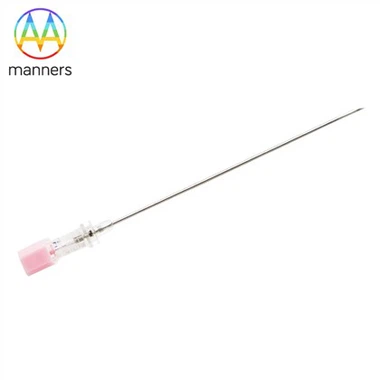
- Sufficient Rigidity: Especially for 14G–17G coarse needles that must penetrate tough periprostatic tissue or withstand force in cervical applications, steel offers the most reliable performance.
Titanium Alloy enters the picture for MRI Compatibility + Lightweighting:
- Titanium is non-ferromagnetic (strictly speaking, paramagnetic with negligible effect). In high-field MRI-guided brachytherapy scenarios, it does not produce significant artifacts or heating risks.