The Embroidery Needle in Hand: OPU Needle Operation Skills, Influencing Factors And Best Practices
Apr 29, 2026
The Embroidery Needle in Hand: OPU Needle Operation Skills, Influencing Factors and Best Practices
Within the OPU-IVP technical workflow, OPU needle operation is the only direct intervention on donor cow ovaries. Operational proficiency directly governs the quantity and quality of oocytes for subsequent in vitro production. Operators require solid expertise in veterinary anatomy and ultrasound imaging, alongside delicate tactile control and stable mental focus comparable to using an embroidery needle. Focusing on practical application, this paper explores core operational skills, key influencing factors and standardized best practices to achieve high oocyte recovery and superior cell quality.
I. Pre-Operative Precision Preparation: The Foundation of Success
1. Donor Selection and Pre-Treatment
Not all cows are suitable for OPU. Young or adult cattle with active ovarian function and healthy follicle development are prioritized. Comprehensive health examinations are mandatory before procedures, and short-term hormonal treatments such as FSH may be applied to synchronize follicle growth and increase retrievable follicle numbers. Proper restraint and sedation (when necessary) ensure safe and smooth operations.
2. Precision Instrument Preparation
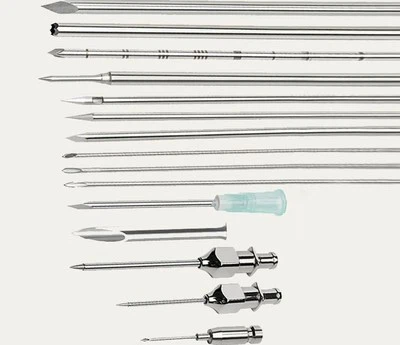
The functional condition of OPU needles is critical and must be inspected before each use:
- Patency Testing: Verify full lumen patency with sterile saline or dedicated flushing solution to eliminate blockages.
- Sharpness Inspection: Check for bent tips or burrs, as minor defects cause severe tissue trauma and cell damage. Commercially available single-use OPU needles guarantee consistent sharpness and sterile conditions.
- System Sealing and Pre-Warming: Inspect full tubing tightness and normal negative pressure functionality. Pre-warm all oocyte-contacting solutions and collection tubes to 38.5°C (bovine physiological temperature) using constant-temperature platforms or thermal sleeves to prevent cold shock-induced oocyte damage.
3. Accurate Ultrasound Image Interpretation
Operators must proficiently identify ovarian contours, target follicles (3–8 mm in diameter), corpora lutea and peri-ovarian blood vessels on ultrasound scans. Precise image recognition prevents vascular puncture, hemorrhagic contamination and enables optimal puncture trajectory selection.
II. Core OPU Needle Operation Skills: Stability, Accuracy, Gentleness and Rapidity
1. Puncture Planning and Needle Insertion (Stability & Accuracy)
Under ultrasound guidance, position the pick-up probe closely against the target ovary and adjust angles to center target follicles on the scanning guide line. Advance the OPU needle steadily along the dedicated channel with soft wrist control rather than rigid arm movement to regulate penetration depth precisely. A single clean bevel penetration into the follicular cavity is required to avoid repeated puncture of individual follicles.
2. Negative Pressure Activation and Aspiration Timing (Gentleness & Rapidity)
Modern OPU devices adopt foot-switch controlled negative pressure. The gold-standard protocol is to activate preset optimal negative pressure (90–110 mmHg) instantly once the needle tip is confirmed inside the follicular cavity via real-time ultrasound. Cease aspiration immediately upon complete follicle collapse on imaging to prevent excessive suction, follicular wall tissue inhalation and sample contamination.
3. Multi-Follicle Puncture Strategy
Adopt systematic puncture sequences (distal to proximal or clockwise order) to avoid missed follicles. High-risk follicles located too deeply or adjacent to major blood vessels shall be abandoned to ensure animal safety and prevent severe hemorrhagic contamination.
4. Application of Flushing Technology
For dual-lumen OPU needles or flushing-compatible systems, infuse pre-warmed buffer and perform secondary aspiration after primary fluid extraction to improve COC recovery, especially for viscous follicular fluid and tightly adhered oocyte complexes.
III. Key Factors Affecting OPU Efficiency and Oocyte Quality
1. Operator Proficiency and Hand Stability
As the most critical variable, experienced operators achieve faster ovarian positioning, more accurate puncture and streamlined workflows, reducing animal stress and raising oocyte recovery rates above 70%. Hand stability directly determines puncture precision and the degree of mechanical ovarian trauma.
2. Individual Donor Variations
Breed, age, nutritional status, hormone levels and estrous cycle stages significantly affect follicle quantity, size and oocyte developmental quality. Individualized donor assessment and standardized management are essential.
3. OPU Needle Performance
Needle sharpness, inner wall smoothness and pump system compatibility directly determine aspiration efficiency and mechanical cell damage rates.
4. Environmental and Process Control
Operational sanitation, constant temperature maintenance and time intervals between aspiration and oocyte detection collectively influence subsequent embryonic developmental potential.
IV. Standardized Best Practices and Continuous Optimization
1. Establishment and Implementation of Standard Operating Procedures (SOPs)
Laboratories shall formulate detailed OPU SOPs covering animal preparation to oocyte screening, ensuring repeatable and standardized results.
2. Simulation Training and Skill Assessment
Novice operators must complete systematic training on isolated ovarian models and simulators to master ultrasound interpretation and hand-eye coordination before live animal operations.
3. Data Recording and Statistical Analysis
Record detailed data including punctured follicle number, recovered oocyte count, cell grading and operation duration. Regular data analysis identifies operational weaknesses and optimizes customized strategies for different donor groups.
4. Animal Welfare Priority
Always prioritize donor welfare with standardized sedation and analgesia, gentle manipulation and post-operative monitoring, ensuring the long-term sustainable development of OPU technology.
Conclusion
OPU needle operation is a sophisticated craft integrating professional technology, practical skill and empirical experience, connecting precision medical devices with living animal tissues. The pursuit of high recovery rates and high-quality oocytes demands extreme patience, carefulness and concentration from operators. Through in-depth principle mastery, skilled operational techniques, factor analysis and standardized best practices, technicians can maximize the performance of this delicate "embroidery needle", providing high-quality and sufficient germ cells for subsequent in vitro fertilization and embryo culture. The practical value of reproductive technology is ultimately realized through skilled manual operation.