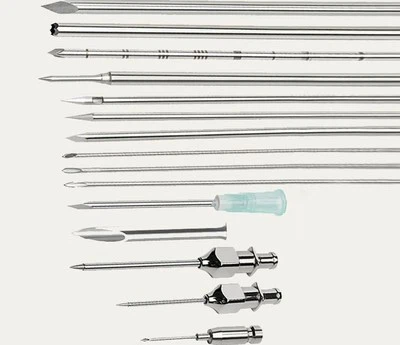
Efficiency Multiplier: How OPU Needle Technological Innovation Boosts The Overall Efficiency Of Superior Livestock Rapid Breeding
Apr 29, 2026
Efficiency Multiplier: How OPU Needle Technological Innovation Boosts the Overall Efficiency of Superior Livestock Rapid Breeding
In the bovine OPU IVP technical system, the OPU needle serves as the core upstream tool for oocyte acquisition. Its technological innovations not only determine the success of single ovum collection but also generate a multiplier effect on the whole superior breeding chain by elevating operational efficiency, guaranteeing biological quality and expanding application boundaries. This paper systematically analyzes how technical upgrades of OPU needles improve overall OPU IVP performance, and discusses their synergistic value with sexed semen, genomic selection and other cutting-edge breeding technologies.
I. Improving Single Collection Efficiency: Leaping From Quantity to Quality
A longstanding bottleneck of traditional OPU is the inconsistent oocyte recovery rate and uneven egg quality among visualized follicles. Innovative OPU needle design directly targets this core pain point.
Higher Oocyte Recovery Rate
Finer, sharper and ultra smooth bore OPU needles, paired with precisely calibrated negative pressure systems, greatly reduce mechanical damage and cell retention during puncture and aspiration. The dual lumen "aspiration flushing" design further dislodges cumulus–oocyte complexes tightly attached to follicular walls. These advances raise the average recovery rate from the early 50%–60% to over 70% or even 80%, delivering more viable raw materials per OPU session.
Guaranteed Developmental Competence of Oocytes
The developmental potential of oocytes is the decisive factor for viable transferable embryos. Optimized needle structures that lower fluid shear stress, together with biocompatible materials and standardized temperature controlled workflows, minimize oxidative stress, cold shock and mechanical trauma during harvesting. Stable high-quality oocytes lay a solid foundation for efficient in vitro maturation and fertilization.
II. Expanding Donor Adaptability and Collection Frequency: Unleashing Genetic Potential
Reduced Dependence on Donor Physiological Status
Early OPU procedures relied heavily on estrous cycle synchronization and heavy hormonal stimulation. Modern ultra-fine, minimally invasive OPU needles enable safe ovum collection from non-estrous cattle, early-stage pregnant cows and young heifers. This broadens the genetic resource pool and allows access to elite germplasm from young, high-genetic-value individuals that were previously unavailable.
High-Frequency Repeated Collection
Thin gauge minimally invasive needles cause mild ovarian trauma and rapid tissue recovery, enabling weekly or biweekly repeated OPU on top-tier donor cows. Compared with conventional MOET superovulation, OPU requires minimal exogenous hormones, ensures higher animal safety, and yields far more oocytes and annual embryos per donor. It supports exponential expansion of premium genetic resources.
III. Streamlining Workflows and Reducing Costs: Accelerating Commercialization
Shorter Operation Time and Higher Labor Efficiency
Echogenic tips, optimized puncture ergonomics and integrated programmable negative pressure controls shorten individual processing time. Skilled technicians can serve more donor cattle daily, lifting overall laboratory throughput and labor productivity.
Lower Consumable Waste and Animal Loss
Disposable high-precision OPU needles eliminate cross-contamination risks and maintain consistent sharpness and performance, avoiding egg loss or procedural failure caused by worn reusable devices. From a long-term operational perspective, they deliver superior economic benefits by stabilizing success rates and protecting core breeding herds through minimal trauma.
Seamless Connection With Downstream Embryo Production
Mild, high-efficiency OPU provides stable, high-quality oocyte supplies for downstream IVP procedures, raising fertilization, cleavage and blastocyst rates. Stable annual embryo output per donor effectively dilutes unit production costs and strengthens the commercial competitiveness of bovine embryo breeding programs.
IV. Synergistic Technology Integration: Building a High-Efficiency Breeding Model
Advancements in OPU needle technology have normalized high-frequency, high-efficiency oocyte acquisition, laying the groundwork for integrated application with frontier reproductive and genomic technologies.
OPU IVF + Sexed Semen
Oocytes harvested via high-throughput OPU can be fertilized with flow sorted X chromosome semen, achieving over 90% female embryo rates. This brings revolutionary value to dairy herds needing large numbers of replacement heifers and accelerates the expansion of superior female lines in beef breeding.
OPU IVF + Genomic Selection
Combining OPU with high-density genomic testing enables accurate genetic evaluation of bulls and donor females. Only genetically superior individuals are selected for customized mating. Pre-implantation embryonic genotyping realizes precise matching and embryo-level selection, shortening generation intervals and greatly accelerating genetic gain.
Conclusion
Though small in size, the OPU needle forms the efficiency cornerstone and critical fulcrum of modern bovine rapid breeding systems. Its continuous upgrades - finer gauge, higher precision, intelligent control and gentler tissue interaction - jointly deliver more abundant high-quality oocytes, wider donor coverage, higher collection frequency and lower overall costs. Ultimately, it enables large-scale, cost-effective production of gender-controlled, genotypically verified premium embryos from elite breeding stock, reshaping traditional breeding rhythms and acting as a core efficiency multiplier for livestock genetic improvement. With the integration of automation, AI ultrasound recognition and intelligent puncture assistance, this multiplicative effect will continue to expand in the future.