OPU Needle: The Core Tentacle Of Ovum Pick-Up Technology — Principles, Evolution And Design Essentials
Apr 29, 2026
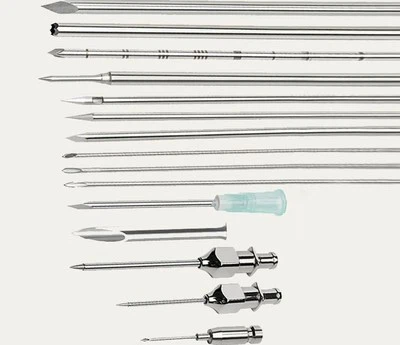
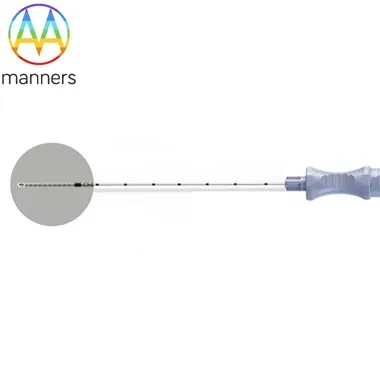
In the modern technical system for rapid high-quality cattle breeding, the combination of Ovum Pick-Up (OPU) and In Vitro Embryo Production (IVP) has become the core engine driving genetic progress. Within this sophisticated technological chain, the OPU needle plays an irreplaceable and critical role. It serves not only as a bridge connecting B-mode ultrasound imaging and physical follicles, but also as the primary determinant of the quantity and quality of retrieved oocytes. This article thoroughly analyzes the technical principles, design evolution and core design elements of OPU needles, revealing how this slender tubular device acts as a vital "core tentacle" to unlock high-yield genetic potential.
I. Working Principles of OPU Needles: Precision "Capture" at the Microscopic Level
Essentially, OPU technology retrieves immature oocytes from ovarian follicles via transvaginal ultrasound-guided puncture, without harming donor cows. The OPU needle is the core executive component that enables this process.
1. Spatial Positioning Under Ultrasound Guidance
Operators insert an ovum pick-up device equipped with a high-frequency ultrasound probe (typically 5–7.5 MHz) through the vagina and place it closely against the rectal wall, to display real-time two-dimensional images of the ovaries and follicles. Guided by real-time ultrasound navigation, the OPU needle is precisely advanced to target follicles through a dedicated channel on the pick-up handle.
2. Fluid Mechanics of Negative Pressure Aspiration
The OPU needle is a hollow thin tube, with its rear end connected to an adjustable negative pressure pump system via flexible tubing. The moment the needle tip penetrates the follicular cavity under ultrasound guidance, the system delivers precisely controlled negative pressure (usually 80–120 mmHg). This pressure draws follicular fluid together with enclosed Cumulus-Oocyte Complexes (COCs) into the needle lumen.
3. Oocyte Collection and Protection
Aspirated follicular fluid and COCs are immediately delivered into pre-warmed test tubes filled with oocyte collection medium (generally buffer solutions containing anticoagulants such as heparin). Systematic temperature control, fluid pre-warming and optimized buffer compositions are designed to minimize physical and chemical stress on fragile oocytes.
II. Design Evolution of OPU Needles: From Universal Puncture to Oocyte-Specific Design
The design of OPU needles has evolved continuously, driven by refined upgrades focused on higher recovery rates, guaranteed oocyte quality and improved operational efficiency.
1. Early Stage: Crude Puncture Needles
Early designs were adapted from human medical follicle puncture needles, featuring relatively large gauges (18–19G) and simple beveled tips. Their primary function was follicle penetration and fluid extraction, yet they caused significant mechanical damage to oocytes, unstable recovery rates and obvious trauma to ovarian tissue.
2. Standardization Stage: Emergence of Specialized OPU Needles
With the commercialization of OPU technology, cattle-specific OPU needles were developed with key optimizations:
- Reduced Gauge: Widely upgraded to finer 20G, 21G and 22G specifications to minimize ovarian tissue damage and bleeding caused by puncture.
- Optimized Tip Design: Precisely engineered bevel angles and sharpness enable smooth penetration of the follicular wall and reduce cutting damage to oocytes.
- Smooth Inner Wall: Highly polished lumens lower cell adhesion and friction during fluid transportation.
3. Modern Refined Stage: Integration and Intellectualization
- Dual-Lumen Design: High-end OPU needles adopt dual-channel structures. One lumen delivers negative pressure for follicular fluid aspiration, while the second infuses buffer or culture medium immediately after puncture to form an "aspiration-flushing" cycle, theoretically boosting COC recovery, especially for viscous follicular fluid or tightly adhered complexes.
- Echogenic Tip Modification: Special ultrasound-reflective coatings or micro-structured tips enhance visualization on B-mode ultrasound, enabling accurate real-time positioning, faster puncture and improved precision.
- Optimized Pump System Integration: Modern OPU needles are fully compatible with programmable negative pressure pumps, supporting instant pressure activation and shutdown to reduce fluid shear stress on oocytes. Some systems feature automatic aspiration triggering upon follicle penetration for faster, more continuous operations.
III. Key Performance Indicators of OPU Needle Design
High-performance OPU needles strike an optimal balance among multiple restrictive parameters:
- Rigidity vs. Flexibility: Premium stainless steel alloys ensure sufficient structural rigidity to avoid bending during transvaginal and ovarian capsule penetration for accurate puncture trajectories, while maintaining moderate flexibility to prevent breakage and excessive tissue trauma.
- Sharpness vs. Safety: Ultra-sharp tips minimize penetration resistance, pain and tissue injury; precisely calculated bevel angles prevent accidental vascular puncture and secondary damage.
- Inner Diameter and Flow Velocity: Lumen diameter directly determines aspiration speed and fluid shear force. Custom-calibrated inner diameters prevent blockage by viscous fluid or large COCs and avoid excessive shear stress induced by high-speed flow.
- Biocompatibility and Non-Pyrogenicity: Medical-grade raw materials deliver excellent biocompatibility without toxic substance release. Strict pyrogen-free manufacturing eliminates exogenous contamination and safeguards subsequent in vitro embryo culture.
Conclusion
As precision metal tubes measuring only 20 to 30 centimeters in length, OPU needles represent a typical example of "small components with great significance" in modern cattle reproductive biotechnology. Every puncture and aspiration directly determines the starting point of high-quality potential embryos. From crude structures to refined designs, and from single functionality to integrated intelligence, the evolution of OPU needles mirrors the continuous pursuit of higher efficiency, superior quality and enhanced animal welfare in OPU-IVP technology. In-depth understanding of working principles and continuous optimization of cutting-edge designs lay the foundation for higher ovum pick-up success rates and widespread application of rapid superior breeding technologies. Moving forward, driven by advances in material science, microfluidics and real-time imaging, OPU needles will become smarter, gentler and more efficient, maintaining their irreplaceable role as the core functional "tentacle" for genetic improvement in animal husbandry.