The Art Of Standardized Operating Procedures — The Core Role Of PTC Needles in Renal Cyst Sclerotherapy
Apr 27, 2026
The Art of Standardized Operating Procedures - The Core Role of PTC Needles in Renal Cyst Sclerotherapy
In the entire workflow of interventional ultrasound treatment for simple renal cysts, the PTC needle serves as the fundamental tool for achieving precise, safe, and effective therapy. The standardized operating procedure described in the literature is, in essence, a model of precision interventional technology centered around the PTC needle.
Preoperative Planning and Pathway Design: The First Step
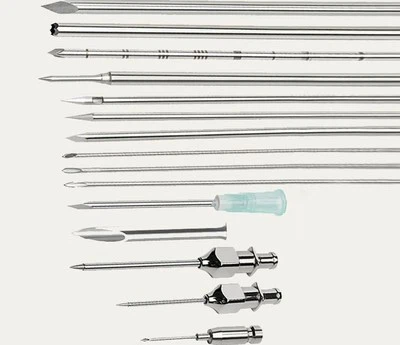
The initial application of the PTC needle lies in preoperative planning. The practice of "selecting the optimal safe puncture path using routine ultrasound" aims to chart a "highway" for the PTC needle-one that reaches the target (cyst center) directly while perfectly avoiding dangerous zones (renal parenchyma, blood vessels, and adjacent organs). The literature emphasizes that "the puncture path should be free of vessels and important tissue structures, avoiding renal parenchyma as much as possible." This requirement underscores the prerequisite for leveraging the slender and precise nature of the PTC needle to embody the concept of "minimally invasive" treatment. The 200mm length of the PTC needle (specifically the HAKKO 18G×200mm model mentioned) provides ample operating distance for deep-seated or positionally challenging cysts, while the 18G diameter strikes the optimal balance between smooth aspiration and minimal tissue trauma.
Precise Execution of Puncture and Positioning
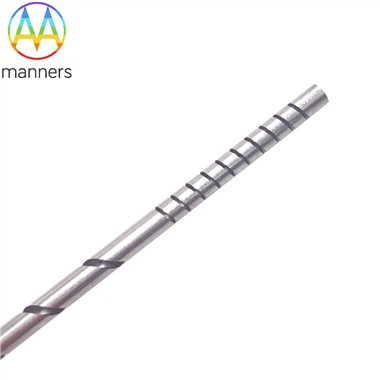
The direct manifestation of PTC needle technology is the precise execution of puncture and positioning. The achievement of "successful one-time puncture" results from the perfect synergy between real-time ultrasound guidance and the excellent echogenicity of the PTC needle. The procedure requires "using... a PTC needle under ultrasound guidance to puncture into the cystic cavity" and "observing the needle tip position in real-time to keep the needle tip centered within the cyst." This relies entirely on the superior craftsmanship of the PTC needle shaft (often featuring coatings or etched markers to enhance visibility under ultrasound), allowing the surgeon to clearly track the needle tip trajectory and ensure it remains in the optimal working position-the center of the cystic cavity. Only then can the subsequent goals of "maintaining patency and safety during fluid aspiration" be guaranteed.
Dual-Function Therapeutic Operation
The therapeutic operation demonstrates the value of the PTC needle as a multifunctional working channel.
Efficient Aspiration Channel: Once connected to a syringe, it smoothly aspirates varying amounts of cystic fluid (45–270ml). The smoothness and patency of its lumen directly determine the efficiency and thoroughness of the aspiration.
Precise Delivery and Sclerotherapy Channel: After evacuating the fluid, the same PTC needle is used to inject a calculated dose of Lauromacrogol (polidocanol) into the cyst cavity, followed by "repeated irrigation and aspiration 10–15 times." This "irrigation therapy" requires the needle to move slightly and safely within the cyst to ensure the sclerosant fully contacts the cyst wall, while remaining absolutely stable to avoid damaging the wall or puncturing outside the cyst. The rigidity, flexibility, and maneuverability of the PTC needle are critically tested in this step.
Postoperative Safety and Efficacy Assessment
The starting point for postoperative safety and efficacy assessment lies in the final manipulation of the PTC needle. The action of "inserting the stylet before withdrawing the PTC needle" is a standard step to prevent tract seeding and ensure the safe exit of the tip through tissue layers. The reported outcomes of "no adverse reactions," "no complications such as cyst hemorrhage or injury to surrounding organs," and a final efficacy rate as high as 100% serve as ultimate proof of the PTC needle's exceptional performance throughout the entire process-from precise puncture to safe withdrawal.
Conclusion
In summary, the literature presents not merely an operational guide for renal cyst sclerotherapy, but a "how-to" manual on maximizing the potential of the PTC needle. Every step in the design revolves around optimally utilizing the unique characteristics of the PTC needle, ultimately achieving a perfect translation from instrument performance to clinical efficacy.