The Standardized Operational System And Value Expansion Of Interventional Ultrasound Sclerotherapy For Renal Cysts
Apr 27, 2026
The Standardized Operational System and Value Expansion of Interventional Ultrasound Sclerotherapy for Renal Cysts
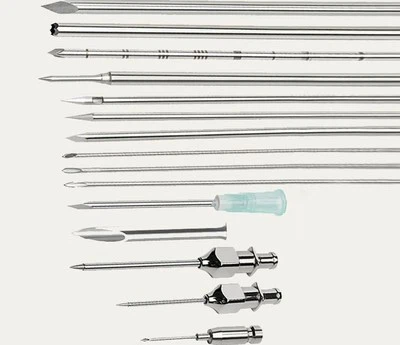
Based on the literature "Operational Experience and Application Value of Interventional Ultrasound Sclerotherapy for Renal Cysts," this analysis focuses on its core instrument-the PTC needle. Through five dimensions-core operation, specification logic, safety systems, clinical value, and future prospects-this document provides an in-depth interpretation and reconstruction, forming a series of feature articles suitable for industry knowledge dissemination.
Feature 1: The PTC Needle - The "Absolute Core" of the Standardized Renal Cyst Sclerotherapy Process
In the precise operational chain of interventional ultrasound treatment for renal cysts, the PTC needle is not a mere replaceable tool; it is the "absolute core" that runs through the entire procedure and determines success or failure. This feature distills the literature's described workflow into four core operational modules centered around the PTC needle.
Module 1: Preoperative Visual Pathway Planning with the PTC Needle as the "Probe"
The first step is not puncture, but planning a "highway" for the PTC needle. The literature states: "Perform routine ultrasound to select the best safe puncture path... ensuring no vessels or important tissue structures are in the puncture path." The essence of this step is to pre-simulate the ideal trajectory of the PTC needle from the body surface to the cyst center within the virtual imaging space. The core principles of this planning serve the physical characteristics of the PTC needle:
Straight: To leverage its rigid advantages.
Clean: To mitigate puncture risks.
Short: To ensure its length is adequate.
This ensures that every subsequent push of the PTC needle is purposeful and targeted.
Module 2: Precise Puncture and Dynamic Anchoring with the PTC Needle as the "Blade"
Puncture marks the first physical manifestation of the PTC needle's value. The goal is "successful one-time puncture." Under real-time ultrasound guidance, the PTC needle, leveraging its excellent Doppler echogenicity at the tip, allows the physician to clearly visualize the entire process of the needle "incising" tissue to reach the bullseye. The hallmark of successful puncture is that the "needle tip is located in the center of the cystic cavity." This requires the PTC needle to have excellent controllability in the later stages of puncture for millimeter-level fine-tuning. Fixing the puncture needle post-puncture signifies its transition from a "puncturing device" to a "stable working channel," with its rigidity ensuring no accidental displacement during subsequent operations.
Module 3: Aspiration and Sclerotherapy via the PTC Needle as a "Multifunctional Working Channel"
In this phase, the PTC needle assumes dual responsibilities:
Efficient Aspiration Channel: After connecting to a syringe, the smoothness of the PTC needle's lumen determines whether the aspiration of cystic fluid (45–270 mL) is smooth and thorough. The literature emphasizes "draining as much as possible," which relies on the high flow rate and anti-collapse capability provided by the PTC needle's large inner diameter (e.g., 18G).
Precision Drug Delivery and Agitator: After injecting Lauromacrogol, the "repeated irrigation and aspiration 10–15 times" is performed through the PTC needle. This critical step requires the needle tip to make slight, safe movements within the cyst to agitate the sclerosant, ensuring full contact with the cyst wall lining. Here, the stability of the PTC needle combines perfectly with its moderate mobility.
Module 4: Concluding the Operation with the Safe Withdrawal of the PTC Needle
At the end of treatment, "inserting the stylet before withdrawing the PTC needle" is the standard procedure. Inserting the stylet aims to seal the needle tip, preventing tissue cutting or carrying residuals during retraction. "Compressing the puncture site with sterile gauze for 5 minutes" then seals the micro-invasive channel left by the PTC needle. From puncture to withdrawal, the standardized use of the PTC needle completes a closed loop.
Conclusion
The standardized process for renal cyst sclerotherapy is essentially a complete technical演绎 (interpretation/performance) of the PTC needle-from "pathway planning" and "channel establishment" to "treatment execution" and "safe withdrawal." Every step is designed around maximizing the performance of the PTC needle.