Why “B 18G×200mm”? — The Clinical Adaptation Philosophy Of PTC Needles Reflected In Product Specifications
Apr 28, 2026
Why "B 18G×200mm"? - The Clinical Adaptation Philosophy of PTC Needles Reflected in Product Specifications
In the paper Operational Experience and Application Value of Interventional Ultrasound Sclerotherapy for Renal Cysts, a key technical detail clearly specifies the device adopted: "The disposable puncture needle used is HAKKO interventional PTC Needle (B 18G×200 mm) manufactured in Japan." The selection of this specific model is by no means arbitrary; instead, it profoundly reflects the precise integration between the design logic of PTC needles and actual clinical demands.
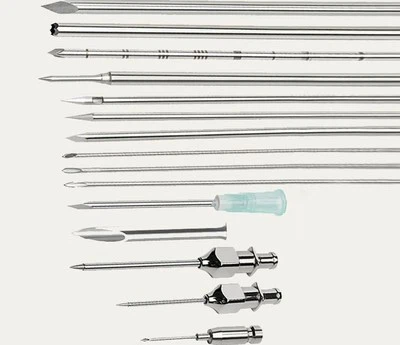
The Type B configuration defines the foundational structural design of the puncture needle. HAKKO PTC needles are generally classified into Type A, B, C and D, differentiated mainly by bevel geometry and inner stylet structure. Featuring an optimized tip design, the Type B needle delivers enhanced ultrasonic visibility, lower puncture resistance, minimized tissue trauma, and superior tract sealing performance to prevent the leakage of cystic fluid and sclerosant. Such advantages perfectly meet the refined clinical requirements of renal cyst puncture, including real-time needle tip visualization and maximum avoidance of renal parenchyma injury.
18G (outer diameter of approximately 1.2 mm) serves as the balanced golden standard for interventional procedures. Thicker needles such as 16G enable smoother fluid aspiration yet significantly raise the risks of tissue damage and hemorrhage. In contrast, thinner options like 20G or 22G reduce trauma but may cause poor drainage of viscous fluid and hinder subsequent cyst irrigation. The 18G PTC needle achieves an ideal balance for simple renal cyst treatment. Its large inner lumen supports efficient cyst fluid aspiration (the maximum drainage volume in the cited clinical group reached 270 ml) and facilitates effective turbulent irrigation within the cyst cavity with lauromacrogol injection. Meanwhile, its moderately slim outer diameter maintains satisfactory minimal invasiveness, greatly reducing damage to the renal parenchyma and peritract tissues, and forming a critical physical foundation for zero complications and adverse reactions.
The 200 mm length ensures sufficient operational depth and procedural safety. Renal cysts vary greatly in anatomical location (upper pole, mid pole and lower pole of the kidney), and patients present with diverse body types. The 200 mm specification reserves adequate operating space for puncturing deep lesions such as upper-pole renal cysts and for procedures on obese patients. More importantly, the extended length allows operators to place the needle hub and clamping section away from the ultrasound probe in a stable, ergonomic position, avoiding cramped manipulation caused by an overly short shaft and improving overall puncture stability and accuracy. Even if cyst collapse and positional displacement occur during fluid extraction, the reserved shaft length enables fine adjustment to keep the needle tip stably centered within the cyst cavity.
High-quality materials and sophisticated craftsmanship act as invisible guarantees of comprehensive performance. Though not elaborated in the literature, core advantages including medical-grade stainless steel material, precision tip grinding technology and ultra-smooth inner wall coating are essential to clinical performance. These core characteristics jointly ensure three key capabilities: first, sufficient shaft rigidity to maintain puncture trajectory and prevent bending deflection; second, a sharply honed needle tip for atraumatic, smooth penetration through the skin, soft tissue and cyst wall to reduce mechanical compression and procedural pain; third, ultra-smooth inner lumen to guarantee unobstructed injection and aspiration of cyst fluid and sclerosant without residual buildup - a critical prerequisite for complete contact between lauromacrogol and the cyst lining as well as thorough postoperative fluid evacuation.
Accordingly, the specification of HAKKO PTC Needle (B 18G×200 mm) cited in the research represents a highly professional and evidence-based choice. It fully demonstrates that successful interventional ultrasound treatment relies not only on surgical proficiency, but also on in-depth professional understanding and accurate specification matching of core instruments such as PTC needles. Widely verified by extensive clinical practice, this classic model has become a reliable, standardized optimal solution in the field of renal cyst sclerotherapy.