Technical Evolution And Innovation Trends Of PTC Puncture Needles
Apr 19, 2026
Technical Evolution and Innovation Trends of PTC Puncture Needles
Since the initial conception of percutaneous transhepatic cholangiography (PTC) puncture needles, the devices have undergone remarkable technical evolution, advancing from basic puncture instruments to highly specialized, safety-optimized interventional medical devices. Throughout its developmental history, the core design philosophy of PTC puncture needles has consistently centered on achieving greater precision, enhanced operational safety, and minimized traumatic injury in percutaneous transhepatic biliary interventional procedures.
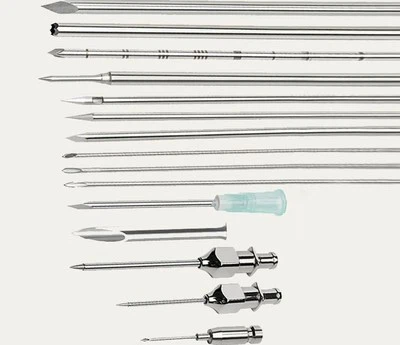
The earliest generation of PTC puncture devices is widely recognized as the Chiba needle. Characterized by an elongated slender shaft and beveled tip configuration, conventional Chiba needles are manufactured in 21G to 22G specifications, corresponding to an outer diameter of approximately 0.8 mm and 0.7 mm respectively. This device was originally engineered for puncturing non-dilated bile ducts under X-ray fluoroscopic or ultrasound guidance. The fine-caliber structure of the Chiba needle substantially mitigates the risk of perioperative hemorrhage, which revitalized clinical interest in percutaneous transhepatic cholangiography. Furthermore, it laid a fundamental technical foundation for subsequent clinical applications including percutaneous biliary drainage, portal venous system interventional therapies, and diversified transhepatic interventional procedures.
Contemporary technological innovations of PTC puncture needles are predominantly concentrated in three core dimensions: material science optimization, structural design refinement, and functional integration upgrading. In terms of material application, beyond traditional medical-grade stainless steel, medical device manufacturers have gradually adopted advanced alloy materials and biocompatible polymer composites for the fabrication of needle shafts and handgrips. These innovative materials comprehensively improve mechanical strength, shaft flexibility, and biological compatibility of the instruments. Meanwhile, continuous iterative optimization of tip geometric configurations has been implemented to attain sharper puncture performance and reduced parenchymal trauma. Multiple products have adopted multi-stage bevel structures and specialized precision grinding processes, enabling one-time penetration of the hepatic capsule and bile duct wall while alleviating repetitive damage to hepatic parenchyma.
In structural design modification, modern PTC puncture needles are integrated with radiopaque markers to improve intraoperative visibility, facilitating accurate localization of the needle tip under real-time fluoroscopy. Ergonomic redesign of instrument handles has also become a key research focus, which optimizes hand grip stability and operational controllability, thereby reducing surgical fatigue among interventional physicians. Additionally, the internal smoothness of the needle lumen exerts a decisive influence on the unobstructed passage of guidewires, which serves as a critical determinant of overall surgical efficiency.
Functional integration represents another prominent developmental trend. Modern PTC puncture needles have transcended their original role as simple puncture tools, realizing systematic integration with complete interventional surgical kits such as drainage catheters and stent delivery systems. Typical clinical innovations include one-step puncture and drainage kits, in which instruments required for sequential procedures including puncture, cholangiography, guidewire insertion, and preliminary tract dilation are pre-assembled within a sterile package. Such integrated systems streamline surgical workflows, shorten operational duration, and effectively lower perioperative infection risks.
From a forward-looking perspective, future development of PTC puncture needles will lean toward intelligent navigation and ultra-minimally invasive performance. Integration with artificial intelligence-assisted image navigation systems is expected to realize automatic puncture path planning and real-time intraoperative trajectory adjustment. Research on biodegradable materials and drug-coated needle surfaces is under exploration to further reduce postoperative complications and endow puncture instruments with auxiliary therapeutic functions. With the proliferation of ultra-minimally invasive techniques including single-port laparoscopic surgery, clinical demand for finer, more flexible, and highly directional PTC puncture needles will stimulate novel product morphology research and development. Sustained technological iteration in material, structure, intelligence and integration will remain the core driving force propelling global market expansion of PTC instruments and improving long-term clinical prognosis for patients undergoing biliary interventional treatment.