Safeguarding The Future Of The Knee Joint: The Core Value Of Meniscus Repair Needles In Improving Long-Term Clinical Prognosis
Apr 23, 2026
Safeguarding the Future of the Knee Joint: The Core Value of Meniscus Repair Needles in Improving Long-Term Clinical Prognosis
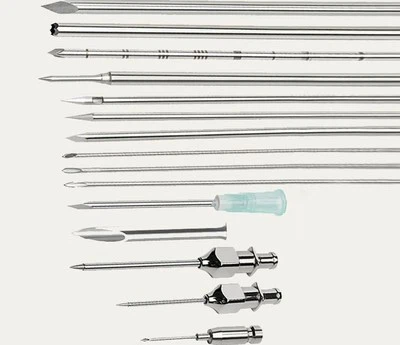
In the field of knee surgery, the therapeutic paradigm has comprehensively shifted from historical meniscectomy toward meniscus repair. Underlying this paradigm transition, meniscus repair needles serve as a pivotal instrument with fundamental clinical significance: they make the ideal of meniscus repair a widely applicable, precise and technically feasible procedure under minimally invasive conditions. Ultimately, the value of this needle is manifested in its remarkable improvement of patients' long-term quality of life, preservation of joint health, and superior health economic benefits.
The repair needle provides the physical prerequisite for biological healing rather than simple tissue resection. The meniscus is a vital structure of the knee joint responsible for stress buffering, load distribution and joint stabilization. Following meniscectomy, contact pressure on articular cartilage rises sharply, which is a well-established risk factor for early-onset knee osteoarthritis.With precise delivery capability, meniscus repair needles enable surgeons to pass sutures through torn meniscal tissue, achieve anatomical reduction and secure fixation. This creates favorable conditions for biological healing of the tear where vascular supply permits. Although clinical literature indicates that reoperation rates after repair may be slightly higher than those after resection, its long-term prognostic advantages are overwhelming: by preserving native meniscal function, it greatly delays the onset and progression of osteoarthritis, allowing patients - especially young and physically active individuals - to retain functional knee joints for decades.
The repair needle is central to the maturation and widespread adoption of all-inside suture techniques. Compared with inside-out or outside-in techniques that require additional incisions, the all-inside approach is performed entirely under arthroscopy with minimal invasiveness.Within this technique, the repair needle plays an irreplaceable role. Within the narrow joint space, it accurately deploys suture anchors or sutures from the cannula through meniscal tissue, and completes grasping or knot fixation on the opposite side. These sophisticated procedures rely on the needle's excellent force transmission, precise trajectory control and reliable suture release mechanism. Continuous evolution of repair needles has made routine repair of tears in challenging anatomical regions such as the posterior horn possible, enabling comprehensive full-scope meniscus repair.
Meniscus repair needles directly facilitate enhanced recovery pathways. As repair procedures are truly minimally invasive with only standard arthroscopic portals, combined with precise, low-traumatic suturing enabled by repair needles, patients experience markedly milder postoperative pain, swelling and inflammatory responses compared with open surgery or extensive meniscectomy.This permits early initiation of range-of-motion and muscle strength rehabilitation training, fully aligning with the principles of Enhanced Recovery After Surgery (ERAS). Patients are able to discontinue crutches earlier, resume daily activities sooner, and safely return to sports activities in due course. The advantages highlighted by Manners Technology - reduced soft tissue trauma and accelerated recovery - are translated into tangible clinical benefits for patients through the exquisite design and reliable performance of repair needles.
From a health economics perspective, despite being single-use high-value medical consumables, meniscus repair needles deliver cost-effective long-term benefits. While meniscectomy may appear lower-cost in the short term, it significantly advances the age at which patients require total knee arthroplasty secondary to subsequent osteoarthritis. Total joint replacement is expensive, and revision surgeries are even more complex.Accordingly, successful meniscus repair avoids or delays arthroplasty, generating enormous long-term medical cost savings for individual patients and the healthcare system as a whole, and achieving a superior cost-effectiveness ratio.
In conclusion, the ultimate clinical value of meniscus repair needles lies in their role as a critical tactical instrument in the knee-preservation strategy. They do not merely repair a torn cartilaginous structure, but safeguard the long-term biomechanical environment of the knee joint and slow the natural degenerative process of articular tissues.Every precise suture completed with this needle represents an investment in a more durable, functional and pain-free future for the patient's joint. Thus, it evolves from a disposable medical device into a carrier of long-term health investment with profound enduring value for patients' quality of life.