Precise Tendrils For Minimally Invasive Meniscal Repair: The Design Philosophy And Functional Integration Of Meniscal Repair Needles
Apr 23, 2026
Precise Tendrils for Minimally Invasive Meniscal Repair: The Design Philosophy and Functional Integration of Meniscal Repair Needles
The meniscal repair needle, serving as the core executing component of an all-inside suturing system, is far more than a simple puncture needle. Under the modern sports medicine philosophy that prioritizes meniscus preservation, this needle acts as the surgeon's "extended finger" and "precise eye"-an engineering bridge connecting macroscopic surgical goals with microscopic tissue suturing. Its design philosophy is to overcome the complex geometric constraints within the knee joint under minimally invasive conditions, delivering tough sutures precisely and reliably through fragile torn meniscal tissue to achieve anatomical reduction and biological healing.
Needle Tip Geometry: Concentrated Design Intelligence
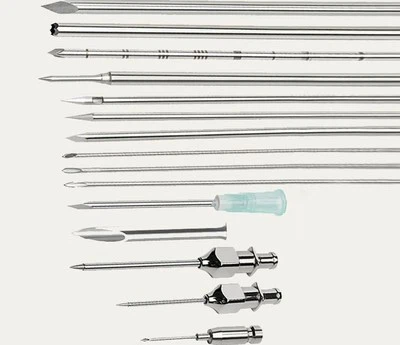
The geometry of the needle tip epitomizes design intelligence. The "ultra-sharp tip" emphasized by manufacturers like Manners Technology is achieved through precision grinding techniques. This sharpness is not merely for simple piercing; it is designed for atraumatic, incisive entry into the dense fibrocartilage of the meniscus. A dull tip crushes and tears tissue, expanding the zone of injury, whereas an optimized sharp tip cleanly separates fibers like a scalpel. This creates a regular channel, laying ideal groundwork for the smooth passage of the suture and secure knot tying, thereby maximizing the structural integrity of the meniscal tissue.
Shaft Curvature and Stiffness Balance: Keys to Navigating Complex Spaces
The balance of curvature and stiffness in the needle shaft is the key to navigating the complex spaces of the knee joint. The joint space is narrow, and the anatomical structures of the medial and lateral compartments differ significantly, with the posterior horn region being particularly difficult to access. Meniscal repair needles are typically designed with specific, ergonomic curvatures. This curvature is not arbitrary; it is biomechanically calculated to allow the needle to bypass the femoral condyles and glide along the curvature of the tibial plateau to reach the ideal entry point at the meniscal tear margin. Simultaneously, the shaft must possess sufficient stiffness to resist bending deformation when passing through tough tissue, ensuring puncture accuracy, yet retain a degree of elasticity to allow for surgical fine-tuning and prevent cartilage damage from a "leverage effect" caused by excessive rigidity.
Wire/Line Groove Design: The Essence of Functional Integration
The design of the line groove (wire slot) on the needle body is the essence of functional integration. Unlike standard puncture needles, the core task of a meniscal repair needle is "delivery." The precisely machined line groove on the side or back of the needle shaft acts as the "track" for the pre-loaded suture. This groove must be sufficiently smooth (achieved through electropolishing) to ensure the suture can be pulled out smoothly under significant traction without fraying, snagging, or breaking. The depth and shape of the groove must perfectly match the specific suture model-securely constraining the suture during puncture to prevent premature dislodgement, yet allowing the suture to detach smoothly from the groove via a simple needle withdrawal action once the puncture is complete, leaving the loop securely within the tissue. This "grasp-and-release" mechanism is the cornerstone of the repair needle's reliability.
Seamless Interface with the Delivery System
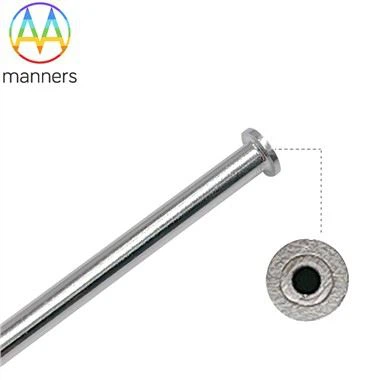
Seamless docking with the entire delivery system is a prerequisite for effective performance. The repair needle does not work in isolation; it is the terminal end of a sophisticated system (including cannulas, awls, and knot pushers). The needle's tail interface must connect quickly, firmly, and co-axially with the handle or push rod, ensuring that the surgeon's pushing force is transmitted to the tip without loss or deviation. Any looseness or misalignment at the connection point can lead to decreased puncture accuracy or even surgical failure.
Therefore, the design significance of the meniscal repair needle lies in its integration of a series of conflicting clinical requirements-high penetration power versus low tissue damage, flexible navigation versus a stable path, and secure suture retention versus smooth release-through precise engineering design. It is the physical foundation that makes the art of "threading the needle" possible under minimally invasive principles. Manufacturers like Manners Technology continuously optimize every detail of the needle by deeply researching knee biomechanics and surgical workflows. This transforms the needle from a passive tool into an intelligent partner that actively assists surgeons in overcoming technical challenges and improving repair quality, ultimately safeguarding the future of the meniscus-the knee joint's "shock absorber"-on a millimeter-level battlefield.