From Precise Grinding To Mirror-polishing: How Advanced Manufacturing Techniques Define The Performance Boundaries Of Meniscus Repair Needles
Apr 23, 2026
From precise grinding to mirror-polishing: How advanced manufacturing techniques define the performance boundaries of meniscus repair needles
An outstanding meniscus repair needle, its remarkable performance does not arise out of thin air; it is rooted in a series of unparalleled manufacturing processes. The precise grinding, Citizen Cincom machine processing, electrolytic polishing, and wire-cut electrical discharge machining mentioned by Manners Technology are not simple production steps; they form a progressive and interlocking "performance forging" system. These processes jointly ensure the needle's perfect shape at the microscopic level, thereby defining the absolute boundaries of reliability, safety, and effectiveness in the macroscopic surgical procedure.
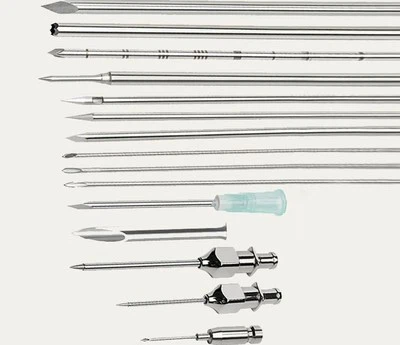
Precision grinding is the creator of the "soul" of the needle tip. The sharpness, symmetry and geometric shape of the needle tip directly determine the initial breakthrough sensation of the puncture and the degree of damage to the tissue. Using high-precision CNC grinding machines and micrometer-grade diamond grinding wheels, the optimal puncture slope can be ground on the needle tip material. The angle of this slope needs to be optimized through a large number of mechanical tests to achieve the effect of achieving the smoothest penetration with the minimum force. The "super sharp needle tip" of Manners Technology is the result of this process. It ensures that when the needle tip contacts the tough meniscus, it "cuts" rather than "wedges" the tissue, forming a clean needle path, providing the least resistance for the suture line, and reducing the compression on the surrounding healthy cartilage.
Ultra-precision CNC machines (such as Citizen Cincom) are the cornerstone for constructing complex microstructures of needle bodies. On the meniscus repair needles, there are often extremely precise grooves, sockets, or complex threads that interface with the push rods. These features are of extremely small dimensions and have tolerance requirements typically in the micrometer range. Swiss-type centering turning and milling combined machines like Citizen Cincom can complete all processes such as turning, slotting, drilling, and tapping of micro rods in a single setup. This "one-time setup and one-time completion" process avoids the cumulative errors caused by multiple setups, ensuring extremely high coaxiality and positional accuracy between various features on the needle body. For example, the centerline of the groove must be absolutely parallel to the long axis of the needle body; otherwise, when pulling the suture line, torsional force will be generated, causing wear of the suture or tissue cutting.
Wire cutting discharge machining is an excellent tool for processing extremely hard materials and complex irregular contours. For some special designs (such as the special hooked structure of a needle tip) or for needle tips made of extremely hard alloys (to achieve ultimate wear resistance), traditional mechanical processing may be ineffective. WEDM utilizes the principle of electrical discharge corrosion, using an extremely fine metal wire as the electrode, and can "cut" any complex two-dimensional shape almost without cutting force, achieving an astonishing shape accuracy of ±1 micrometer. This ensures that even the most complex needle tip functional forms can be faithfully and precisely replicated, and the processed surface has no mechanical stress, maintaining the best performance of the material.
Electrolytic polishing is the "final magic" that gives needles their biological compatibility and smooth functional properties. After the aforementioned mechanical processing, the metal surface is still rough at the microscopic level, covered with burrs and microscopic cracks. Electrolytic polishing is an electrochemical process in which the needle acts as the anode and current is passed through the electrolyte, preferentially dissolving the microscopic protrusions on the metal surface. This process brings about three major advancements: Firstly, a mirror-like smooth surface with extremely low roughness is achieved. This minimizes friction when the needle passes through tissues, reducing trauma to soft tissues; the inner walls of the suture channels become as smooth as a mirror, allowing the suture to pass through smoothly. Secondly, all microscopic burrs and sharp edges are completely eliminated. These defects are stress concentration points and the origin of possible needle fractures during repeated bending. Removal of these defects significantly enhances the fatigue strength and safety of the needle. Finally, a uniform, dense, and chromium oxide-rich passivation film is formed on the surface of the needle, which is a robust barrier against fluid corrosion and repeated high-pressure steam sterilization, ensuring the long-term durability and biological safety of the instrument.
Therefore, the significance of these advanced manufacturing processes lies in transforming the designer's ideal blueprint into a physical entity that is nearly perfect at the microscopic level. They ensure that every manufactured meniscus repair needle has consistent, outstanding, and predictable performance. For surgeons, this means that the sensation of each puncture is familiar and reliable, and the delivery of each suture line is smooth and powerful. The "performance certainty" guaranteed by these extreme processes is the source of confidence for performing a difficult minimally invasive meniscus repair surgery. It is also the fundamental technical strength of Manners Technology as a high-end manufacturer, enabling its products to gain market trust and fulfill the commitment of "accelerating patient recovery".