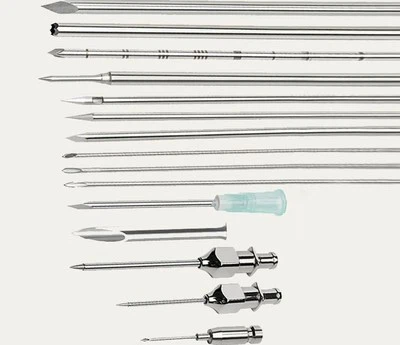
Precision Intervention For Knee OA — Breaking The Inflammatory-Mechanical Vicious Cycle With Tapered Shaver Blades
Apr 29, 2026
Precision Intervention for Knee OA - Breaking the Inflammatory-Mechanical Vicious Cycle with Tapered Shaver Blades
The core pathological mechanism of knee OA is a self-perpetuating inflammatory-mechanical vicious cycle: cartilage wear generates debris → synovitis activation → excessive inflammatory cytokines accelerate chondral degeneration and pain → limited joint mobility and abnormal biomechanics → aggravated articular abrasion. Traditional joint irrigation solely targets inflammatory cascades through mediator dilution and drainage. The advent of arthroscopic tapered shaver blades enables simultaneous, precise intervention at multiple core links of this cycle, bridging the gap between symptomatic relief and functional recovery.
I. Breakpoint 1: Eliminating Mechanical Irritants - Blocking the Cycle Initiation
Intra-articular mechanical instability and impingement are primary triggers of pain and inflammation.
- Clinical Scenario: Degenerative meniscal tears form flap or bucket-handle fragments, causing recurrent locking and persistent chondral abrasion during joint movement.
- Tapered Shaver Solution: Small-caliber tapered meniscal trimmers are inserted through minimal anteromedial and anterolateral portals. Under direct endoscopic visualization, unstable torn fragments are precisely resected, and residual meniscal margins are contoured into smooth inclined surfaces. Mechanical impingement and secondary cartilage damage are fundamentally eliminated. The tapered configuration ensures superior maneuverability in narrow joint spaces and protects healthy meniscal and chondral tissues.
II. Breakpoint 2: Resecting Inflammatory Hubs - Suppressing Inflammatory Amplification
Hypertrophic synovium acts as both an inflammatory victim and a catabolic effector, secreting high levels of IL-1β, TNF-α and matrix metalloproteinases to accelerate cartilage degradation.
- Clinical Scenario: Knee OA is commonly accompanied by variable synovitis, predominantly in the suprapatellar bursa, intercondylar notch and lateral recesses.
- Tapered Shaver Solution: High-efficiency full-radius synovial shavers rapidly resect hyperplastic synovial villi with atraumatic cutting edges. Radical resection of inflammatory tissue drastically reduces intra-articular cytokine concentrations and joint effusion. Synchronized high-power suction instantaneously evacuates resected tissue debris to maintain unobstructed visualization for thorough synovectomy.
III. Breakpoint 3: Managing Secondary Lesions & Optimizing Microenvironment - Disrupting Cyclical Progression
Progressive OA induces multiple secondary pathological changes that sustain disease deterioration.
- Loose Bodies & Cartilage Debris: Small free fragments are directly aspirated, while larger joint mice are fragmented and removed, preventing acute locking episodes.
- Intercondylar Notch Impingement: Tapered burrs precisely resect osteophytic hyperplasia, expand the intercondylar space and relieve extension pain caused by anterior cruciate ligament impingement.
- Chondral Lesion Debridement: Delicate shavers trim unstable chondral flaps to stable viable margins, preparing prerequisite conditions for microfracture and cartilage repair while reducing chronic synovial irritation.
IV. Combined Biologic Therapy: Constructing a Repair-Friendly Microenvironment
Arthroscopic debridement serves as the fundamental prerequisite for modern combined biologic interventions:
1. Preparatory Procedure for Biologic Injection: Thorough debridement of inflammatory tissues and debris optimizes intra-articular conditions, significantly enhancing the efficacy of adjuvant therapies such as platelet-rich plasma (PRP) and hyaluronic acid injection.
2. Synergy with Microfracture Technology: Standardized debridement of chondral defects and exposure of subchondral bone facilitate mesenchymal stem cell recruitment and reparative fibrocartilage formation.
Conclusion
For knee OA management, arthroscopic tapered shaver blades have evolved into multi-functional surgical instruments capable of multi-target pathological intervention. Through the integrated tripartite strategy of mechanical debridement, inflammatory source control and secondary lesion management, it effectively disrupts the OA vicious cycle. Superior to passive irrigation, this etiological minimally invasive procedure is ideal for early-to-moderate OA patients with intractable mechanical symptoms refractory to conservative treatment. Guided by functional reconstruction philosophy, it restores pain-free, smooth joint mobility with minimal trauma, prolongs joint lifespan and improves patients' long-term quality of life.