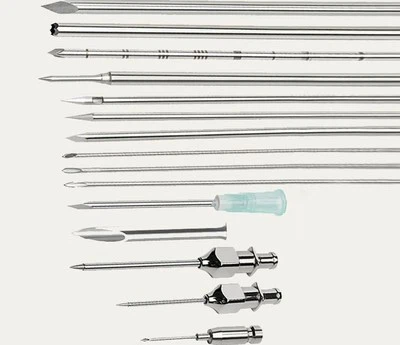
The Surgeon’s Second Hands — Core Operational Value Of Tapered Shaver Blades
Apr 29, 2026
The Surgeon's Second Hands - Core Operational Value of Tapered Shaver Blades in Knee, Shoulder and Ankle Arthroscopy
If the arthroscopic lens serves as the surgeon's intra-articular eyes, the powered shaving system and its core component - the tapered shaver blade - function as flexible, precise and powerful surgical hands. The performance of these instruments directly determines the feasibility of translating surgical planning into precise intra-articular manipulation within narrow, deep joint cavities. In complex large-joint arthroscopy of the knee, shoulder and ankle, its value extends beyond technical advantages to become the fundamental guarantee for standardized surgical strategy implementation.
I. Knee Arthroscopy: Precision Sculptor in Complex Compartmental Spaces
The knee features a large cavity with multi-compartmental intricate anatomy, requiring versatile instrument adaptation for diverse tissue textures.
- Intercondylar Notch Plasty: Tapered round or elliptical burrs gradually resect osteophytic hyperplasia in confined notches to prevent cruciate ligament impingement. The tapered shaft enables deep cavity access with minimal disturbance to anterior fat pad and patellar tendon. Millimeter-level grinding accuracy relies on delicate tactile feedback and visual control.
- Meniscal Suture Preparation: Fine sharp tapered shavers refresh torn meniscal margins by removing avascular degenerated tissue to enhance healing potential. High operational stability avoids iatrogenic injury to native meniscal tissue.
- Posterior Compartment Debridement: Ultra-fine long-shank tapered shavers safely address posterior medial and lateral lesions, including loose bodies, synovitis and posterior horn tears, with specialized portal access to neurovascular-dense deep anatomical regions.
II. Shoulder Arthroscopy: Efficient Space Developer in Confined Narrow Compartments
The shoulder joint possesses limited operative space surrounded by vital tendons, ligaments and neurovascular structures, making space creation the primary surgical step.
- Subacromial Decompression: Full-radius or serrated tapered shavers rapidly resect highly vascular subacromial bursae for clear visualization. Tapered acromial burrs precisely remodel the inferior acromial surface to expand the subacromial space while protecting underlying rotator cuff tendons.
- Rotator Cuff Repair Bone Bed Preparation: Tapered burrs decorticate the humeral greater tuberosity to create bleeding cancellous bone beds for tendon graft integration. The ergonomic tapered design accommodates multi-angle rotational positioning and prevents suture entanglement.
- Labral Repair Wound Preparation: Small-caliber fine shavers gently debride glenoid rim soft tissues for anchor implantation in Bankart and SLAP lesions, avoiding excessive bone resection and labral complex damage.
III. Ankle Arthroscopy: Microsurgical Instrument for Ultra-Confined Spaces
As the smallest large joint, the ankle demands the most compact and flexible surgical instruments.
- Anterior Impingement Debridement: Ultra-fine tapered shavers (2.0–2.9 mm diameter) resect anterior tibial and talar osteophytes alongside fibrous scar tissues in extremely limited supratalar spaces, an indispensable tool for athletic ankle impingement management.
- Osteochondral Lesion Microfracture Preparation: Delicate straight or angled tapered blades trim unstable talar dome chondral flaps under extreme plantarflexion or dorsiflexion. Micron-level precise manipulation minimizes unnecessary healthy cartilage damage.
Conclusion
Arthroscopic tapered shaver blades act as irreplaceable extended surgical hands for modern arthroscopic surgeons. Across knee, shoulder and ankle procedures, they undertake core operative tasks including initial space creation, radical lesion resection and standardized reparative preparation. Their tapered geometric design, diversified functional tips and high-efficiency suction systems enable surgeons to conduct precise, controlled three-dimensional manipulation under two-dimensional endoscopic visualization. Proficiency in tapered shaving system operation serves as a critical benchmark for evaluating arthroscopic surgeons' technical competency. Far beyond disposable instruments, tapered shaver blades bridge surgical philosophy and minimally invasive clinical practice.