Material Science And Safety Evolution Of The 14ml Blood Drawing Needle
Jun 05, 2026
https://pmc.ncbi.nlm.nih.gov/articles/PMC11507497/
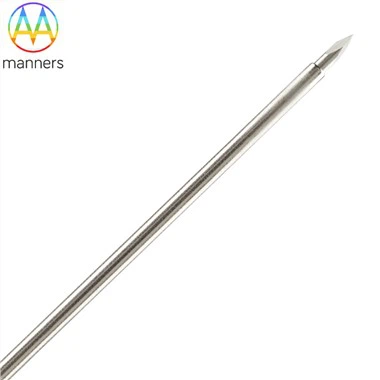
The 14ml blood-drawing needle, as a key component of therapeutic bloodletting therapy, has a material evolution history that reflects the continuous improvement of human understanding of medical safety. From the early "iron and fire" to the modern high-tech alloys, the advancement of materials science has fundamentally reshaped the safety boundaries and application efficiency of this device.
Traditional bloodletting instruments are mostly made of metals such as iron, copper, and bronze. Their inherent drawbacks include easy rusting and poor biocompatibility. Even when using the original "disinfection" methods like boiling or flame burning during reuse, the risk of infection cannot be completely eliminated, especially for tetanus and sepsis. The modern 14ml bloodletting needle, the primary safety foundation lies in its material. The mainstream materials used are 304 or 316L stainless steel. 304 stainless steel, with its excellent corrosion resistance and processing properties, is widely used in disposable medical products. While 316L stainless steel has its added molybdenum element, which significantly enhances its resistance to chloride corrosion (such as chloride ions in sweat and blood), improving its biocompatibility, and is particularly suitable for situations requiring prolonged contact with the internal environment or having higher requirements for the material. NiTi (nickel-titanium alloy, also known as memory alloy) is also used in some specially designed needles, but its core advantages lie in its shape memory and super elasticity, which may be used for special puncture angles or flexible needle tube designs, rather than the mainstream disposable 14ml bloodletting needle.
The scientific essence of material selection lies primarily in "inertness". The ideal needle material should, when in contact with blood and tissues, minimize chemical reactions, not release harmful ions, and not trigger significant immune or coagulation system activation. This ensures the stability of blood components during the outflow process and provides a foundation of accuracy for possible subsequent blood tests (if the released blood needs to be analyzed). Secondly, it lies in "mechanical properties". A 14ml collection volume requires the needle to have sufficient resistance to bending and fracture under a relatively long tube body (to facilitate operation and connection with blood collection tubes or containers), and to be able to withstand the entire rigorous process from tube pulling, needle tip grinding, inner cavity polishing to final sterilization without performance degradation. Finally, it lies in "processability". The material must be able to withstand the entire rigorous process from tube pulling, needle tip grinding, inner cavity polishing to final sterilization without performance deterioration.
The surface treatment of the material serves as the second line of defense for safety. Through techniques such as electrolytic polishing, not only can a smooth and mirror-like inner and outer surface be achieved, reducing blood turbulence and cell damage, but more importantly, it can remove microcracks and burrs generated during the processing. These microscopic defects are the sources of bacterial colonization and crack propagation. At the same time, the smooth surface also facilitates the application of medical silane lubricating coating treatment, which can significantly reduce the puncture resistance by up to 60%-80%, alleviate patient pain, and make the needle's positioning in the blood vessel more stable, avoiding vascular intima damage caused by friction.
Modern sterilization and packaging technologies are complementary to the material properties. The production environment that complies with international standards such as ISO13485 and ISO9001 ensures a low biological load of the products in their initial state. The needles are finally sterilized using ethylene oxide or gamma rays, and their packaging is a specially designed medical-grade breathable-bacteriostatic material, ensuring the effective penetration and dissolution of the sterilizing agents, and maintaining a sterile state during transportation and storage until use. Therefore, a modern 14ml blood-drawing needle, along with its material and the entire set of processing procedures, constructs a comprehensive safety barrier from physical invasion to biochemical reactions, enabling the ancient therapy of therapeutic blood-drawing to be precisely implemented within a controllable and safe modern medical framework.