Evolution Of Design Philosophy Behind 14 ML Therapeutic Phlebotomy Needles
Jun 05, 2026
https://pmc.ncbi.nlm.nih.gov/articles/PMC11507497/
Having persisted for thousands of years, therapeutic bloodletting retains its core instrumental function: controlled withdrawal of fixed blood volume. Nevertheless, the underlying design philosophy of phlebotomy implements has undergone an earth-shaking transformative revolution. The contemporary 14 mL dedicated phlebotomy needle stands as a refined design outcome forged from the interplay of clinical functional requirements, human-centered care philosophy and rigorous risk management principles.
In historical periods, classic bloodletting instruments including lancets and fleams were predominantly engineered around two core targets: reliable vascular penetration and sufficient blood drainage capacity, constrained by primitive raw material techniques and limited medical cognition. The conventional several-inch cannula length is inherited in modern products to accommodate average puncture depth for superficial forearm veins such as the median cubital vein. Historically, such dimensional setting merely guaranteed feasible venesection operations; by contrast, the length specification of present-day 14 mL phlebotomy needles is optimized via ergonomic engineering. The revised dimension enables steady operator gripping and adjustable puncture angles, alongside seamless docking with modern closed-system blood collection bags to facilitate fully aseptic blood harvesting.
Historically, needle gauge selection followed empirical depletion logic: thicker cannulas were deployed for patients deemed suffering from severe ailments. Today's outer diameter specification strikes a precise tradeoff between minimally invasive trauma and effective drainage efficiency. To satisfy the flow demand for 14 mL fixed-volume phlebotomy, engineers calculate the maximum feasible inner lumen bore within acceptable tissue injury limits, mostly adopting 16G–18G sizing marginally coarser than routine 20G–22G diagnostic blood collection needles. Such design secures unobstructed blood flow without two major drawbacks: excessively thin cannula wall induced by oversized inner bore compromising structural durability, or excessive outer gauge triggering aggravated puncture pain for recipients.
The most landmark shift in design ideology centers on single-use specification and infection prevention control. Reusable instrumentation paired with ambiguous disinfection standards dominated ancient practice, constituting the primary source of procedural cross-contamination. Modern 14 mL phlebotomy needles are manufactured as mandatory single-use sterile devices, cutting off cross-infection risks from the design source. Integrated cannula-hub construction or standardized Luer-lock secure connections seal the entire fluid pathway into an enclosed intact system. Disposable tips are fabricated to attain superior sharpness unachievable by repeatedly sharpened vintage steel implements, delivering minimal-traumatic venipuncture for every single application.
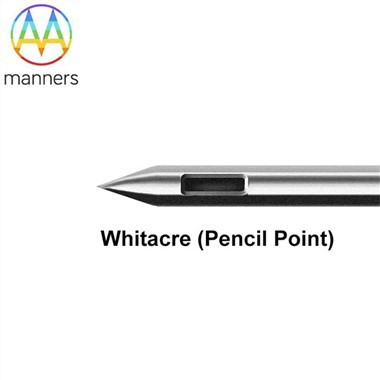
Patient comfort has gained drastically elevated priority in modern design, departing from the painful stereotype of traditional bloodletting. Multi-bevel tip geometry, ultra-thin-wall tubing and specialized lubricious coating jointly minimize tissue penetration resistance and effectively mitigate puncture discomfort. Graduated depth markings on cannula shafts assist clinicians in monitoring insertion depth in real time. Certain upgraded configurations incorporate passive safety shielding mechanisms such as auto-retractable or lockable needle guards post usage, eliminating accidental needlestick injuries among clinical staff-a professional safety dimension entirely absent from antique instrument design.
Quantitative blood harvesting has also witnessed comprehensive methodological renovation. Ancient volume measurement relied entirely on clinicians' subjective experience and rough approximation with poor precision. While the modern 14 mL phlebotomy needle serves as a high-efficiency drainage conduit, precise volumetric calibration is delegated to matched graduated evacuated tubes or standardized collection bags. Needles are tasked exclusively with smooth, contamination-free blood outflow, and volume regulation is realized via specialized accessory containers. This layout embodies modularization and separated functional zoning, a core design concept of contemporary medical devices where each component specializes in its designated performance scope.
In summary, the modern 14 mL therapeutic phlebotomy needle has evolved from a crude, high-risk handcrafted implement into an integrated single-use precision system combining material science, fluid dynamics, ergonomics and intrinsic safety engineering. Every curved profile, beveled cutting surface and micron-level dimensional tolerance incorporates lessons distilled from millennia of medical history, reflecting the persistent pursuit of procedural safety, volumetric accuracy and human-centric clinical design