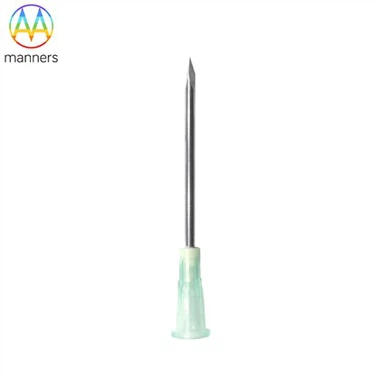
How SS316 Achieves The Outstanding Performance Of Vacuum-Assisted Breast Surgery Biopsy Needles
Jun 12, 2026
https://pmc.ncbi.nlm.nih.gov/articles/PMC4115763/
The main material of the vacuum-assisted breast surgery biopsy needle is SUS 316 stainless steel (SS316), with its hardness controlled within HRC 30–40 (approximately 70–90 HRB). This material selection was not random but was the result of a combination of factors including biocompatibility, corrosion resistance, machinability, and cost-effectiveness. This article will delve into the characteristics of SS316 and its crucial role in the VABB needle, and will also introduce how surface treatment processes such as passivation, electrolytic polishing, and ultrasonic cleaning further enhance the material performance.
I. Metallurgical Advantages of SS316
SS316 is an austenitic stainless steel, containing 16–18% chromium, 10–14% nickel, and 2–3% molybdenum. The addition of molybdenum significantly enhances its resistance to pitting in chloride environments, which is crucial for medical devices that come into contact with human body fluids and disinfectants. Additionally, the non-magnetic property of SS316 ensures that it does not produce artifacts during MRI-guided biopsies, thereby maintaining image quality. Its hardness range (HRC 30–40) strikes a balance between the required stiffness for puncture and the toughness to avoid cracking – too soft would make it difficult to penetrate dense fibrous tissues, while too hard might cause it to break when bent.
II. Passivation: Creating an Invisible Protective Layer
Passivation is a crucial chemical treatment in the manufacturing of VABB pins. By immersing three components in a citric acid solution (with a concentration of 10–20% and a temperature of 50–60°C) for 20–30 minutes, the solution will dissolve the free iron and other contaminants on the surface, while forming a chromium-rich oxide film (Cr₂O₃) with a thickness of approximately 1–3 nm on the metal surface. This oxide film is dense and stable, effectively preventing the erosion of chloride ions and oxygen, thereby extending the corrosion resistance lifespan of the pin body by several times. After passivation, a blue dot test (using potassium ferricyanide solution for detection) must be conducted to confirm the absence of free iron residues.
III. Electrolytic Polishing: The Transformation from Roughness to Mirror Finish
Electrolytic polishing (electrochemical polishing) involves treating the component as the anode and passing an electric current through a specific electrolyte (such as a mixture of phosphoric acid and sulfuric acid) to prioritize the removal of surface micro-protrusions based on the principle of anode dissolution. After electrolytic polishing, the surface roughness of the VABB needle can be reduced from Ra 0.8 μm to Ra ≤ 0.2 μm. This not only lowers the friction coefficient, reduces tearing damage to breast tissue during puncture, but also eliminates micro-cracks and stress concentration points left by the processing, enhancing fatigue resistance. Moreover, the smooth surface is less prone to bacterial and protein adhesion, facilitating cleaning and sterilization.
IV. Ultrasonic Cleaning: Achieving Medical Grade Cleanliness
After electrolytic polishing, the surface of the component may still have polishing paste and metal debris remaining. Ultrasonic cleaning utilizes 20–40 kHz high-frequency vibration to generate cavitation bubbles in the cleaning solution. The shock waves released when the bubbles rupture can penetrate narrow slots and blind holes, thoroughly removing contaminants. The cleaning medium usually consists of deionized water combined with neutral cleaning agents, and is divided into three stages: rough cleaning, fine cleaning, and rinsing. Afterwards, it is dried with hot air filtered by HEPA and packaged in a Class 10,000 clean room to ensure that the product complies with the ISO 13485 requirements for controlling particles and biological loads.
Conclusion
The material foundation of SS316 is combined with three surface treatment processes: passivation, electrolytic polishing, and ultrasonic cleaning. These processes collectively provide the VABB biopsy needle with excellent corrosion resistance, low friction coefficient, and high cleanliness. The collaborative optimization of this material and process is the fundamental guarantee for the long-term safe operation of the VABB needle.